
Curated recommendations
How to Play Commander: Rules, Setup, and First Game
Learn Commander rules from a legal 100-card setup through mulligans, turns, commander tax, commander damage, and a complete multiplayer game.
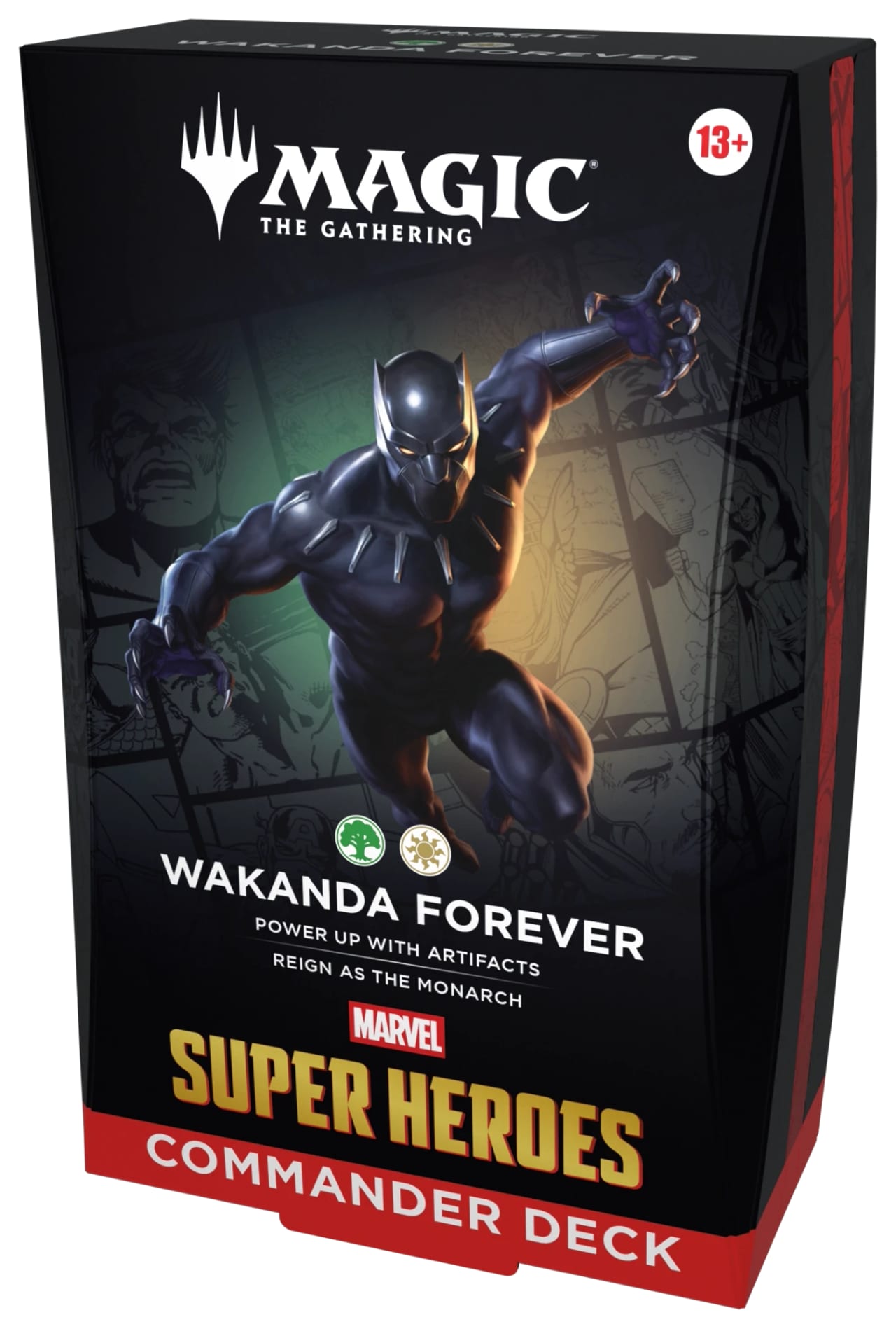
Commander is a multiplayer Magic format in which each player brings a deck of exactly 100 cards led by one commander or a legal commander pair. A standard game is a free-for-all, usually with four players. Each player starts at 40 life, puts their commander or commanders face up in the command zone, and draws seven cards.
Those are the format’s additions. The rest is ordinary Magic: play lands, cast spells, attack, block, and respond to other players. This guide follows the official Commander format overview (opens in a new tab) and takes one real deck from the pregame conversation through setup, a legal opening sequence, a commander leaving and returning, and the point at which a player loses to commander damage.
Build a legal 100-card Commander deck
The current Comprehensive Rules (opens in a new tab) put the construction requirements in rules 903.3 through 903.5. Check these four things before shuffling:
- Choose a legal commander or pair. Under rule 903.3, the designated card is a legendary creature card, a legendary Vehicle card, or a legendary Spacecraft card with at least one power/toughness box unless a card’s own ability changes the requirement. Most decks use one legendary creature. Abilities such as partner expressly permit two commanders. With one commander, the library begins with 99 cards. With two, it begins with 98. The total is always exactly 100.
- Follow singleton. Other than basic lands, cards in the deck must have different English names. A card whose own rules expressly permit additional copies creates its own exception.
- Stay inside the commander’s color identity. Color identity considers colored mana symbols in mana costs and rules text, color indicators, and characteristic-defining abilities. With two commanders, combine their identities. Every card in the deck must fit within the resulting identity.
- Check format legality. A card must be legal in Commander and absent from the current Commander banned list (opens in a new tab) unless the whole table agrees to a casual exception before the game.
For T’Challa, the Black Panther, the color identity is green-white. Its deck can use cards whose color identities are green, white, both, or colorless. It cannot include a card with a blue, black, or red color identity.
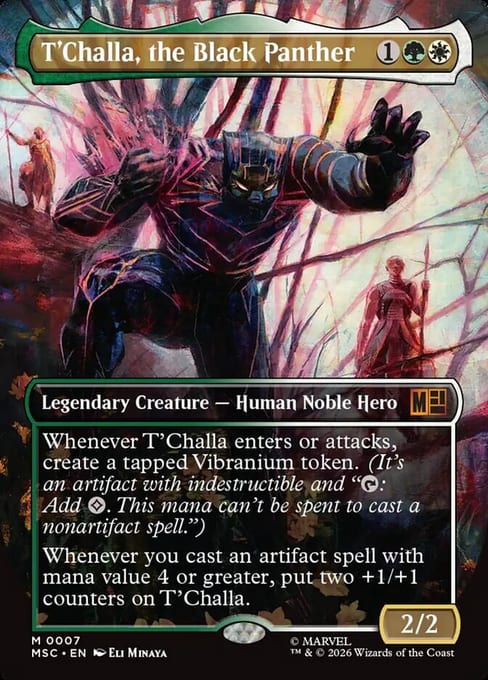
The official Wakanda Forever list (opens in a new tab) is already a complete 100-card deck: T’Challa plus 99 library cards, with 38 lands and no repeated nonbasic card names. A new player can use that stock list without first rebuilding it. To construct a list instead, use the role framework in How to Build Your First Commander Deck.
Have the Rule 0 conversation before shuffling
Commander is social, and legal decks can still produce very different games. Rule 0 is the table’s chance to agree on the experience before cards are drawn. The current official bracket guidance (opens in a new tab) treats brackets as an optional aid to that conversation, not a final ruling on who may play together.
For a first game, say what the deck is and what the player needs:
This is the unmodified Wakanda Forever precon led by T’Challa. I am learning Commander and would like a game without an early infinite combo or a fast lock.
Then let each player summarize their deck’s intended pace and unusual features. Ask about deterministic or infinite combos, extra turns, mass land denial, unusually fast mana, proxies, cards that are not normally legal, and house rules. Agreeing to an exception is different from assuming one. If the table does not agree, use ordinary Commander legality.
Set up a multiplayer free-for-all
The default multiplayer Commander game is a free-for-all with the option to attack multiple players. There are no teams. Each other player is an opponent, and a player may attack one opponent, divide attackers among several opponents, or choose not to attack.
Set up in this order:
- Seat the players in a circle and choose the starting player by an agreed random method.
- Put each commander face up in its owner’s command zone.
- Shuffle each remaining library. With one commander, that library has 99 cards.
- Set each player’s life total to 40.
- Prepare separate commander-damage totals for every opposing commander. Also keep counters, tokens, and dice within reach.
- Draw seven cards, then complete mulligans.
Turn order proceeds clockwise from the starting player. Unlike an ordinary two-player game, the starting player in this multiplayer game does not skip their first draw step. Every player draws on their first turn.
Take the multiplayer mulligan correctly
Commander uses Magic’s normal mulligan procedure with one multiplayer adjustment: each player gets one free mulligan. Players who mulligan shuffle their hand into their library and draw seven new cards. The first mulligan requires no cards to be put on the bottom. After a second mulligan, keep seven and put one on the bottom; after a third, put two on the bottom.
Players declare and take mulligans together in rounds. Once a player keeps, that player cannot rejoin a later mulligan round.
The Wakanda example keeps this opening seven:
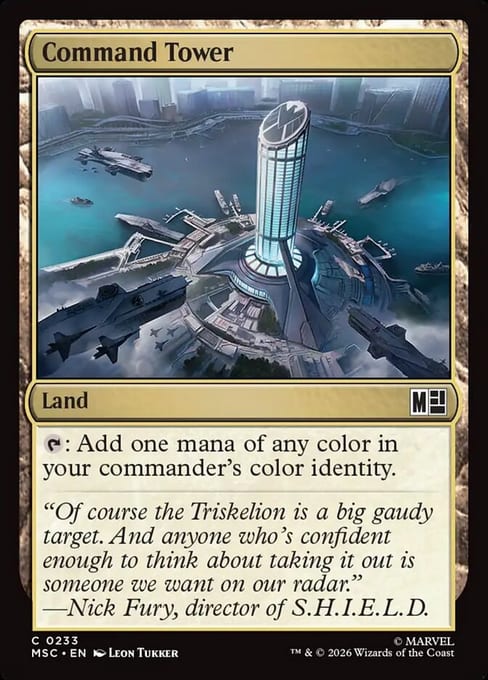
Command Tower supplies green or white in T'Challa's deck. 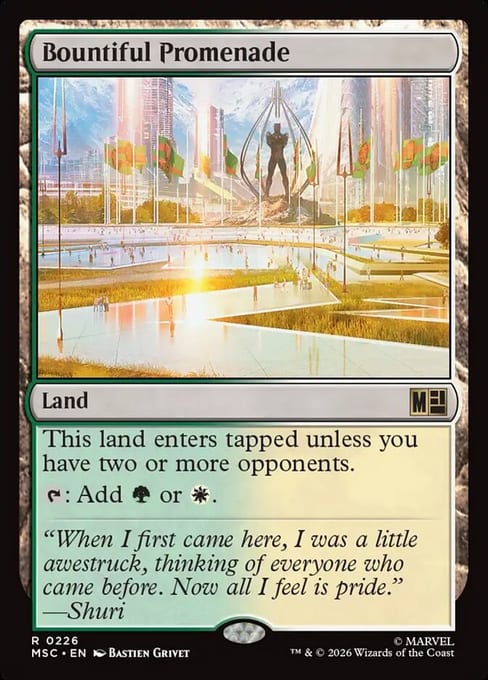
Bountiful Promenade enters untapped while at least two opponents remain. 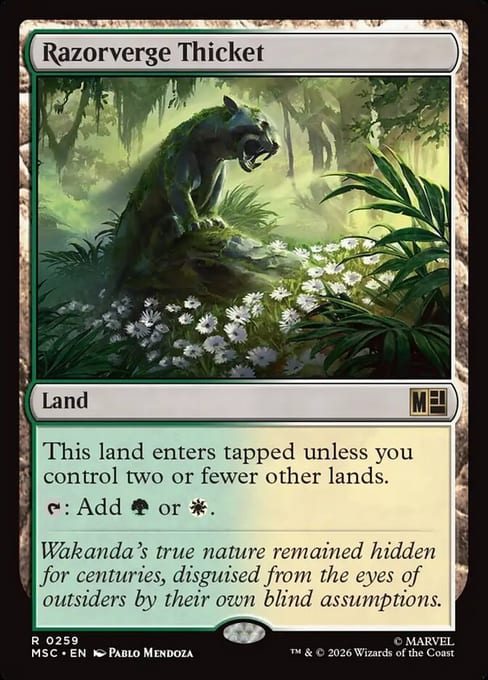
Razorverge Thicket enters untapped while its controller has two or fewer other lands. 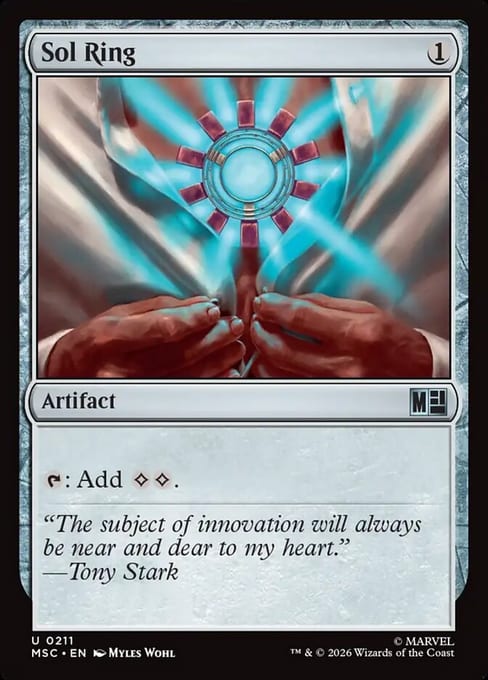
Sol Ring turns one mana into two colorless mana. 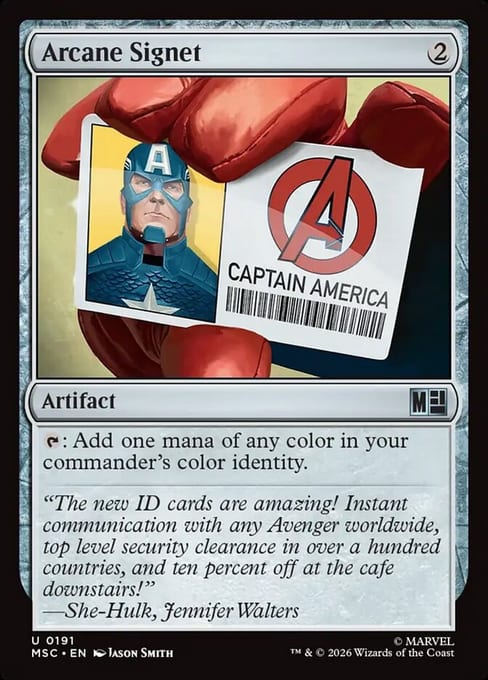
Arcane Signet can supply either commander color. 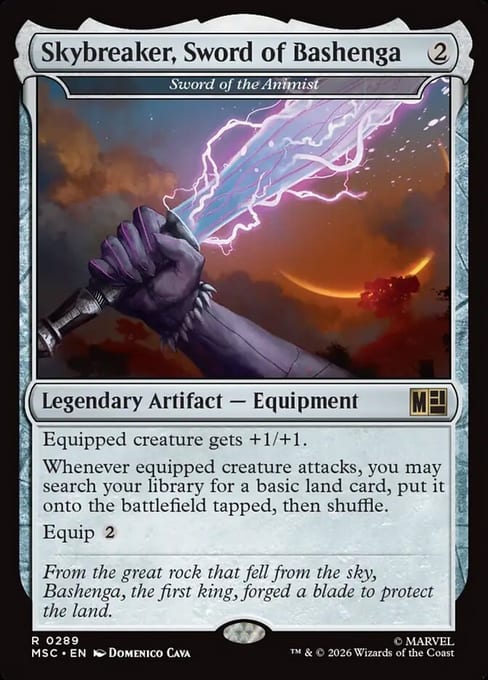
Sword of the Animist adds power and searches for a basic land when its creature attacks. 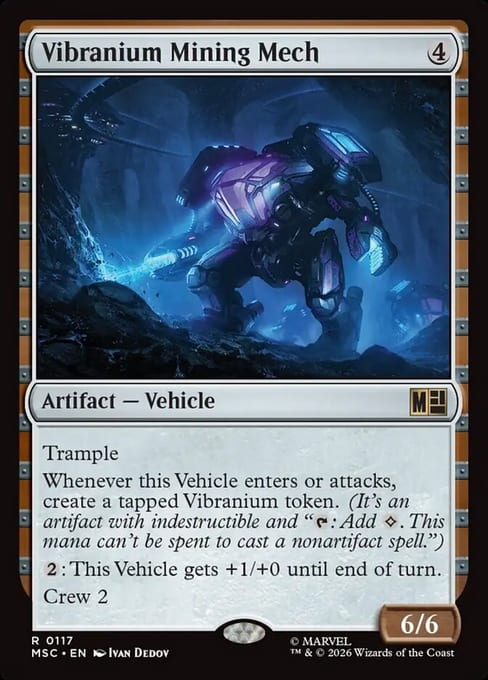
Vibranium Mining Mech is a four-mana artifact spell for T'Challa's payoff.
This is a keep because the three lands enter untapped in the demonstrated order, produce both commander colors, and cast T’Challa on turn three. Sol Ring and Arcane Signet provide development before then. A hand with one land and several expensive spells should be sent back even though the first mulligan is free.
Follow the turn and casting sequence
Every turn has five phases:
- Beginning phase: untap, then upkeep, then draw. Players normally do not receive priority during untap.
- First main phase: play one land for the turn and cast creatures, artifacts, enchantments, planeswalkers, and sorceries while the stack is empty. Cards and effects can change those permissions.
- Combat phase: move through beginning of combat, declare attackers, declare blockers, combat damage, and end of combat. In Commander, each attacker can be assigned to a different opponent or another legal defender.
- Second main phase: take another main phase after combat. A player who did not use their land play may still use it here.
- Ending phase: resolve end-step actions, then discard to the normal maximum hand size of seven during cleanup and remove damage marked on permanents.
Casting a commander from the command zone follows the usual casting process. Announce it, determine and pay its cost, and put it on the stack. Other players may respond. It enters the battlefield only if the spell resolves. Being a commander does not make a spell uncounterable and does not grant haste.
When a player has priority, that player may take a legal action or pass. If everyone passes in succession with a spell or ability on the stack, the top object resolves. If everyone passes with an empty stack, the game advances to the next step or phase. This is how four players share opportunities to respond without acting at the same time.
Play the worked Wakanda opening
This teaching sequence uses the kept seven above. It assumes the ordinary draw steps later provide Shuri’s Fabricator, Thran Dynamo, and Gilded Lotus. Opponents may respond at each priority pass; the sequence below states the result when the named spells resolve and T’Challa is not blocked.
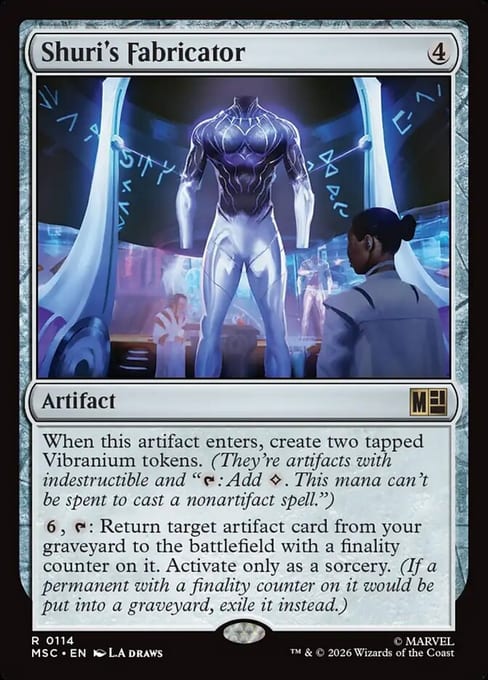
Shuri's Fabricator is a four-mana artifact that creates two tapped Vibranium tokens as it enters. 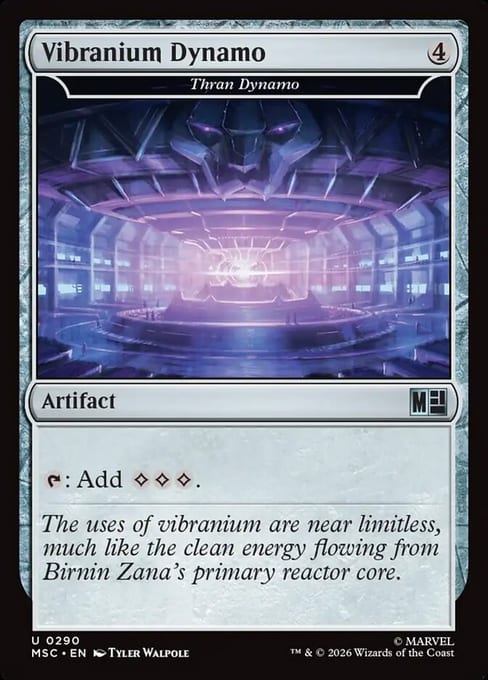
Thran Dynamo is another artifact spell with mana value 4. 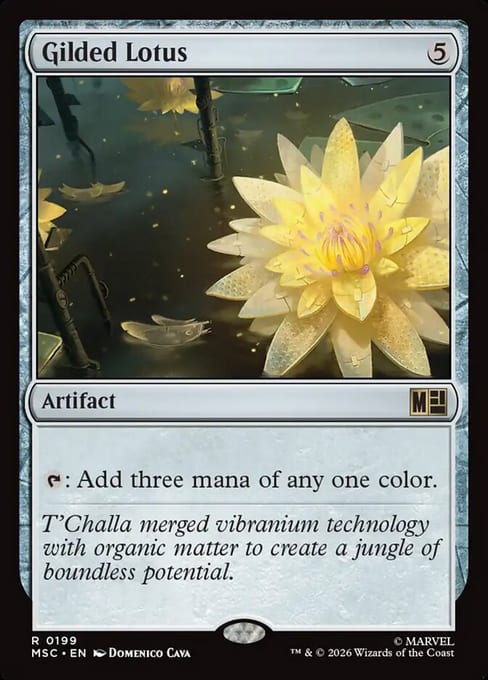
Gilded Lotus has mana value 5 and supplies colored mana on later actions.
Turns one through three: develop and cast the commander
- Turn one: draw, play Razorverge Thicket, and spend it to cast Sol Ring.
- Turn two: untap and draw. Play Bountiful Promenade. Because three opponents remain, it enters untapped. Use Sol Ring to cast Arcane Signet, then use the two lands to cast Sword of the Animist.
- Turn three: untap and draw. Play Command Tower. Spend three mana including green and white to cast T’Challa. When T’Challa resolves and enters, its triggered ability goes on the stack and creates a tapped Vibranium token when it resolves. Spend Sol Ring’s two colorless mana to equip the Sword to T’Challa. T’Challa cannot attack this turn because it has not been under its controller’s control since that player’s turn began.
The commander began in the command zone, was cast as a spell, resolved onto the battlefield, and created a token through a triggered ability. The command zone is not an extra hand: T’Challa’s printed abilities matter there only if they specifically say they work there.
Turn four: cast an artifact and attack one opponent
Untap, draw, and cast Vibranium Mining Mech. Its mana value is 4, so T’Challa’s second ability triggers when the spell is cast. The trigger puts two +1/+1 counters on T’Challa even before the Mech resolves. When the Mech enters, it creates another tapped Vibranium token.
Move to combat and attack one opponent with T’Challa. T’Challa and the equipped Sword both trigger. The active player chooses the order in which those two triggers are put on the stack. After they resolve, T’Challa has created another tapped Vibranium and the Sword has put a basic land onto the battlefield tapped.
T’Challa is now 5/5: its printed 2/2, two +1/+1 counters, and the Sword’s +1/+1. If it is unblocked, that opponent loses 5 life and records 5 commander damage from T’Challa. The same combat damage affects both totals.
Turn five: move T’Challa and pay commander tax
Suppose an opponent exiles T’Challa after that combat. T’Challa first reaches exile. The next time state-based actions are checked, its owner may move it to the command zone. The +1/+1 counters cease to exist when it changes zones, the Sword becomes unattached, and the 5 commander damage already dealt remains recorded.
On turn five, cast T’Challa from the command zone again. Its printed cost is , and it has been cast from the command zone once before, so commander tax adds . The total is five mana, including green and white.
Vibranium mana cannot be spent to cast a nonartifact spell, so it cannot help cast T’Challa. Sol Ring can pay the two generic tax mana, while lands and Arcane Signet provide the printed cost. Once T’Challa resolves, two untapped Vibranium tokens can pay the Sword’s equip cost because equip is an activated ability, not a spell.
Turns six through eight: reach 21 commander damage
On turn six, cast Shuri’s Fabricator. T’Challa gets two +1/+1 counters, making it 5/5 with the Sword. An unblocked attack deals 5 more commander damage to the same opponent, bringing that total to 10.
On turn seven, cast Thran Dynamo. T’Challa gets two more counters and attacks as a 7/7. The running commander-damage total becomes 17.
On turn eight, cast Gilded Lotus. T’Challa gets two more counters and attacks as a 9/9. The opponent’s total reaches 26 commander damage from the same commander. That player loses the game the next time state-based actions are checked, even if their life total is still above 0.
This is a complete commander-damage calculation: 5 + 5 + 7 + 9 = 26. Removing T’Challa did not erase earlier commander damage. It did erase the counters on that object, so the post-removal calculation restarted from T’Challa’s printed power before new counters and the Sword were applied.
Eliminating one opponent does not win a four-player free-for-all. Continue the same example with the three remaining players. If a second opponent at 6 life later takes 8 combat damage from noncommander creatures, that player falls to -2 life and loses. The final opponent has a separate T’Challa commander-damage total. If that ledger shows 14 and an unblocked 7-power T’Challa deals combat damage, it reaches 21 and that opponent loses. T’Challa’s controller is then the only player left and wins the game.
Understand commander tax and command-zone choices
Commander tax adds two generic mana for each previous time that particular commander has been cast from the command zone during the game. Its first command-zone cast has no tax, its second adds two, and its third adds four. In a deck with two commanders, track the count separately for each card.
Tax counts casts from the command zone, not deaths and not total casts. If a commander moves to its owner’s hand and is cast from there, that cast receives no commander tax and does not increase the command-zone count. Earlier command-zone casts still matter if the card later returns there.
The return choice depends on the destination:
- Graveyard or exile: the commander reaches that zone. The next time state-based actions are checked, its owner may move it to the command zone. This lets death and exile events happen for abilities that care about them. The owner cannot decline now and make the same choice several turns later without a new zone change.
- Hand or library: if the commander would go there, its owner may put it in the command zone instead. This is a replacement effect, so a commander moved this way never reaches the hand or library.
Both choices are optional. Leaving a commander in the graveyard for a planned return spell or allowing it to go to hand can be correct. The command zone provides reliable access, but later casts may become expensive.
Track commander damage separately from life
A player loses after taking 21 or more combat damage from the same commander over the game. Keep one total for every commander that has damaged that player.
- Damage from two different commanders does not combine toward 21.
- Damage dealt by a commander’s triggered or activated ability is not commander damage because it is not combat damage.
- Losing life without damage is not commander damage.
- A commander’s combat damage still counts after that card changes zones or controllers.
- A copy of a commander is not automatically a commander. Commander is a designation carried by the actual designated card.
In the Wakanda sequence, the 26 damage also reduced life by 26. If that opponent had already fallen to 9 life before the final 9-point hit, the ordinary 0-life condition and commander-damage condition would apply together. Either is enough to lose.
Know the other ways a Commander game ends
Commander keeps Magic’s other loss conditions. A player also loses by:
- having 0 or less life;
- being instructed to draw more cards than remain in their library;
- having 10 or more poison counters;
- resolving a spell or ability that says they lose, or allowing an opponent’s alternate-win condition to apply; or
- conceding, which a player may do at any time.
When a player loses, that player leaves the multiplayer game. The other players continue. A player still in the game wins when every opponent has left it.
Use this first-game Commander checklist
- Confirm exactly 100 cards including the commander or legal pair.
- Confirm singleton, combined color identity, and current Commander legality.
- Have the Rule 0 conversation: deck intent, unusual cards, combos, pace, proxies, and house rules.
- Put commanders face up in the command zone, shuffle the remaining 99 or 98 cards, and set life to 40.
- Randomize the starting player, draw seven, and remember the first multiplayer mulligan is free.
- Track life, poison, commander tax for each commander, and commander damage from each opposing commander separately.
- On each turn, untap, upkeep, draw, take a main phase, move through combat, take a second main phase, and finish with the ending phase.
- Let every player pass priority before a spell or ability resolves and before an empty stack advances the game.
- When a commander goes to graveyard or exile, make the state-based command-zone choice. When it would go to hand or library, make the replacement choice.
- Continue after one player loses. The last player remaining wins the free-for-all.
Once the rules feel routine, keep the stock deck intact long enough to learn what it actually needs. Use How Many Lands Should a Commander Deck Have? for land-count decisions, Commander Mana Base Guide for colored-source timing, and How to Upgrade a Commander Precon for a measured first revision.