
Curated recommendations
Commander Mana Base Guide: Three Ledgers That Actually Balance
Build a Commander mana base with separate land, total-source, and colored-source ledgers, demonstrated on Wakanda Forever's real 38-land list.
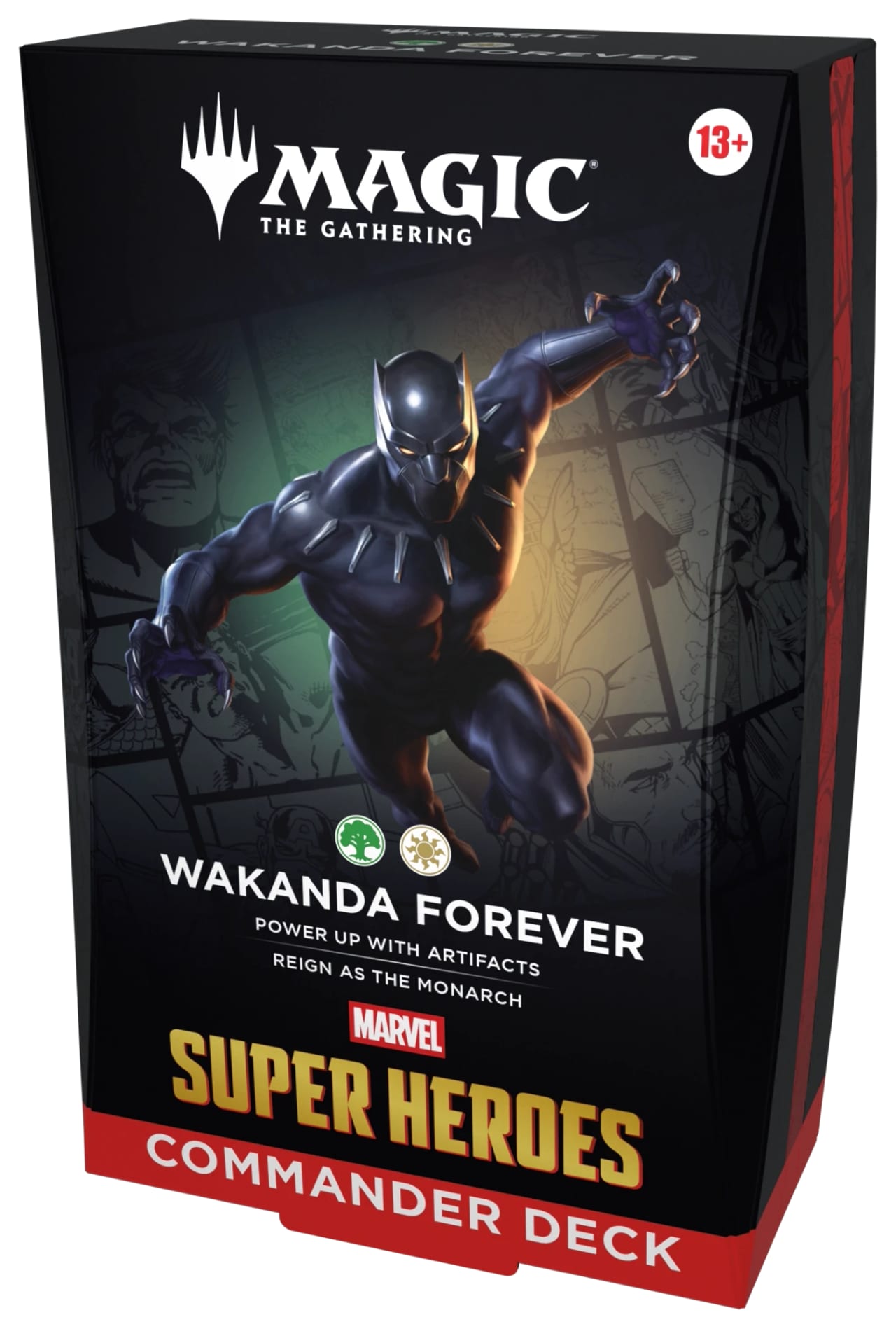
Build a Commander mana base around the spells it must cast, not around an ideal land cycle. Keep three ledgers: land count, total mana sources, and colored sources by deadline. A card can appear in more than one ledger, but the number in one column cannot answer a different question.
This guide completes all three ledgers for the official Wakanda Forever list (opens in a new tab), then makes a specific three-land revision. The deck remains at 38 lands; the result exchanges two delayed basic-fetch slots and one colorless utility slot for earlier green-white access.
Start with the commander’s real requirement
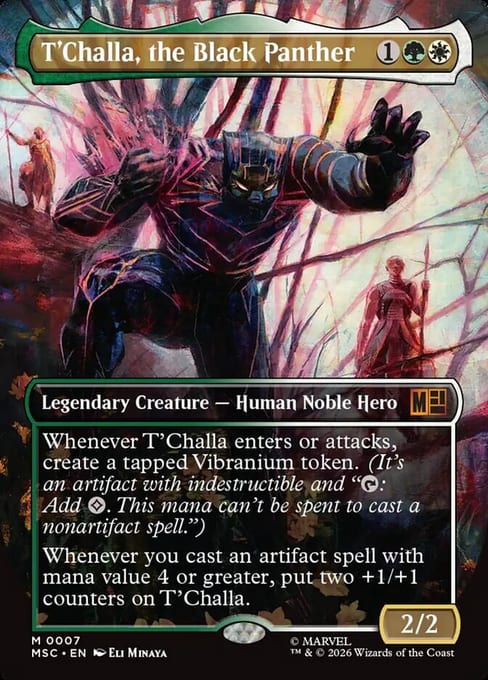
T’Challa, the Black Panther costs . The first copy therefore needs three total mana including one green and one white. T’Challa creates a tapped Vibranium artifact token when it enters or attacks, but that token produces only colorless mana. Its mana cannot be spent to cast a nonartifact spell, so it cannot pay any part of casting T’Challa again or fix the commander’s colors. It can still pay non-spell costs such as equip costs and activated abilities.
Color identity is broader than mana cost. It includes colored mana symbols in rules text, colors assigned by a color indicator, and colors set by characteristic-defining abilities. With two commanders, use their combined identities. Every card must remain within that identity. A land can look colorless and still have colored identity from its rules text, while a land that produces several colors can have no colored identity of its own. The official Commander rules (opens in a new tab) define the construction restriction.
Ledger 1: count the actual 38 lands by behavior
The stock list contains 12 of each basic type and 14 nonbasics. Counting by behavior exposes costs that a simple total hides.
| Land behavior | Count | What it means |
|---|---|---|
| Basics | 24 | One known color, untapped under normal rules |
| Unconditional commander-color dual | 1 | Green or white without an entry condition |
| Conditional green-white lands | 5 | Produce either color, but may enter tapped |
| Always-tapped green-white lands | 2 | Both colors later, no mana on entry |
| Colorless land with a filter ability | 1 | Needs another mana source to turn mana into green or white |
| Delayed basic-fetch lands | 2 | Consume the land play and put the found basic onto the battlefield tapped |
| Colorless utility lands | 3 | Advance a noncolor job at the cost of green-white access |
| Total | 38 |
The first eight green-white nonbasics differ in when they are ready. Their exact conditions matter more than the fact that all can eventually make both colors.
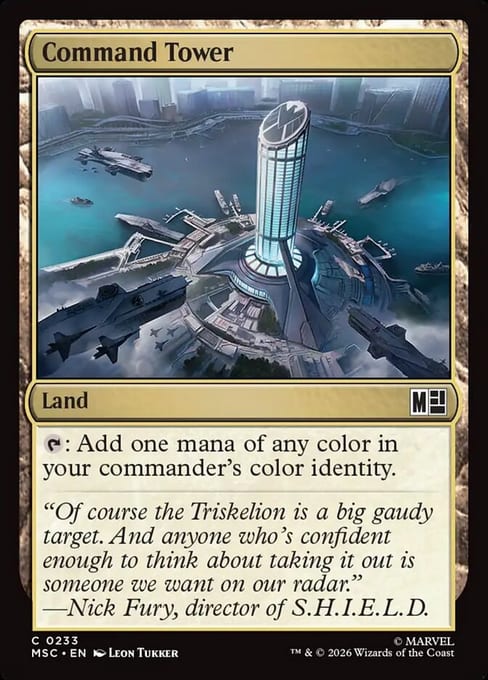
Command Tower: unconditional green or white in T'Challa's identity. 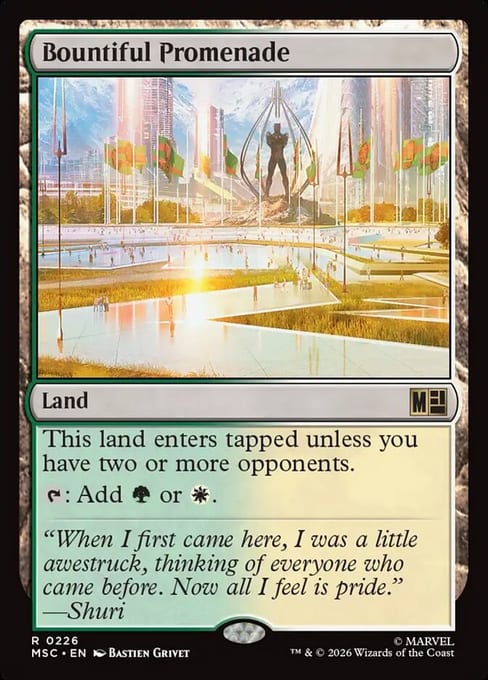
Bountiful Promenade: tapped unless there are at least two opponents. 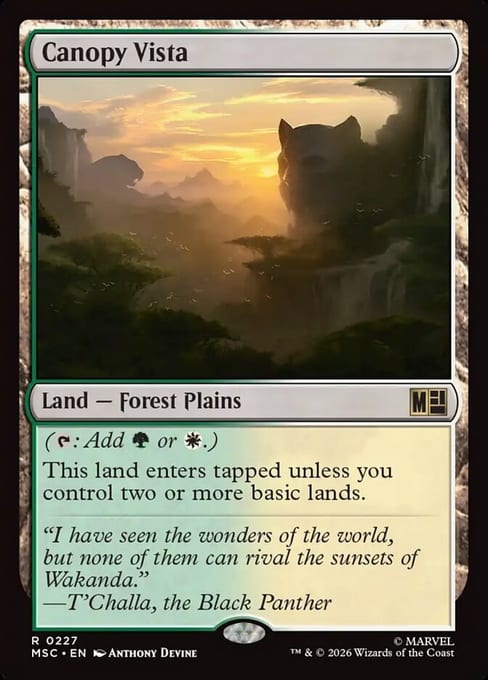
Canopy Vista: tapped unless its controller has at least two basic lands. 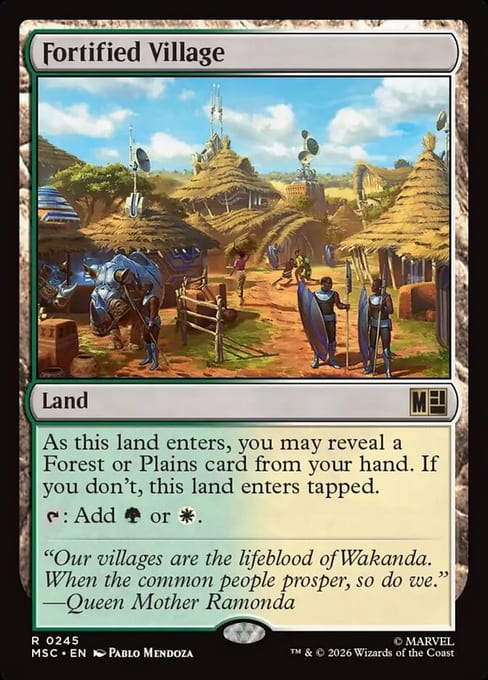
Fortified Village: reveal a Forest or Plains from hand or it enters tapped.
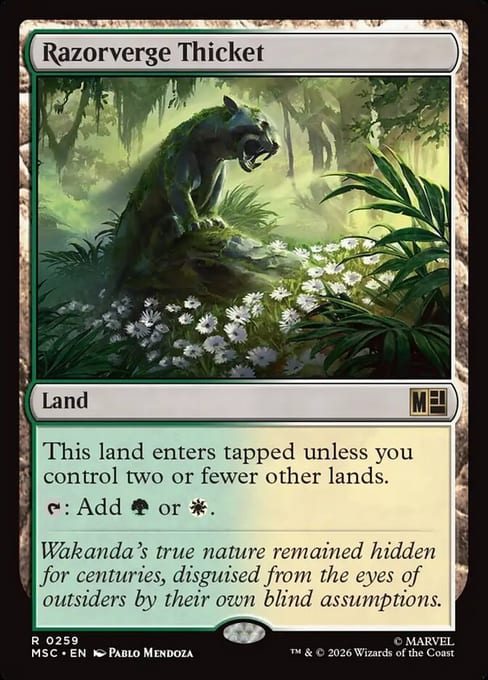
Razorverge Thicket: untapped only while its controller has two or fewer other lands. 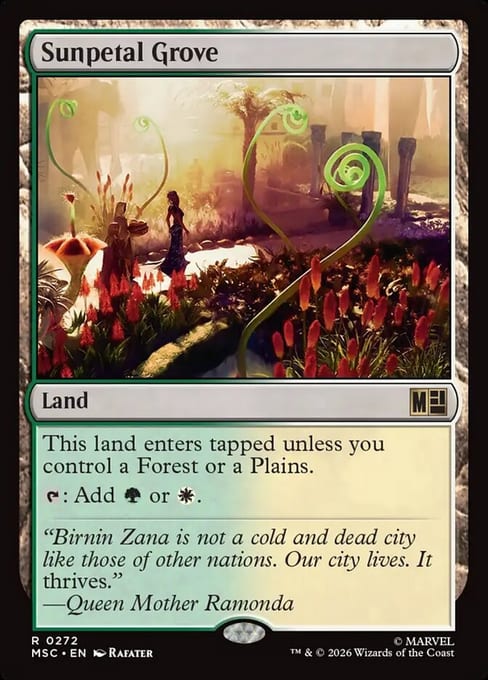
Sunpetal Grove: untapped with a Forest or Plains already controlled. 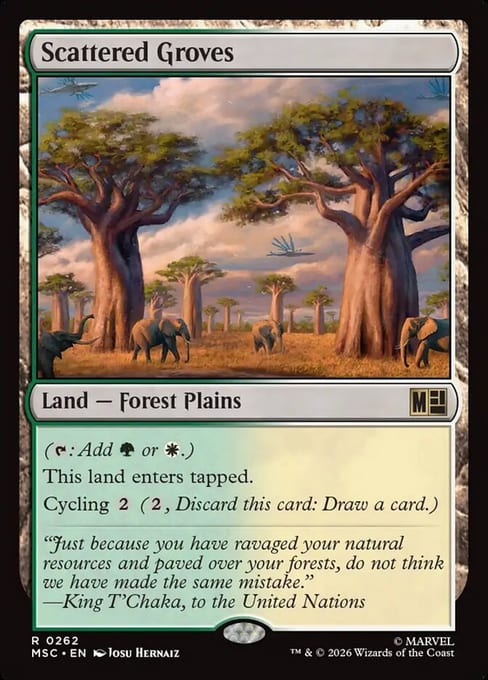
Scattered Groves: always tapped, but it has both Forest and Plains types and can cycle. 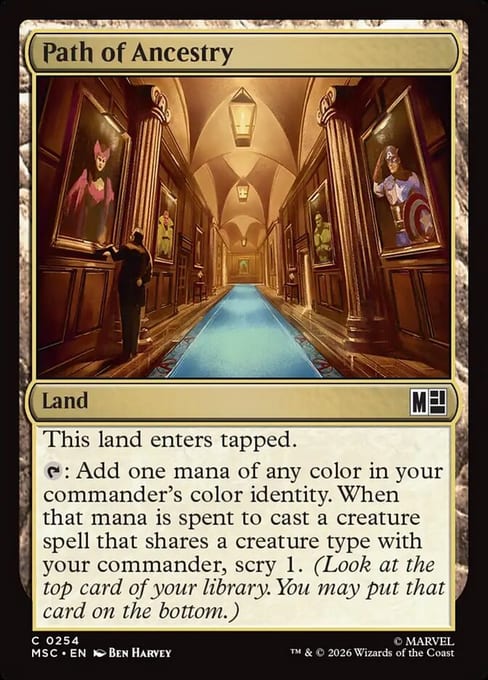
Path of Ancestry: always tapped; it makes a commander color and can scry after a matching creature cast.
The remaining six stock nonbasics either need another source, delay their chosen basic, or provide only colorless mana.
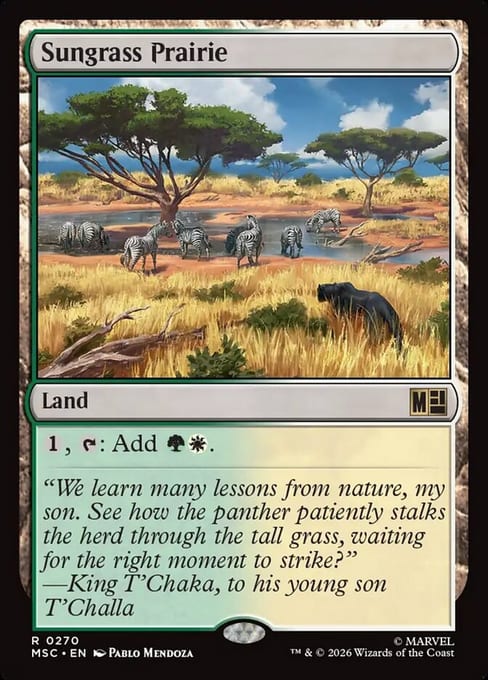
Sungrass Prairie: colorless by itself; green or white requires paying one mana into its filter ability. 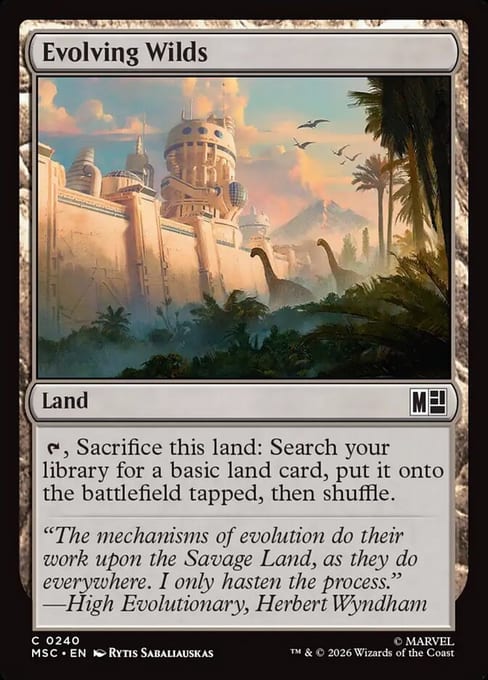
Evolving Wilds: sacrifices to find a basic land that enters tapped. 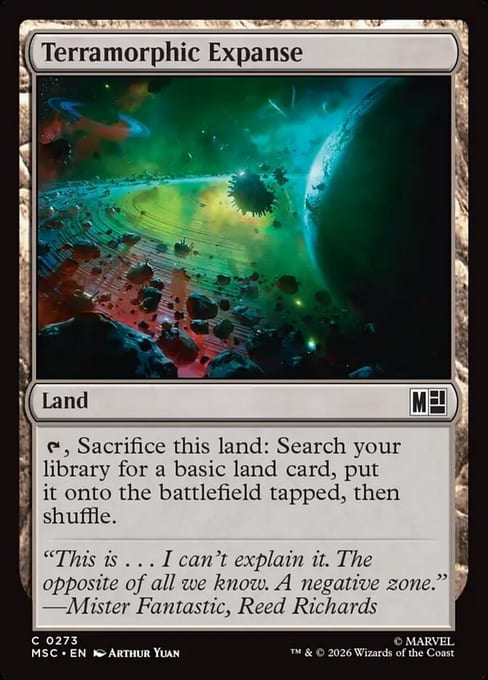
Terramorphic Expanse: the same delayed-basic exchange.
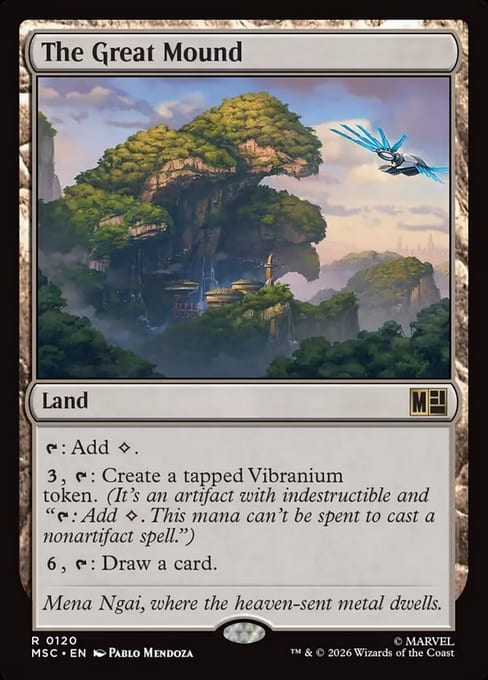
The Great Mound: colorless mana, with later Vibranium and draw abilities. 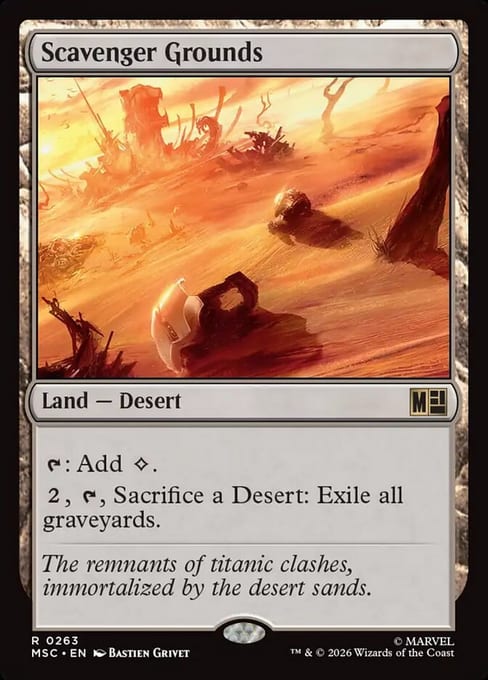
Scavenger Grounds: colorless mana and graveyard exile that needs a Desert sacrifice. 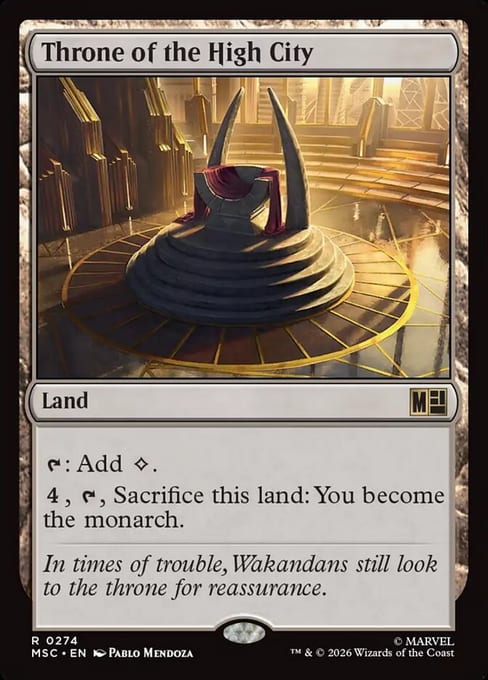
Throne of the High City: colorless mana and a four-mana self-sacrifice to become the monarch.
This is a playable base, not a pile of 14 equivalent duals. It has four guaranteed slow paths: the two always-tapped lands and the two fetch lands whose basics enter tapped. Five more have conditions that can delay them. Three land slots never make green or white, and the filter land needs another source before it can do so.
Ledger 2: total sources are not land drops
The 38 land slots form the base. Six stock nonland permanents can produce mana after they resolve, bringing the deck to 44 mana-source cards after deployment.
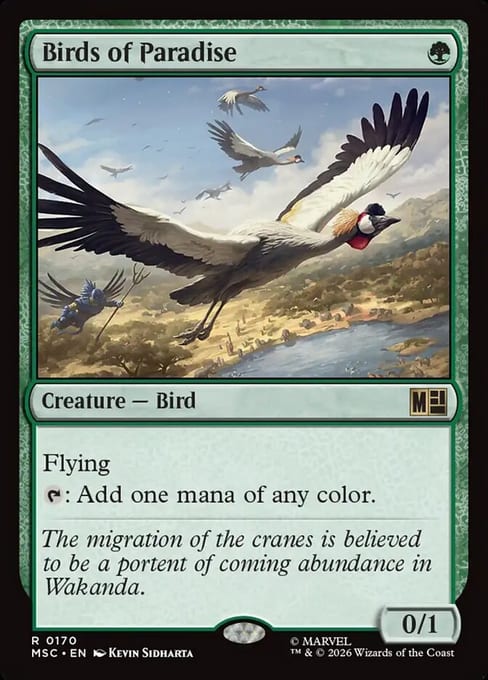
Birds of Paradise: any color after it can tap. 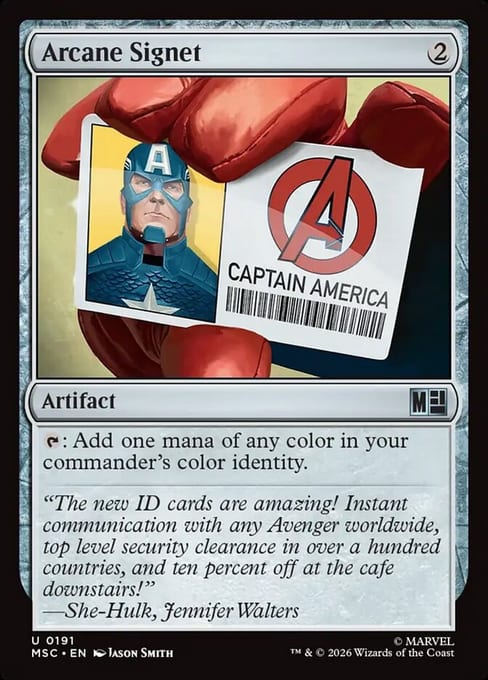
Arcane Signet: green or white after two mana has been spent to resolve it. 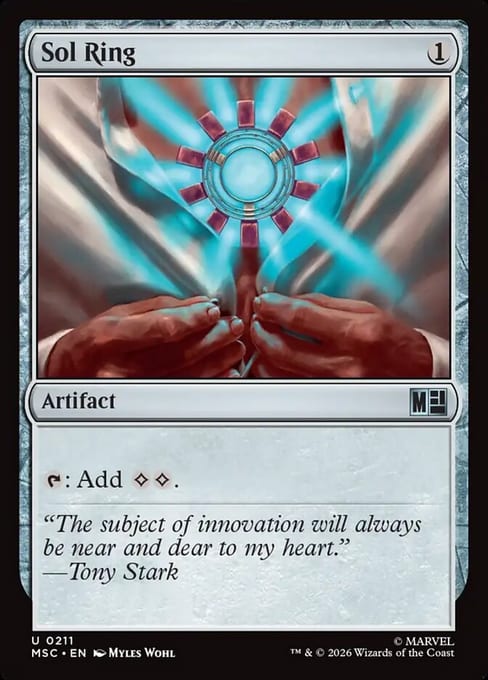
Sol Ring: two colorless mana, not a land and not colored fixing.
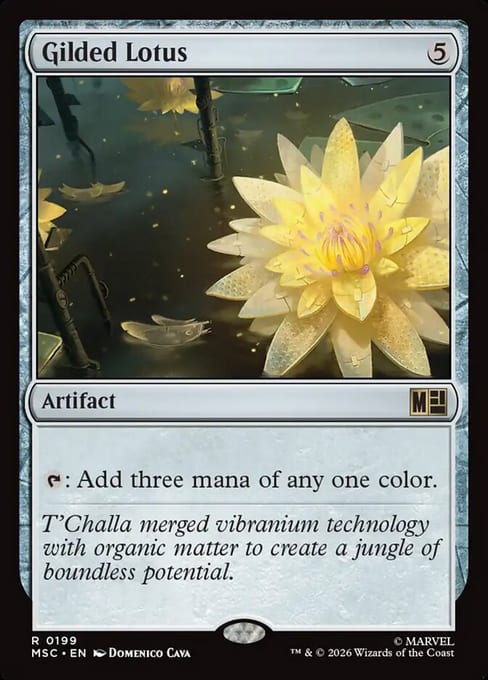
Gilded Lotus: three mana of one chosen color after a five-mana investment. 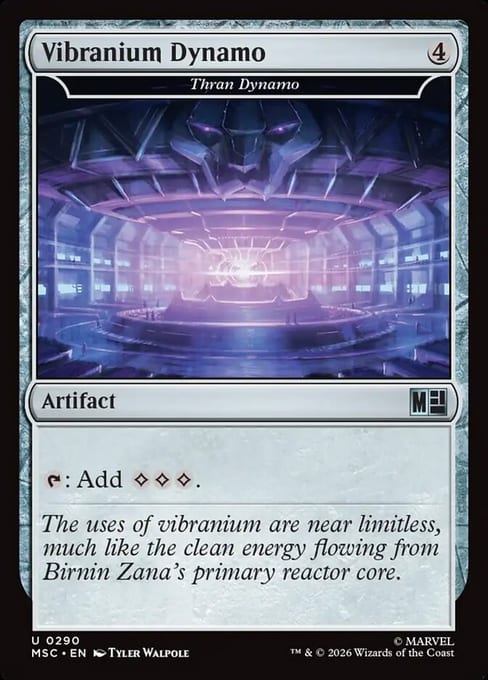
Thran Dynamo: three colorless mana after a four-mana investment. 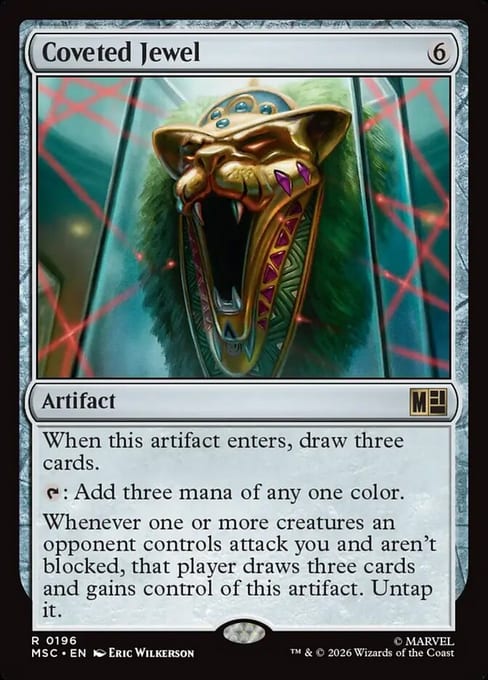
Coveted Jewel: three mana of one color, but an unblocked opponent can take it.
Three additional cards put lands onto the battlefield. Track them as land-adding effects, not as lands in the opening 38 and not as mana before their conditions are paid.
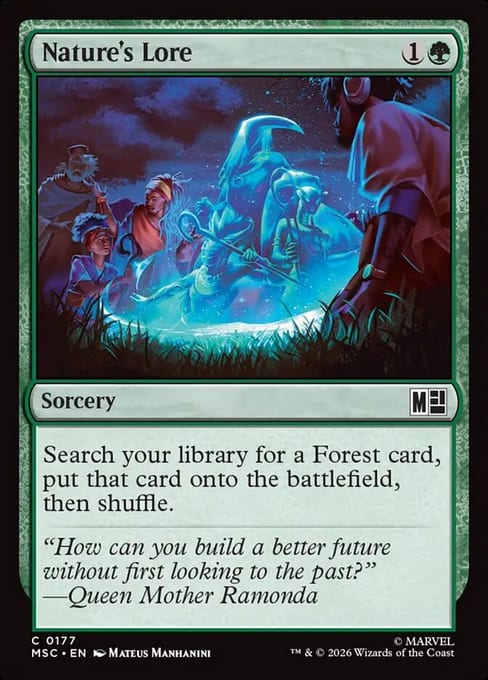
Nature's Lore finds a Forest card and does not impose a tapped entry itself. 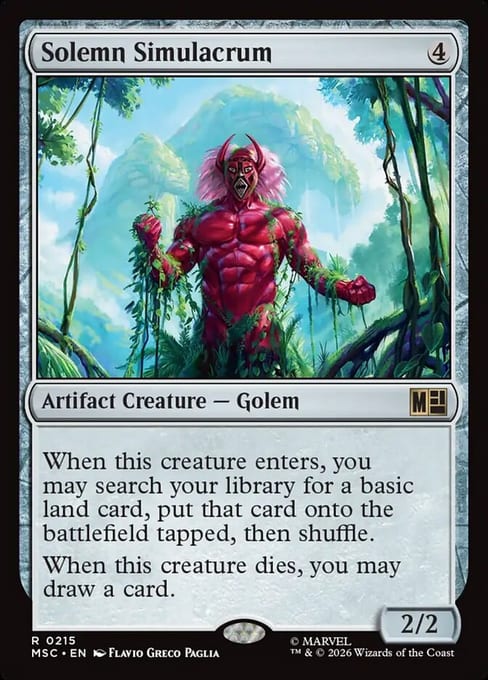
Solemn Simulacrum finds a basic land tapped when it enters. 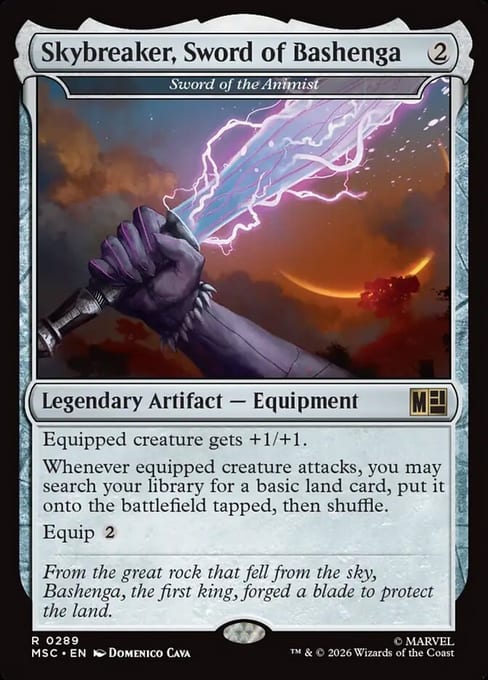
Sword of the Animist finds a basic tapped only after the equipped creature attacks.
For comparison, Farseek can find a Plains, Island, Swamp, or Mountain card but puts it onto the battlefield tapped. Cultivate puts one basic onto the battlefield tapped and another into hand. Neither belongs to this stock inventory; their text is useful only when considering a future exchange.
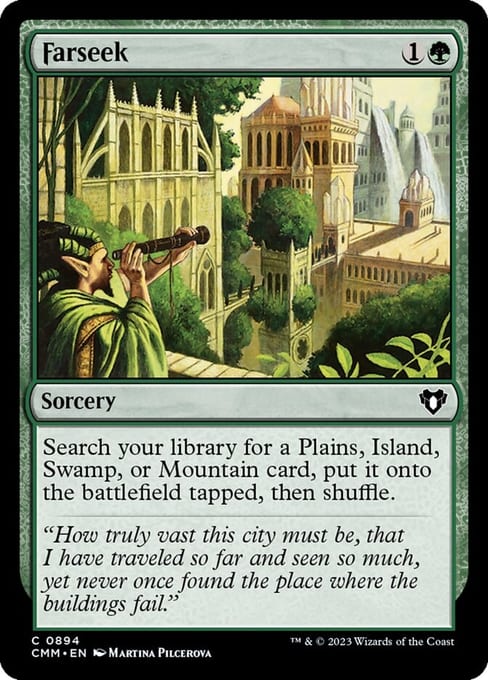
Farseek broadens searchable land types but always puts its target in tapped. 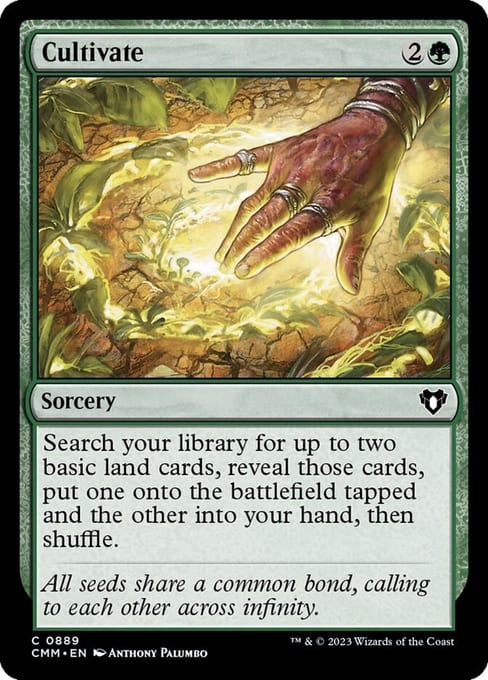
Cultivate develops one tapped basic now and a later land drop in hand.
Finally, five cards can make restricted Vibranium. T’Challa and The Great Mound are already shown. The other makers are below.
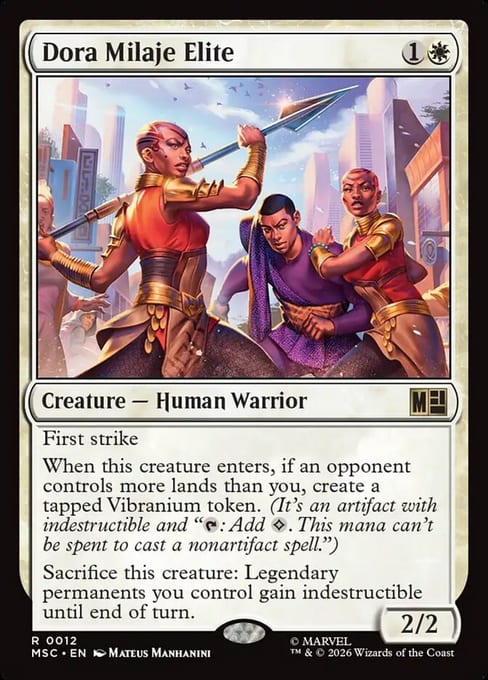
Dora Milaje Elite needs an opponent to control more lands. 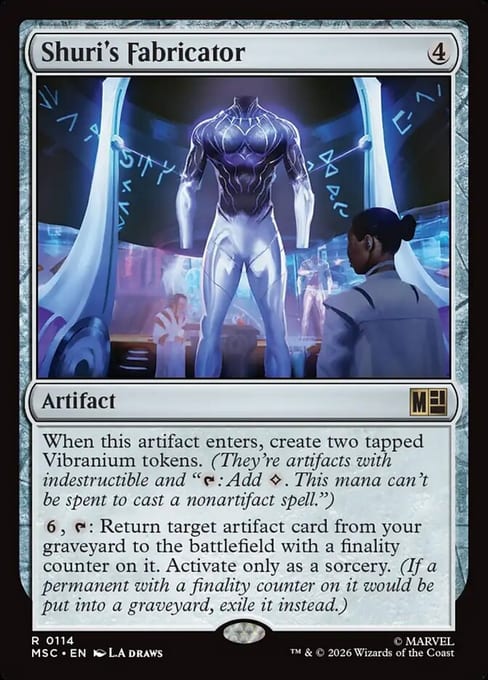
Shuri's Fabricator creates two tapped Vibranium after a four-mana cast. 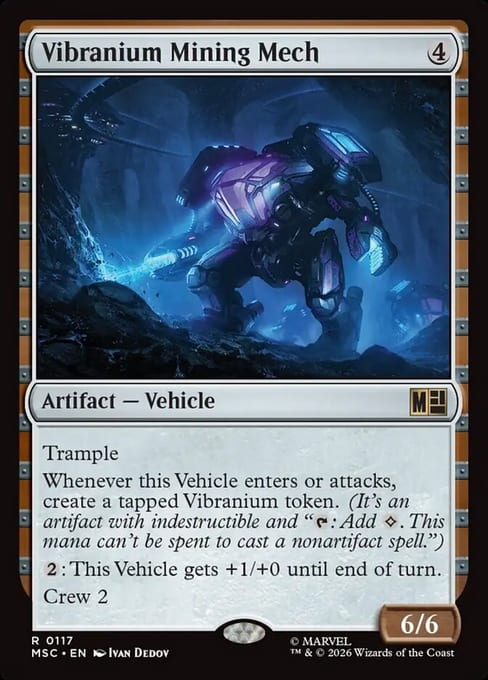
Vibranium Mining Mech creates one tapped Vibranium on entry and later attacks.
Do not add those five cards to 44 as if each guaranteed a normal source. One is the commander, one is already a land, and all require a spell, activation, condition, or attack before a token exists. The resulting mana cannot be spent to cast a nonartifact spell, but it can pay non-spell costs such as equip costs and activated abilities.
Cost reducers need a fourth note outside the source totals. A reducer may make some artifacts cheaper, but it cannot pay an activated ability or an unrelated spell. Mana value remains tied to the printed mana cost even when the amount paid changes.
Ledger 3: count green and white by timing
The stock land base is symmetrical. For each commander color it has:
- 20 independent land slots: 12 matching basics, the unconditional dual, five conditional duals, and two always-tapped duals;
- 1 filtered path: the filter land, which needs another mana source;
- 2 delayed paths: the basic-fetch lands;
- 23 eventual land-slot paths to that color in total.
Four nonland producers can eventually make either green or white; two more make only colorless. Those nonlands do not share a land’s deadline. The one-mana creature cannot tap the turn it enters, the two-mana rock needs two prior mana, and the five- and six-mana artifacts cannot solve the commander’s turn-three colors.
Let P be the actual library size after every commander moves to the command zone: 99 with one commander or 98 with a legal pair. For a single-color question, if S qualifying sources among those P library cards all share the same deadline and N cards will be seen, the chance of at least one is:
1 - choose(P - S, N) / choose(P, N)
For T’Challa, P is 99. Using first-nine-card access only as a comparison, 20 independent green sources produce an 88.1% chance of seeing at least one; 22 produce 90.7%. This does not calculate the chance to cast T’Challa. Casting it needs three deployable mana sources with both colors, and the tapped, conditional, and filtered sources cannot be treated as interchangeable successes.
A double-pip spell has the same warning. An at-least-two hypergeometric calculation works only when any two counted sources can both be deployed and used by the deadline. When sources have different entry timing or compete for land drops, use a sequencing-aware calculation instead.
A concrete three-land revision
The audit identifies early color access as more important than a third colorless utility ability or two delayed basic fetches. Make exactly these changes:
| Remove | Add | Direct result |
|---|---|---|
| Evolving Wilds | One additional stock basic type | Delayed basic becomes an untapped single-color source |
| Terramorphic Expanse | One additional stock basic type of the other color | The second delayed basic becomes an untapped source for the other color |
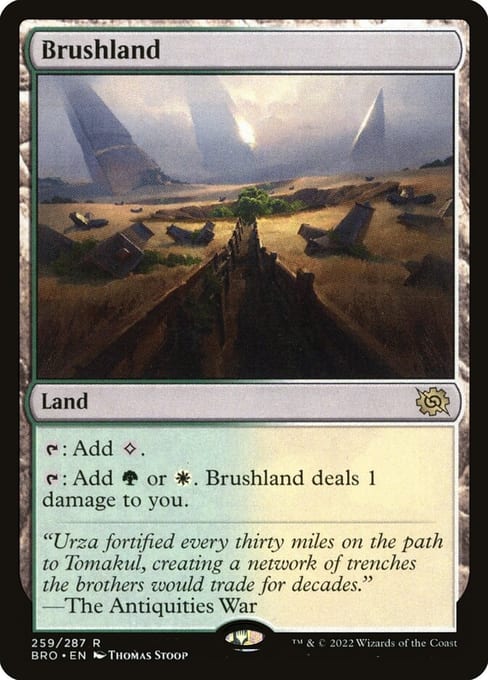
| Throne of the High City | Brushland, BRO 259 ($1.66) (opens in a new tab) | Colorless-only utility becomes immediate green or white access, with 1 damage dealt to you when colored mana is used |
The two added basics are one of each type already present, so the list remains balanced. This revision deliberately gives up a monarch activation and two shuffle effects; it does not pretend those cards had no text.
| Ledger measure | Stock | Revised | Change |
|---|---|---|---|
| Lands | 38 | 38 | 0 |
| Basics | 24 | 26 | +2 |
| Guaranteed slow or delayed land paths | 4 | 2 | -2 |
| Colorless-only utility lands | 3 | 2 | -1 |
| Independent green land paths | 20 | 22 | +2 |
| Independent white land paths | 20 | 22 | +2 |
| Filtered paths per color | 1 | 1 | 0 |
| Eventual land-slot paths per color | 23 | 23 | 0 |
| Nonland permanent source cards | 6 | 6 | 0 |
The result is concrete: the quantity of eventual access stays the same, but two paths stop arriving through a tapped basic and one utility slot becomes a two-color source. The 38-land count and every nonland card remain unchanged.
Check typed targets and utility costs
The stock list has 14 lands with the Forest type: 12 basics plus two typed green-white lands. Nature’s Lore can find any of those. It puts the chosen Forest directly onto the battlefield, but the chosen land’s own text still controls whether it enters tapped. That distinction prevents the common mistake of treating every search target as an untapped source.
Utility should be judged against what it replaces. The revised base keeps the on-plan Vibranium land and the graveyard-answer land, then removes the colorless monarch land. A different table may value monarch more than graveyard exile and make a different cut. The three ledgers show the cost of that choice without dictating it.
Mana-base worksheet
Commander cost and color identity:

LAND LEDGER
Total lands:
Basics:
Unconditional colored lands:
Conditional colored lands:
Always-tapped colored lands:
Delayed fetch-style lands:
Filter lands:
Colorless utility lands:

TOTAL-SOURCE LEDGER
Land slots:
Nonland permanent producers:
Cards that put lands onto battlefield:
Temporary or conditional sources:
Restricted sources and allowed payments:
Cost reducers, tracked separately:

COLORED-SOURCE LEDGER
Independent W / U / B / R / G paths:
Filtered paths by color:
Delayed paths by color:
Earliest required turn for each color:
Double-pip or multicolor sequencing test:

PROPOSED CHANGES
Remove:
Add:
Land count before / after:
Slow paths before / after:
Colorless slots before / after:
Observed failure this change addresses:
The Wakanda Forever result is a 38-land, 26-basic base with two colorless utility lands, two guaranteed tapped duals, and 23 eventual land-slot paths to each commander color. It is not universally correct for green-white. It is the output of this deck’s three ledgers and its turn-three green-white requirement.
If the question is whether 38 should become 37, use the probability comparison in How Many Lands Should a Commander Deck Have?. If the base belongs to the stock deck, the complete spell pass appears in How to Upgrade a Commander Precon.