
Curated recommendations
How Many Lands Should a Commander Deck Have?
Choose a Commander land count with real opening-hand math, mana-value bands, ramp timing, and a worked 38-land Wakanda Forever example.
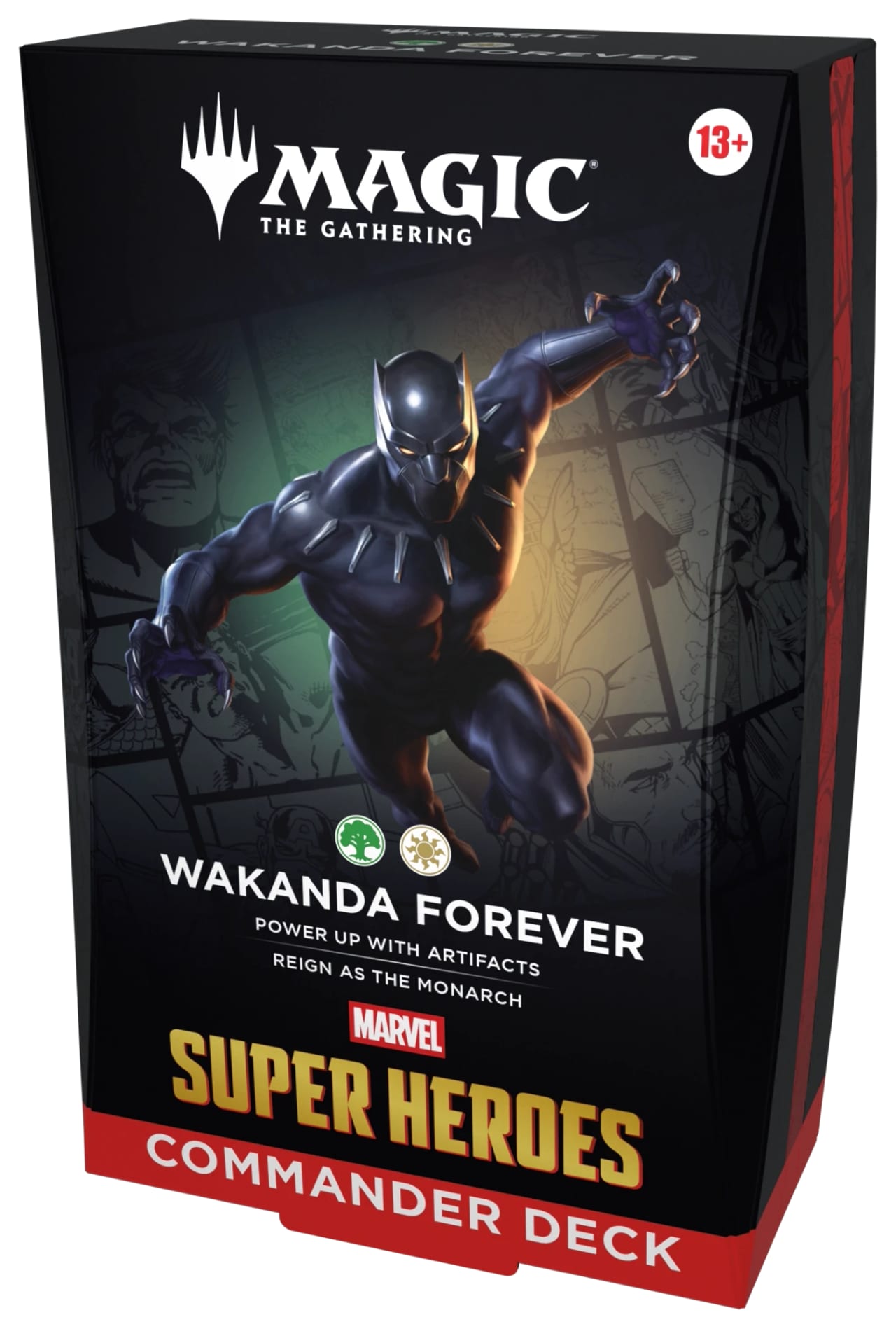
If you need one number, start with 37 lands. Keep that count for a typical deck with a three-to-five-mana commander, a curve centered in the middle, and roughly ten ramp cards. Test fewer only when the deck is genuinely cheap and has reliable early mana or selection. Test more when the deck wants repeated land drops or missing one is worse than drawing one late.
The number is a starting point, not a rule. To show how the decision works on a real list, this guide runs the arithmetic on Wakanda Forever, Wizards’ green-white Magic: The Gathering | Marvel Super Heroes Commander deck. Its official decklist (opens in a new tab) contains 38 lands, and its nonland curve gives a concrete reason not to cut one on sight.
Start with the commander and the exact inventory
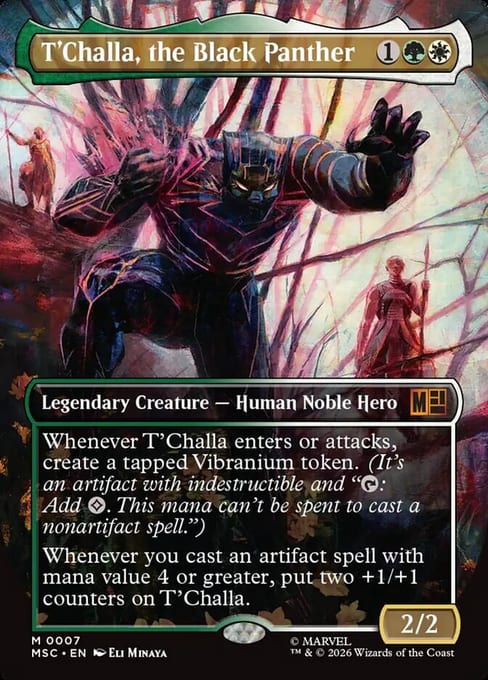
T’Challa, the Black Panther costs . When it enters or attacks, it creates a tapped Vibranium token whose colorless mana cannot be spent to cast a nonartifact spell. It can still pay non-spell costs such as equip costs and activated abilities. Its second ability rewards artifact spells with mana value 4 or greater. Those facts matter in opposite directions: the commander arrives early, but the stock deck deliberately carries a substantial middle and top end to spend its restricted mana.
Expanding the official quantities produces this exact stock inventory:
| Inventory measure | Cards |
|---|---|
| Commander | 1 |
| Lands | 38 |
| Basic lands | 24 |
| Nonbasic lands | 14 |
| Nonlands, including commander | 62 |
| Nonlands with mana value 1-3 | 26 |
| Nonlands with mana value 4-5 | 29 |
| Nonlands with mana value 6+ | 7 |
| Total | 100 |
The curve is not low. Nearly half of the nonlands sit at mana value 4 or 5, and seven more cost at least 6. A three-mana commander alone might suggest testing 36 or 37 lands; this actual 29-card middle band argues for continuing to make land drops after casting it.
What the land-count arithmetic says
With the commander in the command zone, the library begins with 99 cards. If it contains L lands, the probability of drawing exactly k lands in the first N cards is:
choose(L, k) × choose(99 - L, N - k) / choose(99, N)
Here, choose(a, b) counts the ways to select b cards from a. The comparison below assumes no mulligan, selection, or ramp. “First 9” means the opening seven plus two ordinary draw steps, “first 10” adds three, and “first 11” adds four.
| Lands | Opening 2-4 | Opening 0-1 | Opening 5+ | At least 3 in first 9 | At least 4 in first 10 | At least 5 in first 11 |
|---|---|---|---|---|---|---|
| 36 | 74.0% | 20.1% | 5.8% | 70.4% | 52.7% | 36.2% |
| 37 | 74.8% | 18.6% | 6.6% | 72.7% | 55.5% | 39.1% |
| 38 | 75.5% | 17.1% | 7.4% | 74.8% | 58.3% | 42.0% |
| 39 | 76.0% | 15.7% | 8.3% | 76.8% | 61.0% | 45.0% |
| 40 | 76.4% | 14.4% | 9.2% | 78.8% | 63.6% | 47.9% |
Moving from 38 to 36 lands lowers the chance of seeing at least four by the first ten cards from 58.3% to 52.7%, a 5.6-point loss. It also raises the chance of opening with zero or one land from 17.1% to 20.1%. In return, the chance of opening with five or more lands falls only from 7.4% to 5.8%.
At the stock 38, the opening-seven distribution is equally useful:
| Lands in opening seven | Probability |
|---|---|
| 0 | 2.9% |
| 1 | 14.2% |
| 2 | 28.1% |
| 3 | 29.6% |
| 4 | 17.8% |
| 5 | 6.2% |
| 6 | 1.1% |
| 7 | 0.1% |
A mulligan policy changes the hands a player keeps, but it does not turn nonlands into lands. These numbers are a neutral baseline for comparing counts, not a promise that every kept hand reaches a particular turn.
Count ramp by when it works
A land and a mana source do different work. Lands normally enter without first spending mana. Rocks, mana creatures, and land-search effects need an earlier resource or an attack. Count all of them, but keep actual lands in their own column.
The stock Wakanda list has nine conventional nonland cards that either produce mana repeatedly or put lands onto the battlefield. The four that can begin contributing by turn two under ordinary sequencing are shown first.
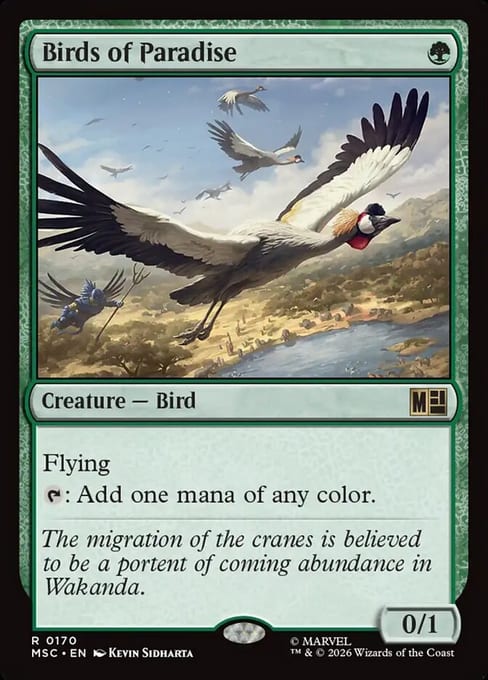
Birds of Paradise: a one-mana creature source for any color. 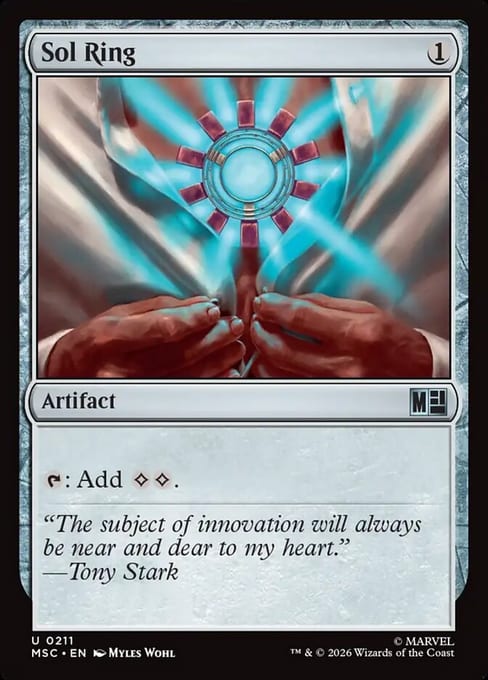
Sol Ring: one mana to cast, then two colorless mana. 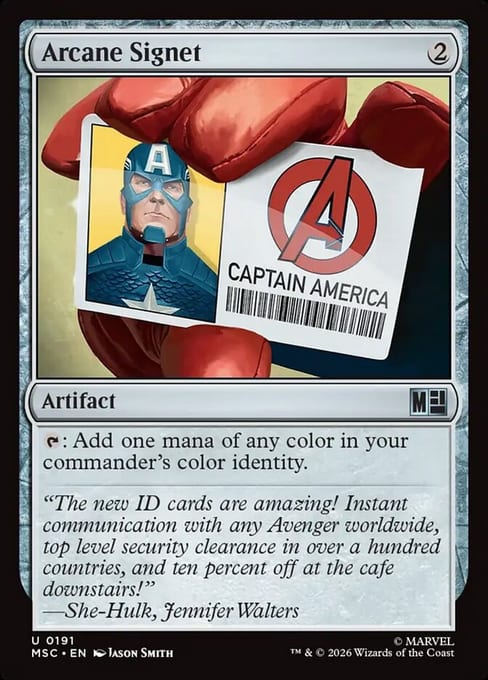
Arcane Signet: two-mana fixing within T'Challa's green-white identity. 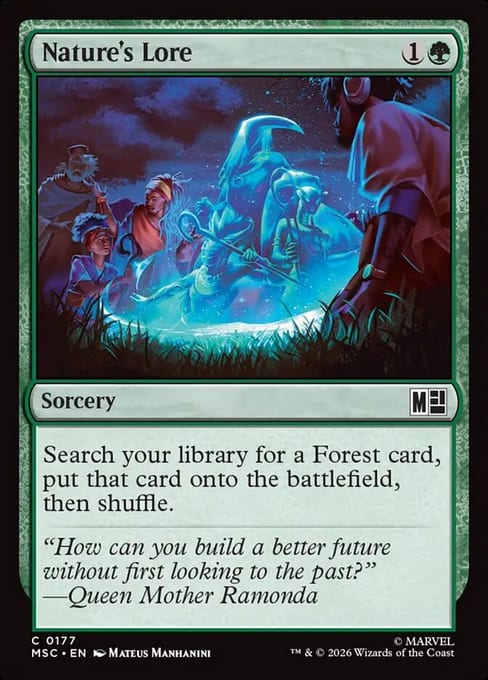
Nature's Lore: two mana to put a Forest card onto the battlefield.
The later permanent producers are real acceleration, but they cannot repair an opening hand that misses its third land. One can also change controller after an unblocked attack, so its three-mana output is not unconditional ownership.
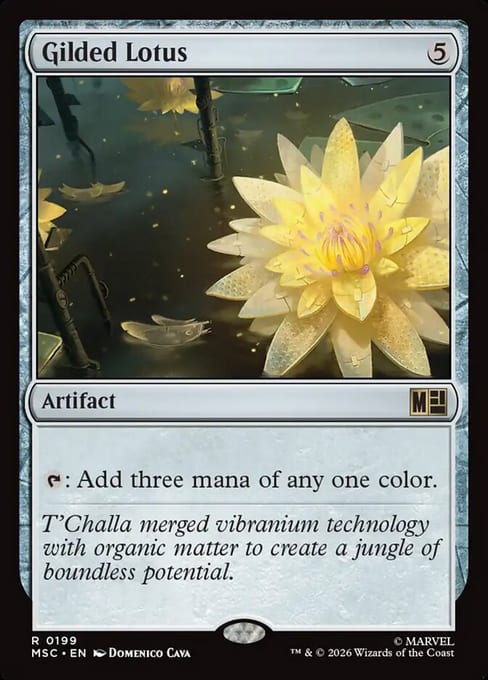
Gilded Lotus: a five-mana artifact that taps for three mana of one color. 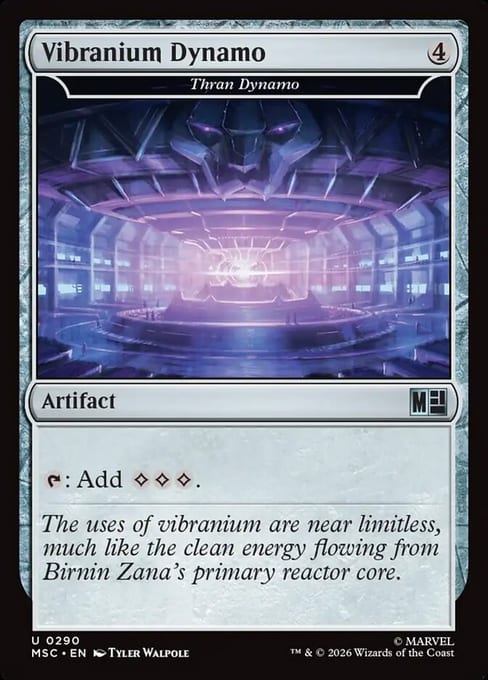
Thran Dynamo: four mana to cast and three colorless mana afterward. 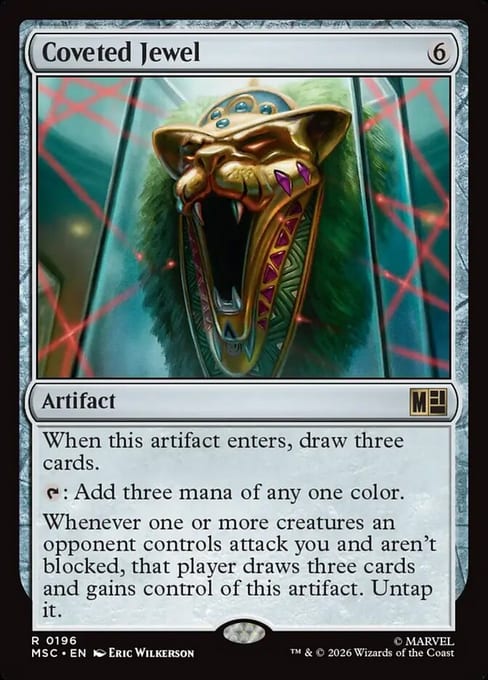
Coveted Jewel: six mana, three cards, and three mana, with a control-changing risk. 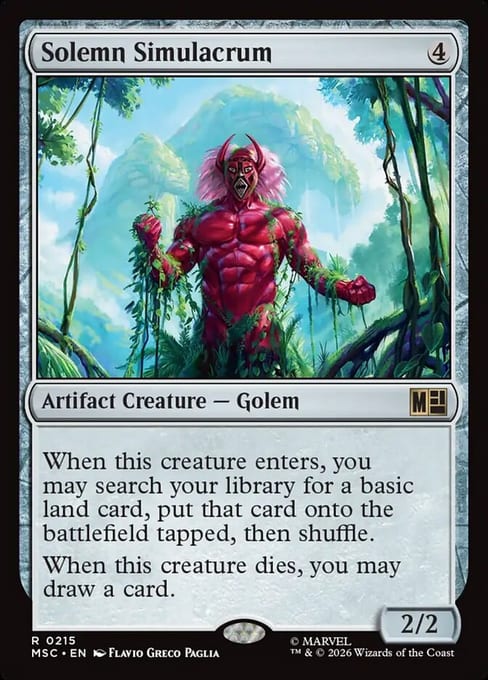
Solemn Simulacrum: puts a basic land onto the battlefield tapped when it enters.
The ninth conventional ramp card needs an equipped creature to attack. That is useful repeatable land development, but it is not a second-turn guarantee.
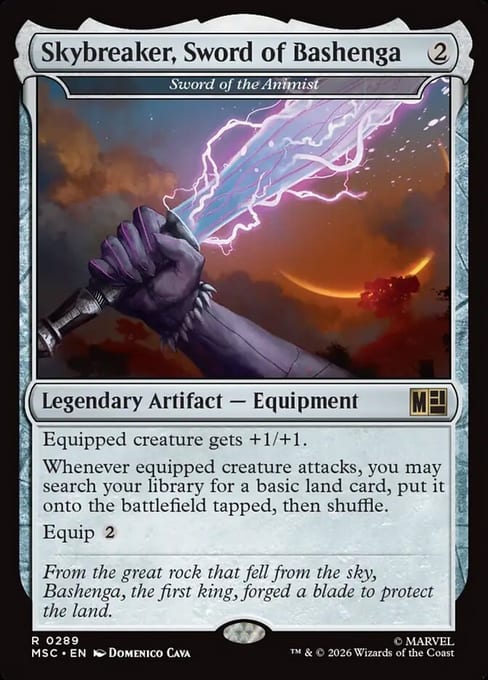
This timing inventory is why “nine ramp cards” is not enough reason to subtract two lands. Only four can affect mana by turn two, and two of those still need the correct land or lands to cast them.
Track restricted and conditional mana separately
Five stock cards can create Vibranium. Those tokens are durable artifact sources, but their colorless mana cannot be spent to cast a nonartifact spell. That means they cannot pay any part of casting T’Challa again or fix a missing color. They can still pay non-spell costs such as equip costs and activated abilities.
T’Challa is already shown above. The other four makers have different timing requirements:
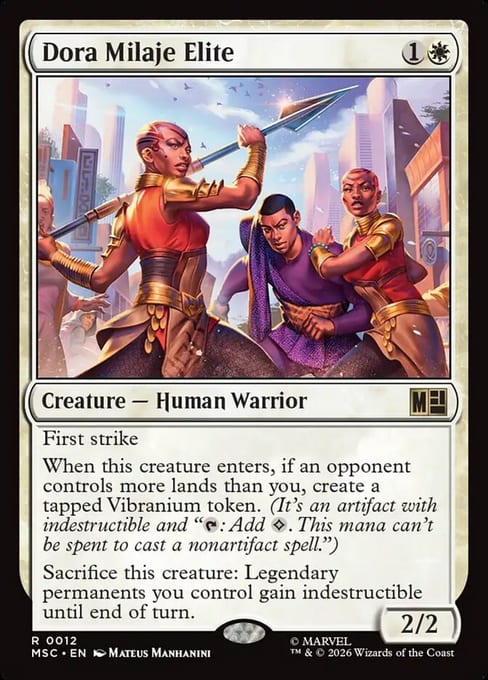
Dora Milaje Elite makes one tapped Vibranium only when an opponent controls more lands. 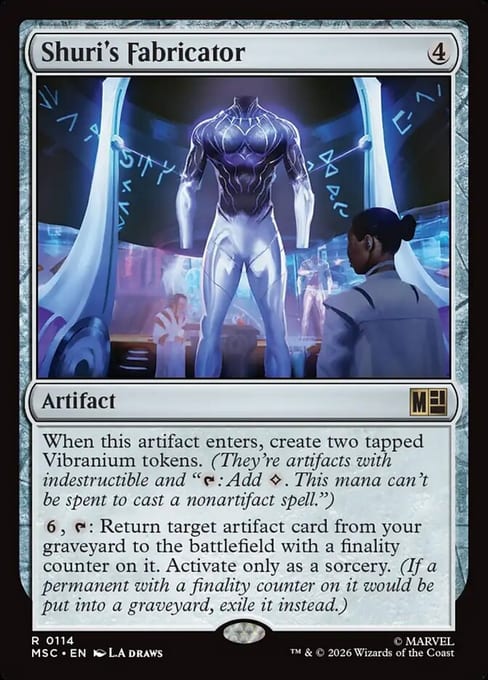
Shuri's Fabricator costs four and creates two tapped Vibranium tokens. 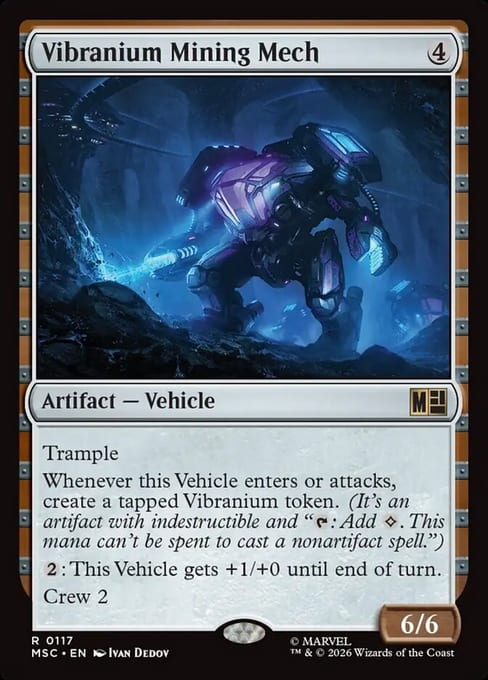
Vibranium Mining Mech costs four and creates a tapped token when it enters or attacks. 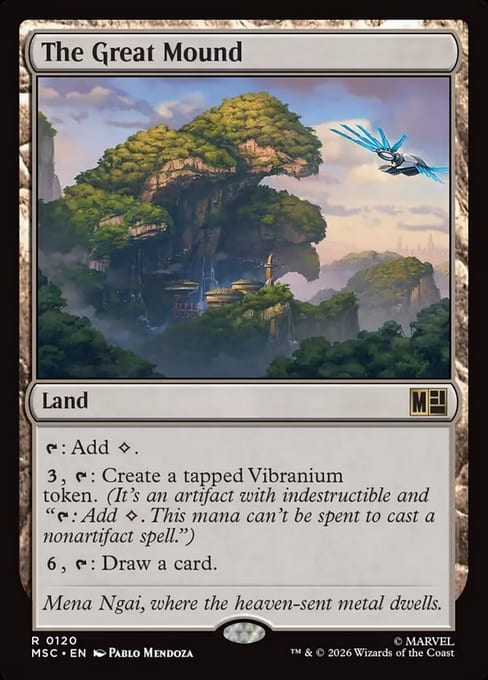
The Great Mound is already a land; its activated ability can later create tapped Vibranium.
The Great Mound belongs in the 38-land count before its token ability is considered. The other four are nonlands. Counting all five tokens as if they were ordinary green-white sources would overstate what the opening turns can do.
Cost reducers require another column. A reducer can make a class of spells cheaper, but it does not cast an unrelated spell, pay an activated ability, or produce a colored pip. Mana value also remains tied to the printed cost even when a reduction changes the amount paid.
Let the curve and commander move the starting number
Use 37 as a baseline, then move it for the list in front of you:
| Deck profile | First land range | Evidence needed for the low end |
|---|---|---|
| Low curve, cheap commander | 33-35 | At least 10 reliable early nonland mana sources, cheap card flow, and very few six-mana spells |
| Typical midrange | 36-38 | Curve concentrated from two to five with roughly 8-12 ramp cards |
| High curve or commander-centric | 38-41 | Expensive plays, repeated commander casts, or punishing missed land drops |
| Land-based engine | 38-42 | Lands remain action because they trigger or power the deck’s plan |
For Wakanda Forever, three facts point to keeping 38 for the first test:
- The 29-card middle band and seven-card late band still need normal land drops.
- Only four conventional ramp cards can begin contributing by turn two.
- Vibranium arrives tapped, depends on its maker, and produces mana that cannot be spent to cast a nonartifact spell, though it can pay non-spell costs.
Testing 37 later is reasonable if recorded games show unused lands and reliable early sources. Cutting directly to 36 is not supported by this inventory or the probability comparison.
Draw and land quality can change the result
Cheap draw or selection can improve the cards seen before the fourth land drop. A late draw engine cannot repair a turn that was already missed. When evaluating a lower count, record when card flow begins rather than counting every draw effect equally.
Land quality matters too. A 38-land deck with many lands that always enter tapped can still miss an early sequence. Review each land for:
- whether it enters untapped when needed;
- whether it produces green, white, or only colorless;
- whether its special ability justifies lost speed or color access;
- whether a land-search effect can actually find it.
A tapped land is not automatically wrong. The cost becomes visible only when several compete for the same early turns. That is a colored-source and sequencing problem, not necessarily evidence that the total should change.
Diagnose the number from games
After a game, replace “flooded” or “mana-screwed” with a resource note:
- Lands in the opening hand: ______
- Land drops made through turn five: ______
- First turn both commander colors were available: ______
- Early ramp drawn and the turn it became active: ______
- Restricted mana left unused: ______
- Highest-cost card stranded in hand: ______
- Extra lands with no useful outlet: ______
If the deck repeatedly misses its third or fourth land, add a land or cheaper selection before another top-end card. If it reaches ten mana with no action, inspect draw and curve before testing one land cut. If it has enough total mana but the wrong colors, fix the source mix instead of changing 38.
Land-count worksheet
Use this before the next revision:
Commander mana value:
Lands:
Nonlands at MV 1-3 / 4-5 / 6+:
Permanent nonland mana sources:
Cards that put lands onto the battlefield:
Temporary or conditional sources:
Restricted sources and what they can cast:
Cost reducers, tracked separately:
Cards that draw or select before turn five:
Colorless utility lands:
Lands that usually enter tapped:
Target land drop and deadline:
Probability at current count:
Probability after proposed change:
Most common observed failure:
Decision and evidence:
For Wakanda Forever, the completed result is 38 lands, not 37 by default and not 36 because the commander makes tokens. The stock count gives a 75.5% chance of opening with two to four lands and a 58.3% chance of seeing at least four lands in the first ten cards before mulligans or card flow. Keep it until games provide evidence for a one-card change.
For the color-source decision inside those 38 slots, continue with Commander Mana Base Guide. For the complete ten-card artifact pass, see How to Upgrade a Commander Precon.