
Set & card guides
Magic: The Gathering | Assassin's Creed: A Beyond Booster and Collector Guide
A collector's guide to Magic: The Gathering | Assassin's Creed, from Beyond Boosters and Starter Kits to Memory Corridor cards, serialized figures, and the release's Modern legality.
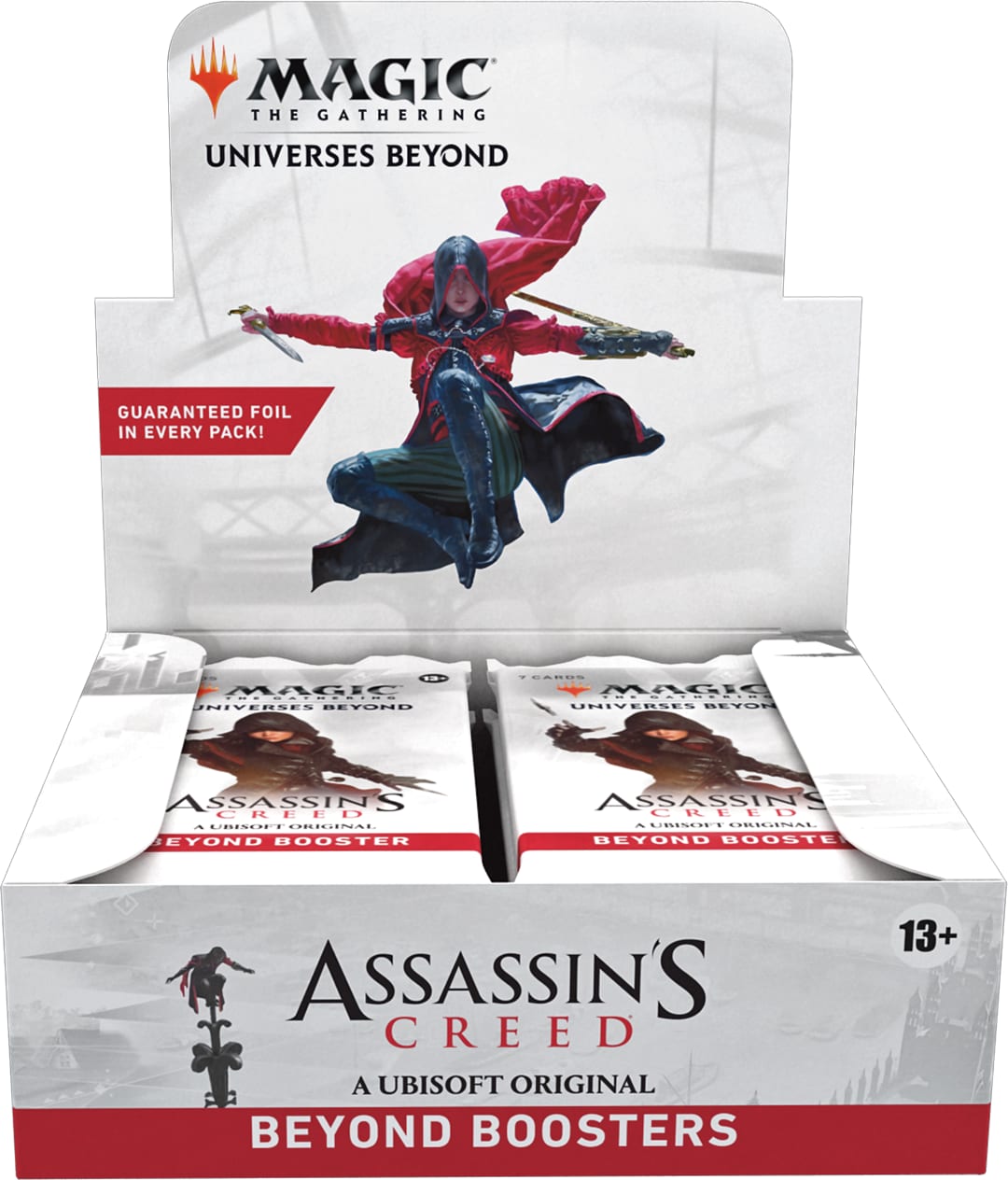
Wizards’ product overview (opens in a new tab) gives Assassin’s Creed a noticeably different shape from a normal Magic expansion. The July 5, 2024 release is a compact, non-draftable set sold through seven-card Beyond Boosters, Collector Boosters, a two-player Starter Kit, and a Bundle. Its cards bring Ezio, Altaïr, Eivor, and the series’ historical settings into Magic without pretending that a small crossover needs the same product ladder as a premier set.
Beyond Boosters carry the ordinary card pool, Collector Boosters concentrate the visual variants, and the Starter Kit is the only ready-to-play product in the line. There are no Assassin’s Creed Commander decks. Under the release’s set-level legality rules (opens in a new tab), new ACR cards are eligible in Modern, Commander, Legacy, and Vintage, but not Standard or Pioneer; reprints retain the format eligibility of the same-named card. Freerunning, Historic, and the Assassin creature type give those cards a mechanical identity as distinct as the Memory Corridor treatment.
The product map
Assassin’s Creed is built around one small booster set, not a draft environment. The official collecting guide (opens in a new tab) separates the main booster pool from Starter Kit exclusives, which is the first distinction to make when comparing sealed products or a card list.
Beyond Boosters are the main set experience
A Beyond Booster contains seven cards: three uncommons, a full-art basic land or Rome Vista scene card, a nonfoil rare or mythic rare, a traditional foil, and a Booster Fun card. A nonfoil token or art card comes along as an extra insert rather than one of the seven. A display holds 24 packs. The curated arrangement gives each pack a visible taste of the set’s art direction, while the smaller pack size makes it a poor substitute for a Draft or Play Booster if your goal is Limited play.
The booster pool contains the set’s core Assassin’s Creed characters, artifacts, and historical figures. Starter Kit-exclusive cards sit outside it, so a collector building a complete checklist needs to track those cards separately rather than assume a Beyond Booster display covers everything.
Collector Boosters are for treatments
Collector Boosters contain ten cards and come in 12-pack displays. They concentrate borderless scene cards, foil-etched legends, textured foil Memory Corridor mythics, and other treatments printed nowhere else. The set’s serialized historical figures are also a Collector Booster chase. This is a variant product, not a second way to assemble the ordinary card pool.
The Memory Corridor treatment is the clearest visual signature. Its pale, spare frame evokes the Animus loading space, which makes it easy to separate from the standard black frame in a binder. The treatment works best as a focused collecting lane: choose the characters or historical figures that matter to you instead of treating every finish as a separate obligation.
The Starter Kit is the play-first option
The Two-Player Starter Kit includes two 60-card decks: Brotherhood Agents, led by Ezio, and Ancient Arsenal, led by Eivor. The decks use blue-black and red-white identities respectively. Two foil mythic rares, six nonfoil rares, tokens, deck boxes, and a play guide complete the box, with 31 cards exclusive to the Starter Kit across its rarity breakdown.
This is the sensible entry point for two people who want to learn Magic with the franchise in view. It also creates a collecting wrinkle: those exclusive cards are not a missing booster pull. Find the Starter Kit itself or source its individual cards when completing a checklist.
Bundle and Secret Lair are separate lanes
The Bundle contains nine Beyond Boosters, a foil alternate-art Royal Assassin, 20 foil full-art lands, 20 nonfoil full-art lands, a spindown, and a storage box. The Bundle is useful when full-art lands are part of your goal, while the Starter Kit is the more direct purchase for playing immediately.
Secret Lair releases belong to their own product history rather than the Beyond Booster pool. Treating them as supplementary Assassin’s Creed cards keeps the main set checklist clean and prevents a later limited drop from being mistaken for an omitted ACR card.
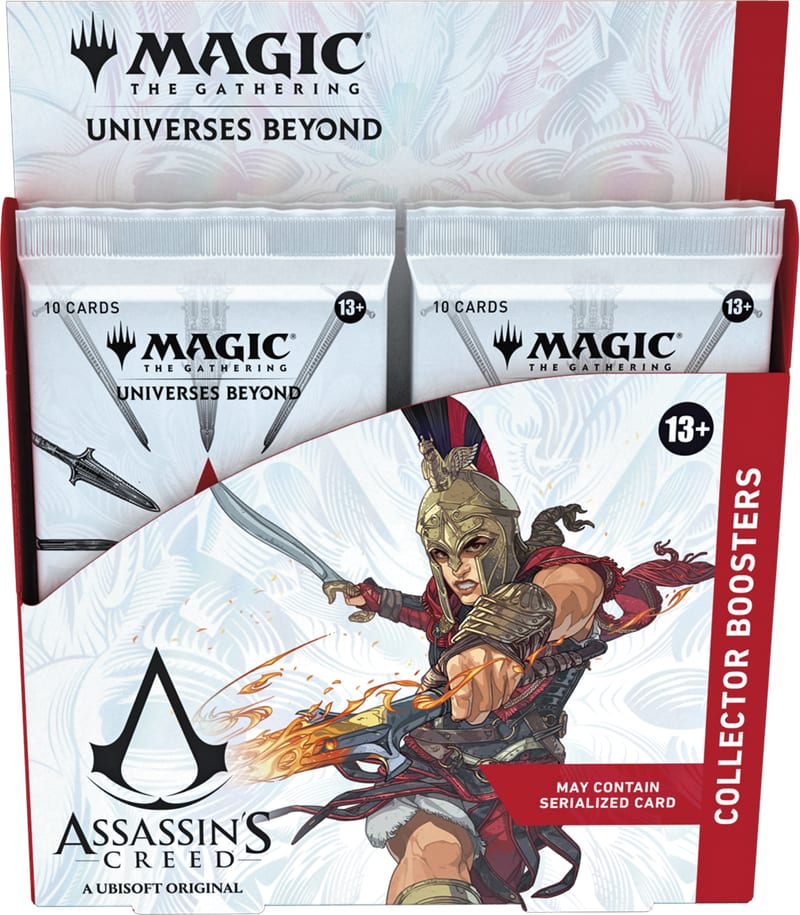
Assassin's Creed Collector Booster DisplayOfficial product image via Wizards of the Coast (opens in a new tab) 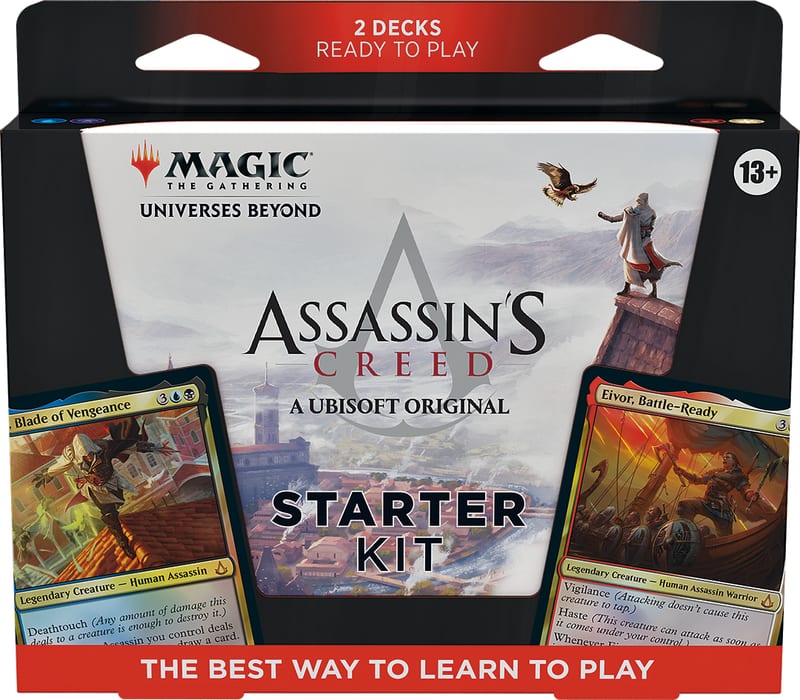
Assassin's Creed Starter KitOfficial product image via Wizards of the Coast (opens in a new tab) 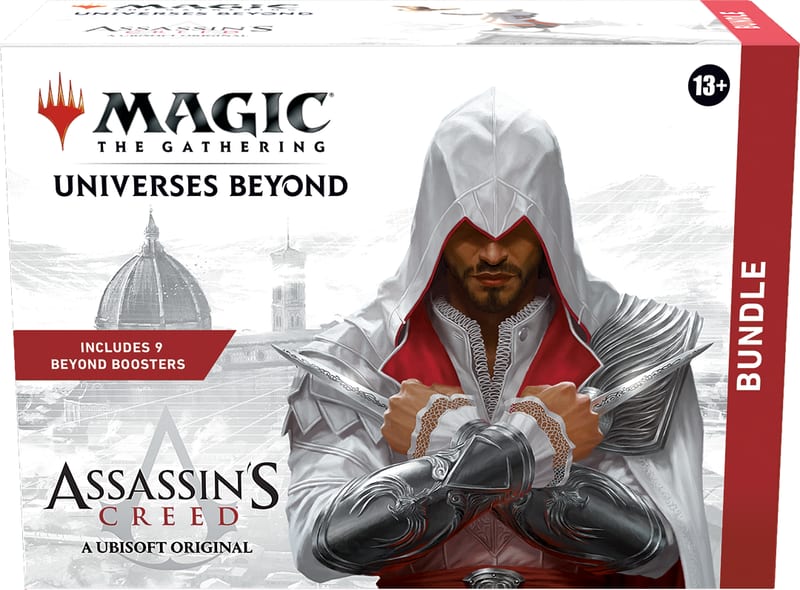
Assassin's Creed BundleOfficial product image via Wizards of the Coast (opens in a new tab)
Format identity and the set code
The entire main release uses the set code ACR. Unlike Commander-first Universes Beyond releases such as Fallout and Doctor Who, ACR’s new cards entered Modern directly. That makes the set relevant to 60-card players as well as Commander builders, but it does not make every sealed product a tournament deck. A Beyond Booster is still a curated pack, and the Starter Kit is still a teaching product.
Check the card name as well as the set code before buying a single. New-to-Magic ACR cards do not enter Standard or Pioneer, while a reprint follows the format eligibility of the same-named card. An ACR Assassin’s Trophy or Fatal Push can therefore remain Pioneer-eligible even though a new ACR design is not; the current banned and restricted list (opens in a new tab) remains the final check. The new cards’ placement in Modern also explains why some of the set’s cheap evasive creatures and combat tricks read as constructed tools rather than only as flavor pieces.
Three ideas that define the cards
The official mechanics coverage (opens in a new tab) and the ACR card file show a set that turns stealth and historical memory into board-game decisions instead of merely printing character names.
Freerunning rewards a successful hit
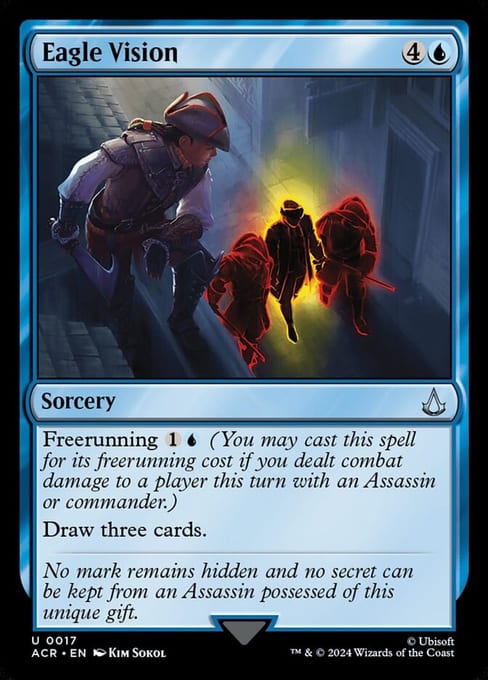
Freerunning is an alternate cost. You can use it after an Assassin or a commander you controlled dealt combat damage to a player that turn. The requirement makes the discount a consequence of getting through, not a discount you can bank before combat.
Eagle Vision shows the appeal. It draws three cards for a large starting cost, but its Freerunning cost is much smaller after an Assassin or commander connects. The decision is not simply “attack, then draw.” You must choose an attacker that can get through, decide if the reduced spell is worth spending your post-combat mana on, and build enough pressure that the next turn still matters.
Historic links artifacts, legends, and Sagas
Historic is a card-type grouping that covers artifacts, legendary cards, and Sagas. The Animus, Hidden Blade, legendary characters, and story-driven Sagas can therefore support one another even when their roles at the table differ. A deck does not need to be made entirely of Assassins to benefit from the set’s historical frame.
That broad category is especially useful for collectors comparing cards by theme. A binder page of legendary figures and artifacts is also a record of the set’s mechanical vocabulary, not just a page of similar character portraits.
Assassins want to connect
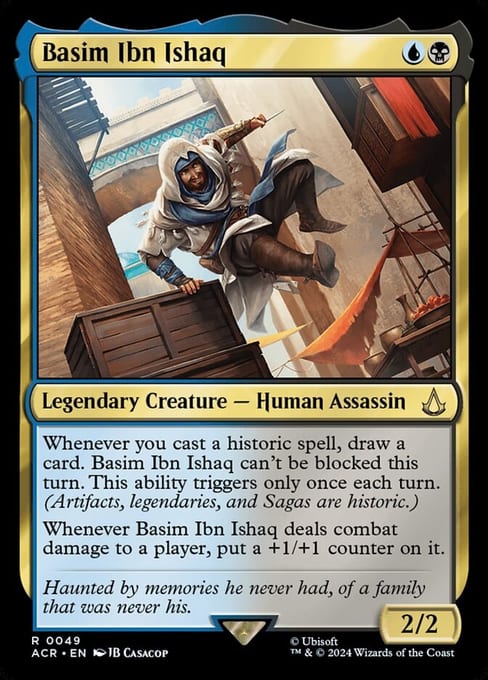
The creature type is the set’s most obvious throughline. Deathtouch, menace, unblockability, and attack triggers all push toward the same question: how will this creature deal combat damage? Basim Ibn Ishaq, for example, turns a first Historic spell into a temporary opening for himself and grows when that opening becomes damage. The effect rewards sequencing a historic permanent or spell before combat rather than casting cards in an arbitrary order.
Cards that explain the release
The set’s best collecting subjects are cards that show how its mechanics work together.
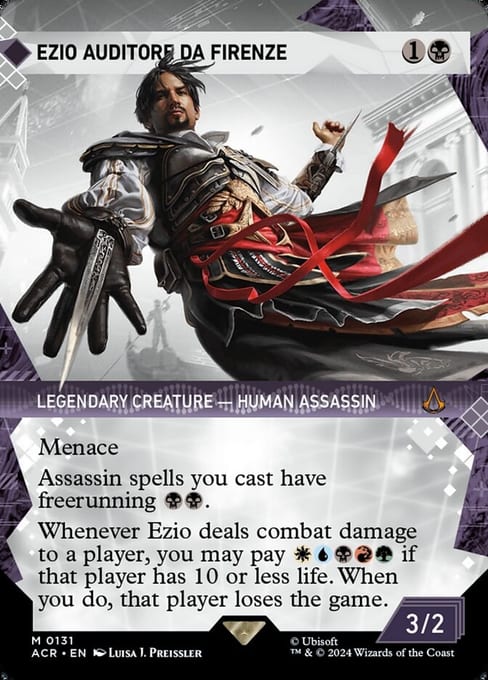
Ezio Auditore da Firenze demonstrates the difference between a flavorful legend and a deck-building commitment. His Assassin discounts and life-total condition point toward a five-color Commander deck, and his five-color identity makes him illegal in an existing two-color Assassin deck. He works only as the commander of, or a card within, a five-color build.
Altaïr Ibn-La’Ahad turns the graveyard into a record of past missions. When he attacks, he can exile up to one target Assassin creature card from your graveyard with a memory counter, then create tapped and attacking copies of the creature cards you own in exile with memory counters. The important collecting distinction is that the card he exiles from the graveyard must be an Assassin creature card, while the creatures copied from exile need not be Assassins. The Animus can create a similar memory-countered exile package, but its copy ability is limited to sorcery speed, so it is a planning tool rather than a combat trick.
Edward Kenway gives a Pirate, Assassin, and Vehicle deck a different route through the catalog. At the beginning of your end step he counts your tapped Assassins, Pirates, and Vehicles and hands you that many Treasures while every one of those permanents stays on the battlefield, then lets a Vehicle that connects borrow a card from an opponent’s library. The card shows how Assassin’s Creed expands beyond the hooded protagonist: ships, artifacts, and historical settings can share a deck when their attack patterns line up.
Kassandra, Eagle Bearer is a clean example of a character card that carries its own equipment story. She finds The Spear of Leonidas when she enters, then rewards legendary Equipment attached to creatures that connect. A Kassandra page in a collection is therefore also a record of the set’s legendary-artifact theme, not just another legendary creature.
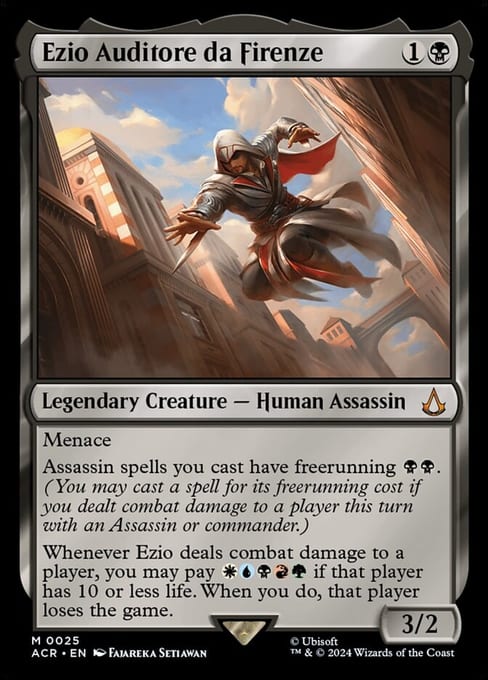
His five-color identity makes him legal only in a five-color build. 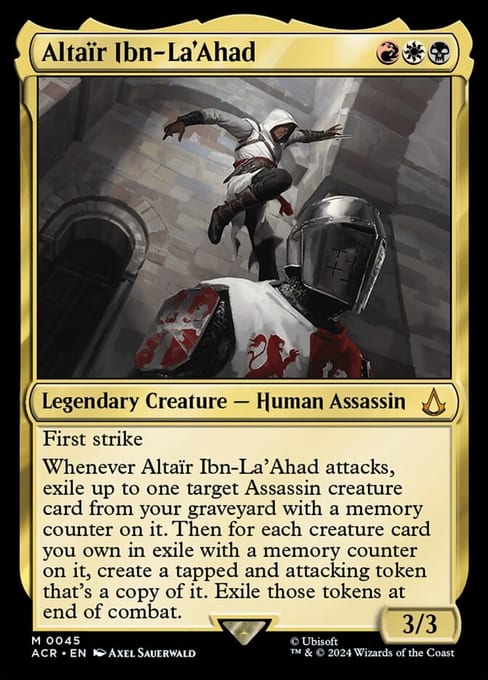
The graveyard target must be an Assassin creature card; the copies from exile need not be Assassins. 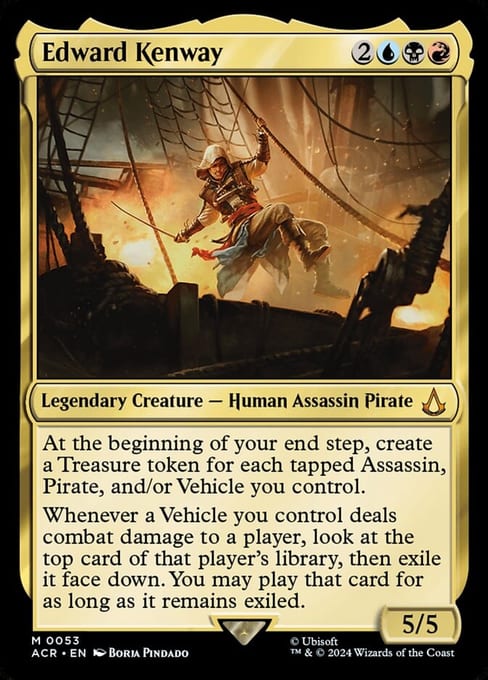
Tapped Pirates, Assassins, and Vehicles are counted for Treasures and stay put; a connecting Vehicle borrows a card. 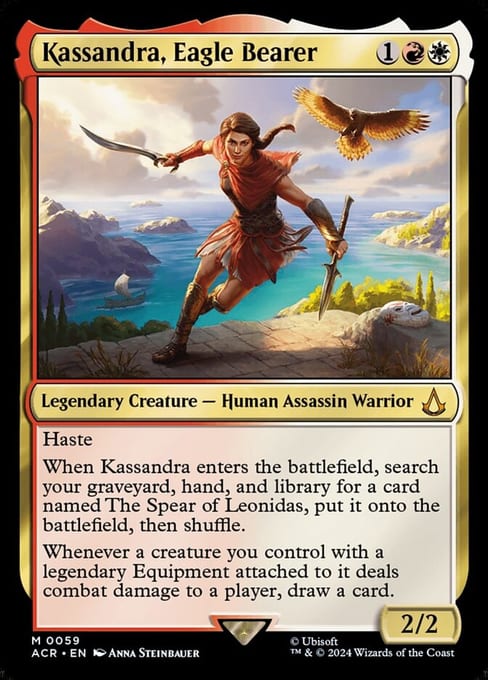
Finds The Spear of Leonidas, then rewards legendary Equipment that connects.
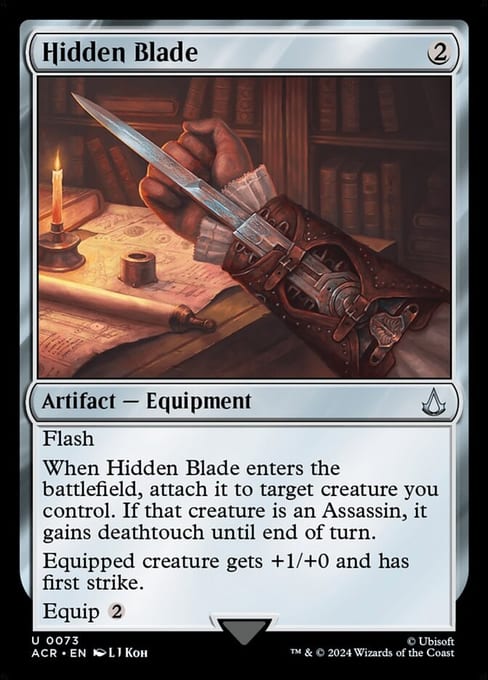
For an equipment-focused list, Hidden Blade (opens in a new tab) supplies the visual and mechanical shorthand. Flash lets it arrive at instant speed, but attachment happens through a triggered ability that targets a creature you control after the Blade enters. Removing that creature in response leaves the Blade unattached. Once the trigger resolves, an Assassin target gains deathtouch for the turn and the equipped creature gets the Blade’s power and first-strike boost. The card captures the set’s fast Equipment play without making that setup unanswerable.
A practical collecting route
Start by naming the part of Assassin’s Creed you actually want to preserve.
- For the regular card pool, use individual cards or Beyond Boosters. Track Starter Kit exclusives on a separate checklist.
- For two-person play, choose the Starter Kit. It is the only product in the main line that supplies two complete decks instead of a random card assortment.
- For Memory Corridor cards, open Beyond Boosters or buy the singles: the treatment fills the Booster Fun slot in non-foil and traditional foil. Save Collector Boosters for the finishes printed only there, such as textured foil Memory Corridor mythics and foil-etched cards.
- For historical figures, decide whether the standard-language cards, the art treatment, or the serialized versions are the point of the collection. The native-language serialized cards are found in Collector Boosters and are numbered out of 500.
- For a Commander deck, verify color identity and card role before choosing a legend. Ezio, Altaïr, Edward, Basim, and Kassandra point to different shells even though they share the same franchise.
When buying opened product, compare the contents with the relevant checklist, especially the Starter Kit’s exclusive cards and the Bundle’s land package. For individual cards, the pale Memory Corridor frame makes surface wear and edge dirt easier to see. Our Magic Card Condition Guide covers the inspection habits that matter for any finish, and How to Read an MTG Marketplace Listing helps separate a clear listing from one that leaves the printing or condition ambiguous.