
Collecting & grading
How to Package and Ship Magic Cards: Sleeves, Toploaders, Mailers, and Carrier Rules
A practical guide to packing single cards and bulk orders safely, navigating USPS carrier rules, weatherproofing, and retaining shipping evidence.
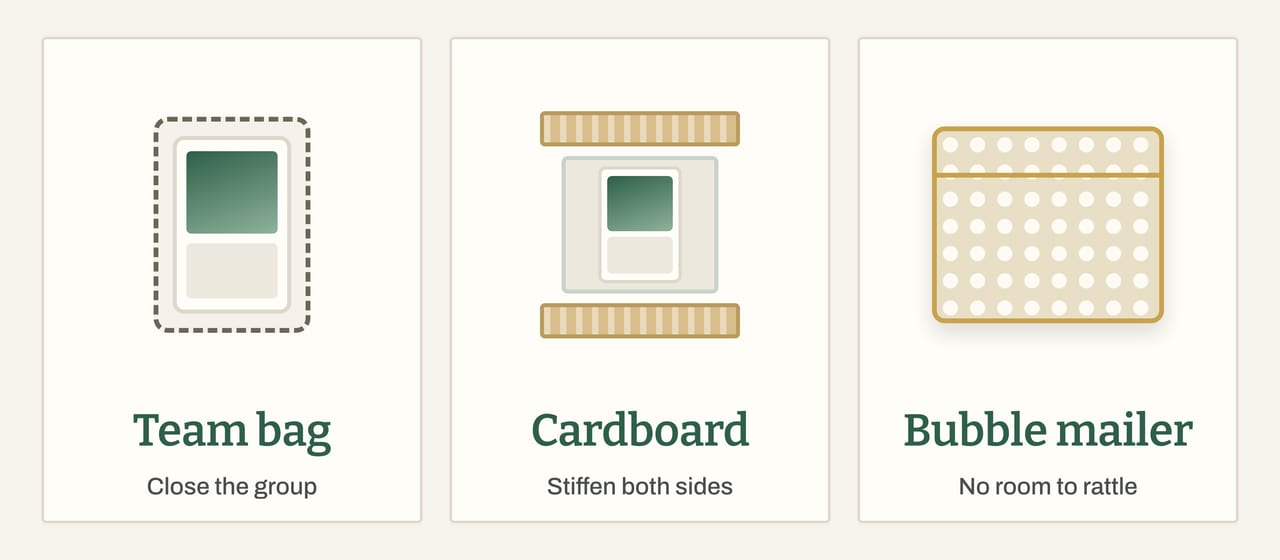
Pack the card for the service you are actually buying. A single card in an envelope needs a thin, flexible inner assembly and a compliant outer envelope. A tracked parcel needs a sealed inner bundle, a stiffener, and enough padding to stop movement. A premium card needs crush protection and a service whose rules match the package. Using the same team bag and toploader setup for every order is how sellers create postage problems, rejected labels, and avoidable damage.
The sequence is simple: protect the surface, stop the card from sliding, add stiffness where the service allows it, and check the finished mailpiece against the carrier or marketplace rules. No packing method guarantees safe arrival, reimbursement, or an approved insurance claim. Good packing reduces physical risk and leaves you with the records a claim or marketplace case may require.
Set up the packing station
Keep clean supplies together before you pull an order. You need penny sleeves, rigid toploaders or semi-rigid holders, team bags, painter’s tape, corrugated cardboard, bubble mailers, sturdy boxes, and clean packing paper or bubble wrap. A digital scale and a ruler catch postage mistakes before the package reaches the counter.
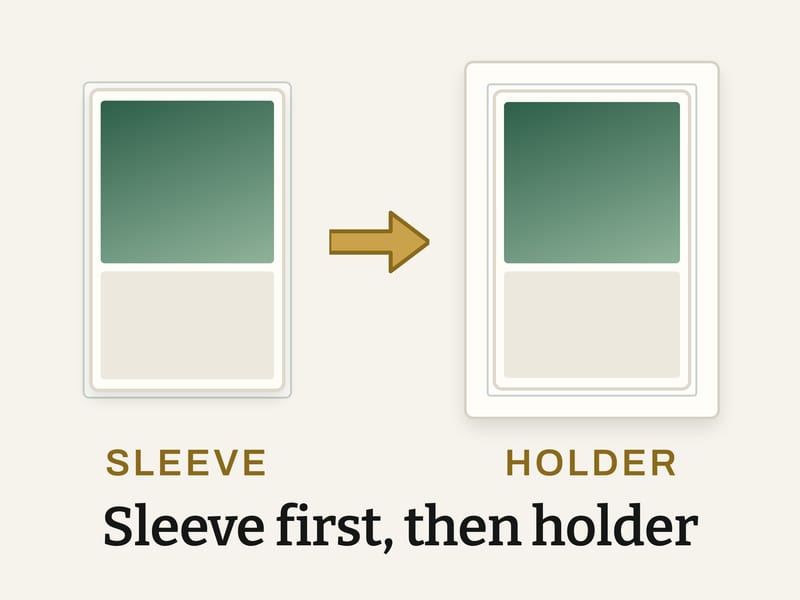
Penny sleeve, then rigid holder
Surface protection first, rigidity second. The sleeve opening goes toward the closed end of the holder so the card cannot slide out on the way.
A penny sleeve keeps surface dirt and friction away from the card. A toploader or semi-rigid holder resists bending, but it also creates a hard, uneven object that may not qualify as a letter. A team bag keeps a holder and its cards together inside a shipment. It can provide inner protection in a paper envelope or a parcel, but it still adds thickness and cannot make a rigid or uneven mailpiece eligible for a letter service.
Avoid rubber bands, paperclips, binder clips, staples, and loose filler. They can leave pressure marks or indents. Never put adhesive where it can touch a card when the recipient removes it. Painter’s tape should hold folded paper or the outside of a cardboard sandwich, not the card itself. Do not use dirty, damp, scented, or previously crushed material around cards.
Choose the workflow before you seal anything
Thin paper mail for ordinary singles
Use this workflow only when the finished piece meets the rules of the service you purchased. It works for an ordinary plain-white-envelope shipment when the holder is protected from the envelope edge, but the exact postage depends on thickness, rigidity, and weight.
- Put the card in a penny sleeve. Add one permitted holder, with the sleeve opening at the bottom or protected by a pull tab.
- Place the holder in a team bag if you want an inner moisture barrier, then tape the bag to the center of a folded sheet of clean paper so it cannot slide into a corner. You can tape an unbagged holder to the paper instead.
- For eBay Standard Envelope, confirm that the origin and destination are both within the United States under eBay’s domestic-only terms checked September 3, 2026 (opens in a new tab). Then use a paper outer envelope that is not made of or enclosed in plastic, while an inner team bag may protect the holder, under eBay packing and rate requirements checked September 3, 2026 (opens in a new tab). The complete mailpiece still has to meet the service’s flexibility, thickness, and uniformity rules.
- Check the completed envelope. It should have no loose lumps, no exposed adhesive, and no hard edge pressing against the paper. Weigh it and confirm the postage matches the finished piece.
The outer-envelope distinction matters. eBay’s current Standard Envelope plastic restriction applies to the envelope itself, not to a team bag used as inner protection. Do not put the paper envelope inside a poly mailer or use a plastic outer envelope.
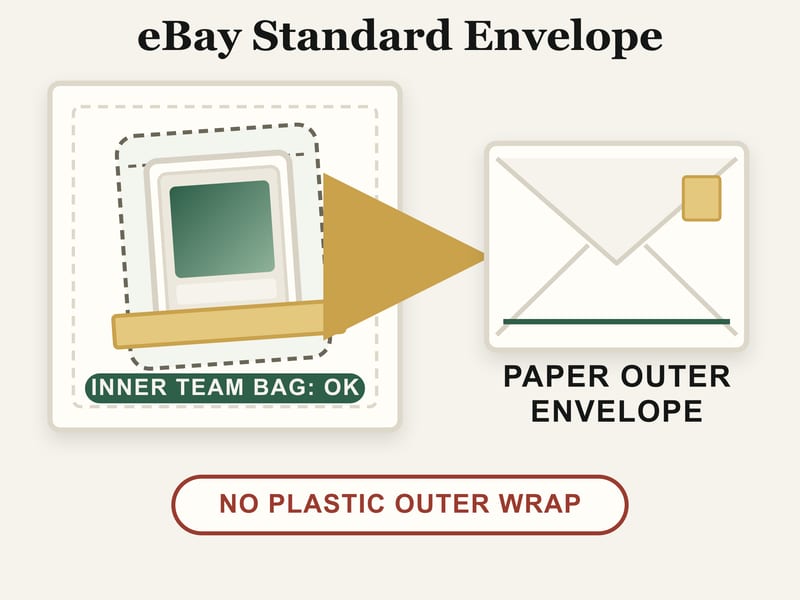
Letter and Standard Envelope packing
An inner team bag can protect the holder, but eBay Standard Envelope requires a paper outer envelope that is not made of or enclosed in plastic. Tape the inner assembly to folded paper, keep adhesive away from the card, and confirm the sealed envelope is flexible and uniform in thickness.
Worked example: one Elspeth in an eBay Standard Envelope
Use the pictured nonfoil Elspeth, Knight-Errant from Shards of Alara for a one-card eBay order from a seller in Oregon to a buyer in California, with a scenario selling price of $12.00 before tax. That U.S. route and order price fit the domestic boundary and sit below eBay Standard Envelope’s $20 per-item selling-price maximum, checked September 3, 2026 (opens in a new tab). Separately, Scryfall’s exact record for the printing (opens in a new tab) showed a nonfoil USD reference price of $9.28 on September 3, 2026; that reference provides valuation context, not service eligibility.
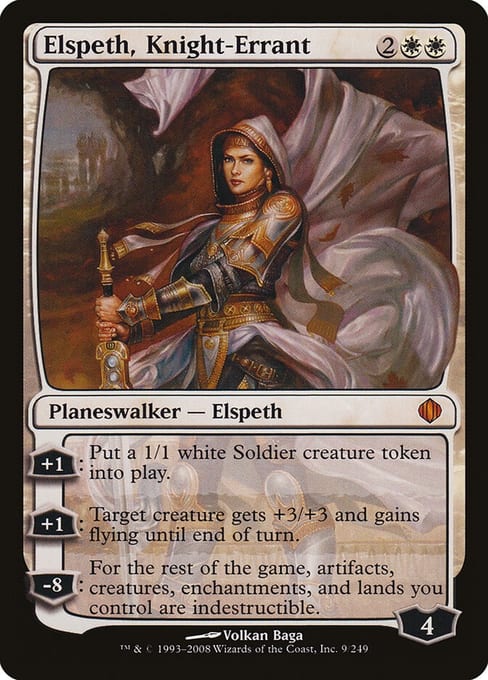
The Shards of Alara nonfoil printing used for the worked envelope order.
The seller puts the card in a penny sleeve, then a single toploader and team bag, and secures that assembly to folded paper inside a paper envelope. After sealing, the example mailpiece weighs 0.7 ounces and measures 0.14 inches at its thickest point. It remains uniform and flexible. Those measurements fit the 1-ounce rate tier and stay below the service limits of 3 ounces and 0.25 inches.
The seller buys the $0.82 eBay Standard Envelope label. The final postage cost is $0.82, with packing supplies outside that total. The seller retains the eBay order, label, integrated tracking, and packing photographs; this service does not issue the acceptance scan expected from a counter transaction. If the same sealed assembly measured 0.25 inches thick or became rigid, it would fail the less-than-0.25-inch and flexibility rules and move to a parcel service.
Tracked singles and playsets in a bubble mailer
A tracked parcel gives you room for a stronger package. Sleeve each card, place cards in holders without forcing them together, and close the group in a team bag. Sandwich that bundle between two pieces of corrugated cardboard cut slightly larger than the holders. Tape around the cardboard perimeter, keeping adhesive away from the cards and leaving a tab for easy opening if possible.
Put the sandwich in a bubble mailer. Fold or pad excess space so the bundle cannot rattle from end to end. Do not pack filler so tightly that it bows the cardboard. Seal the mailer across every opening, weigh it, and apply the label flat. A playset does not need four separate layers of cardboard if the cards are already held together and cannot move, but it does need enough room to remove them without bending the stack.
Premium singles in a box
For a vintage card, a serialized card, or another high-value order, build protection in layers. Double-sleeve the card, place it in a clean rigid holder, and close it in a team bag. Put the bag between sturdy cardboard, wrap that assembly in bubble wrap, and place it in a box that leaves no room for the inner package to shift. Fill voids with crumpled clean paper or foam, then test the box by gently shaking it before sealing the seams.
Buy the service after you know the packed size and value. If a marketplace requires tracking or signature confirmation, choose a service that supplies it and follow the service-specific evidence plan. Insurance is a separate protection decision, not proof that the card will be reimbursed if something goes wrong.
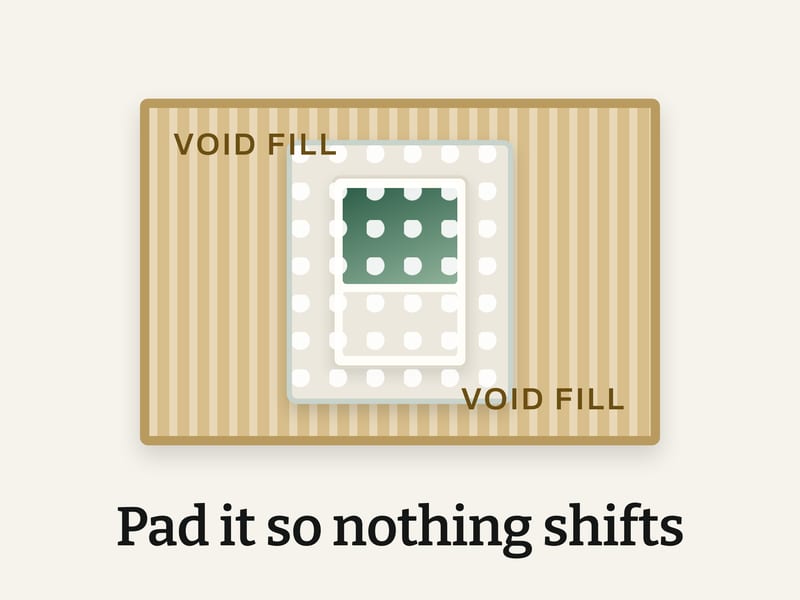
Premium boxed shipment
Cardboard for stiffness, bubble wrap around that, then clean paper or foam filling every void. Shake the sealed box before you buy tracking, signature confirmation, or Registered Mail.
Check the carrier and marketplace rules
Good packing is not the same thing as compliance. Carrier definitions decide whether a mailpiece can travel as a letter, while marketplace programs add their own limits.
USPS letters and nonmachinable mail
Before using letter postage, read the current USPS letter-size and nonmachinable standards checked August 29, 2026 (opens in a new tab). A standard machinable letter can be no larger than 11.5 inches by 6.125 inches, no thicker than 0.25 inches, and no heavier than 3.5 ounces. It also needs uniform thickness and enough flexibility for automated equipment. A rigid holder or a raised object can require nonmachinable postage. A piece that exceeds the letter limits leaves letter pricing and must be checked against the size, flexibility, uniformity, and weight standards for a large envelope or package.
Do not treat a toploader as an automatic letter solution. Measure the sealed mailpiece, feel for uneven thickness, and check whether it bends as the selected service requires. Postage due or a returned envelope is the consequence of guessing.
eBay Standard Envelope
eBay Standard Envelope allows a selling price up to $20 per item, excluding tax. The service provides basic tracking through USPS Intelligent Mail barcodes. Its shipping protection is up to $20 for a single-item order and up to $50 for a combined order. The $50 figure is a combined-order protection cap, not a $50 eligibility ceiling: a compliant shipment may contain several eligible items, subject to the program’s other limits.
The service limit is up to 3 ounces and less than 0.25 inches thick at every point, with uniform thickness. Its current card guidance allows up to 24 raw cards or up to two cards in toploaders per envelope. Keep the outer envelope paper: it must not be made of or enclosed in plastic. An inner team bag can protect the holder, but secure the inner assembly to folded paper and make sure the finished envelope remains flexible and uniform. If the package is too rigid or thick, use a tracked parcel service instead of trying to force it through the letter program.
USPS Ground Advantage and high-value services
For tracked bubble mailers and small boxes, USPS Ground Advantage service details checked August 29, 2026 (opens in a new tab) describe tracking and included carrier insurance. The service covers packages up to 70 pounds and includes up to $100 of insurance for qualifying lost or damaged parcels. USPS’s current insurance and claims page checked August 29, 2026 (opens in a new tab) explains how additional coverage and claims work. Do not promise a buyer that a stated coverage amount guarantees payment; the claim still depends on the service, evidence, and USPS’s decision.
Marketplace rules can add a signature requirement. TCGplayer’s current missing-order guidance checked August 29, 2026 (opens in a new tab) requires tracking on orders over $49.99 and recommends it over $20; tracking and signature confirmation are mandatory for orders of $250 or more. Its missing-order protection conditions depend on the seller and shipping path. For a U.S. seller’s tracked order to the United States or Canada, an order over $49.99 must use USPS, UPS, or FedEx, and tracking must progress beyond Acceptance or Label Created. A separate temporary Safeguard program for untracked orders of $49.99 or less, checked September 3, 2026 (opens in a new tab) covers qualifying orders placed on or after August 17, 2026, for sellers based in the United States or its territories with at least 1,000 lifetime orders. The seller must refund the buyer, then request coverage by escalating the order’s message thread or submitting a Customer Service ticket. For a Canadian seller’s tracked domestic or U.S.-bound order over $49.99 USD, the seller must use a partner listed in the guidance, send the tracking number through the buyer message center when shipping, and provide Customer Service with the tracking number and service when making a claim. Tracking must progress beyond Acceptance, Label Created, or Scanned In.
eBay’s Signature Confirmation Policy checked August 29, 2026 (opens in a new tab) requires signature confirmation for seller protection on orders totaling $750 or more, including item price, shipping, and tax, except orders sent through eBay International Shipping. Check the live policy when buying a label rather than copying yesterday’s threshold into today’s workflow.
For an irreplaceable shipment, USPS Registered Mail is a distinct preparation path, not an upgrade to a bubble-mailer setup. USPS’s Registered Mail requirements checked August 29, 2026 (opens in a new tab) require you to present the prepared package to a USPS retail employee or rural carrier, declare its full value, and retain the issued receipt. Do not drop it in a collection box. The USPS Domestic Mail Manual caps Registered Mail indemnity at $50,000, checked September 3, 2026 (opens in a new tab), so a declared value above that cap leaves the excess uncovered; under-declaring leaves more of the shipment’s value uncovered. Use a paper or cardboard parcel, not a padded, plastic, Tyvek, or glossy-coated mailer. The same manual requires packages to be sealed with mucilage or glue, or with plain paper or cloth tape. Any tape used must visibly damage the envelope or wrapper if removed and absorb postmark ink. Registered Mail receipts monitor the article through the system; they are not a recipient signature at every transfer. Buy a return receipt separately if you need a signature record.
Pack retailer shipments differently
A Card Kingdom buylist box is not an individual marketplace order. Start with the retailer’s current How to Sell packing instructions checked August 29, 2026 (opens in a new tab). Arrange the cards in the exact order shown on the printed invoice. Remove sleeves, toploaders, and binder pages from ordinary submissions so the receiving team can count and grade them efficiently. Card Kingdom permits high-end cards to stay protected between two sleeves, so do not remove that allowed protection from premium cards.
Put ordinary cards snugly into a sturdy 100-count or 400-count card box, plastic deck box, or bundle box. Fill empty space with clean packing paper, bubble wrap, or foam so cards cannot slide, but do not compress the box until cards bow. Place the inner containers in a sturdy outer carton with cushioning around them, and put the packing slip with your name and order number inside. Ship with the service and coverage that fit the order, then keep the receipt.
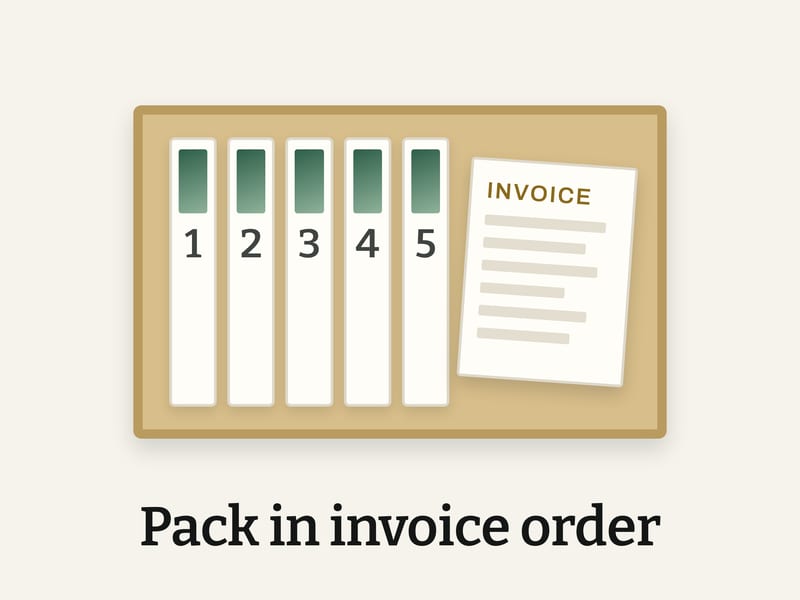
Buylist inner card box
Cards go in the exact order printed on the invoice, unsleeved for ordinary submissions, with the packing slip inside the carton. Card Kingdom permits high-end cards to stay between two sleeves.
TCGplayer Direct is a different operation. Its current Direct shipping guidance checked August 29, 2026 (opens in a new tab) applies to established Direct sellers replenishing inventory at the Authentication Center, not to a consumer sending a collection to a buylist. If you are an eligible Direct seller, follow that program’s packing-slip order, protective-material, tracking, and high-value-card instructions exactly.
Reduce moisture risk without trapping damage
Water resistance is useful at the mailbox and on a wet doorstep, but it is not a promise against weather damage. For a parcel shipment, close sleeved cards and holders in a team bag before adding the cardboard sandwich. For a boxed shipment, use a sealed inner bag or plastic container inside the box, then use a weather-resistant outer mailer or carton. Keep foil cards flat and away from direct contact with wet cardboard.
For eBay Standard Envelope, a team bag may serve as an inner moisture barrier, but the outer envelope must remain paper and cannot be enclosed in plastic. If the order needs firm cushioning or enough protection to make the mailpiece rigid or uneven, it belongs in a parcel service whose packaging rules allow those layers.
Keep evidence that matches the problem
Before sealing, photograph the card’s front, back, and corners and then photograph the packed assembly. Save the marketplace order and buyer messages too. Those transaction records and seller-created photos document the sale, condition, and packing sequence; they do not prove carrier acceptance or delivery.
Carrier evidence depends on the service. An ordinary First-Class Mail letter without a purchased extra service supplies no proof of mailing, USPS Tracking, or acceptance scan under USPS guidance checked August 29, 2026 (opens in a new tab). In a dispute, the seller has the marketplace transaction record but no carrier evidence. For eBay Standard Envelope, retain the eBay label and integrated order tracking; eBay’s current Standard Envelope guidance checked August 29, 2026 (opens in a new tab) says the service does not require an acceptance scan. For a tracked service, save the label record and tracking history. If that service issues an acceptance scan or receipt, keep it too. Retain the applicable records until the marketplace and carrier windows have passed.
If a buyer reports damage, ask for clear photographs of the card, the inner packing, and the outer mailer. Ask the buyer to retain every piece of packaging. For an insured USPS claim, Domestic Claims guidance checked August 29, 2026 requires proof of insurance and proof of value (opens in a new tab). The seller must retain and submit both, plus applicable damage evidence, or USPS can refuse the claim. The recipient must also retain the mailing container, packaging, and contents and make them available for a Post Office inspection if requested.
A delivered scan helps with a non-receipt case, but it does not prove the card was packed correctly. Keep the communication factual: compare the order, the tracking record, the photos, and the applicable policy. Do not promise a refund, insurance payment, or particular marketplace outcome before the relevant process has reviewed the evidence.
Shipping-day checklist
- Confirm the address from the marketplace order, not from an unverified message.
- Match the packing sequence to the selected service.
- Keep adhesive off the card and away from the holder opening.
- Measure and weigh the finished mailpiece.
- Check letter, eBay Standard Envelope, or parcel limits before buying postage.
- Add tracking, insurance, or signature confirmation when the order and current policy call for it.
- Put the invoice or packing slip inside retailer shipments.
- Apply the label flat without creasing or covering the barcode.
- Follow the service-specific evidence plan; keep the transaction records, seller-created photos, and available carrier evidence it identifies until the case windows close.
For condition decisions before you list, use the Magic Card Condition Guide. For the collection-level choice between a buylist, local sale, marketplace, and bulk lot, continue to How to Sell a Magic Card Collection.