
Set & card guides
Magic: The Gathering | Warhammer 40,000: A Commander and Collector Guide
A collector's guide to Magic: The Gathering | Warhammer 40,000, covering the four faction Commander decks, Collector's Edition Surge Foils, Squad, and product choices.
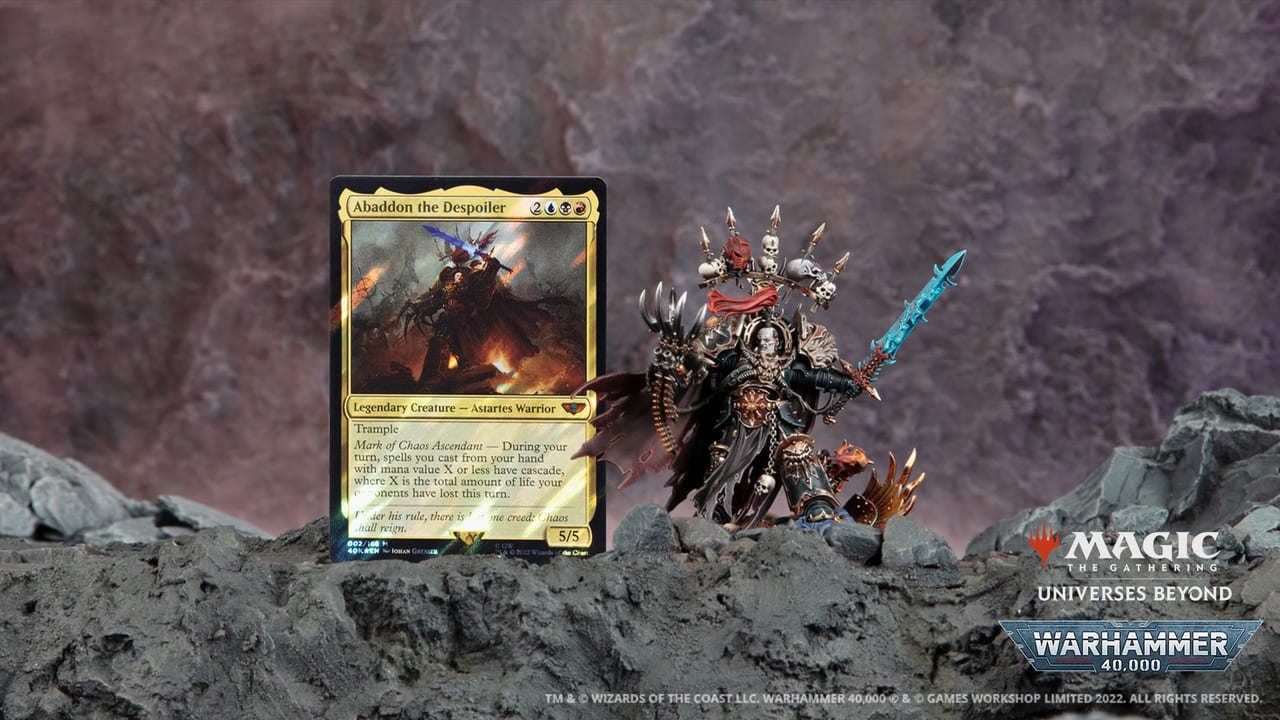
Magic: The Gathering | Warhammer 40,000 is a decks-only crossover. Wizards of the Coast and Games Workshop released it on October 7, 2022 through four preconstructed Commander decks, with each deck also available as a Collector’s Edition full of Surge Foils. There are no Warhammer 40,000 booster packs to draft or open, which makes the product choice unusually clear.
The official product page (opens in a new tab) shows the two core versions: standard decks for playing and Collector’s Edition decks for an all-foil presentation. Secret Lair drops add related settings and cards, but they are not a fifth faction deck. Faction and finish are independent decisions: Chaos cascades, Necrons recur artifacts, the Imperium builds tokens, and Tyranids scale through counters and X spells.
Four decks instead of a booster set
A standard deck contains 100 cards, including two traditional foil legendary commanders and 98 nonfoil cards, a foil-etched display commander, ten double-sided tokens, a deck box, and a life tracker. The lists combine new designs with reprints carrying Warhammer art and flavor. Each box is playable without opening another product.
The Ruinous Powers
The Ruinous Powers is Grixis and gives the four Chaos gods a single deck. Abaddon the Despoiler leads an aggressive cascade plan that wants damage to have happened before the large spells arrive. The deck turns a successful attack into a chance to play more Magic, so early creatures and later haymakers belong to the same curve.
Be’lakor, the Dark Master is the alternate route. Its enters-the-battlefield ability draws cards and makes its controller lose life based on the number of Demons involved. That drawback is part of the card’s identity, not a detail to skip when comparing commanders. Later Demon entries turn the same board into direct damage, making Be’lakor a payoff for committing to the type.
Necron Dynasties
Necron Dynasties is mono-black and is built around artifact creatures, self-mill, and recursion. Szarekh, the Silent King (opens in a new tab) mills three cards on attack and can put only an artifact creature card or Vehicle from among those three into your hand, while Imotekh the Stormlord turns artifact cards leaving the graveyard into Necron Warriors. The deck’s battlefield can therefore rebuild after a board wipe, but it wants artifact density in the library for Szarekh and in the graveyard for Imotekh.
Anrakyr the Traveller offers a different kind of recursion. His permission to cast an artifact by paying life is an attack trigger, and the artifact can come from your hand or your graveyard. Trazyn the Infinite is the more intricate choice, borrowing activated abilities from artifact cards in the graveyard. Those commanders share a faction but ask for different collection and deck-building priorities.
Forces of the Imperium
Forces of the Imperium is Esper and turns tokens into a military engine. Inquisitor Greyfax supports an army while interacting with opposing creatures. Marneus Calgar draws once each time one or more tokens enter under your control and can make Astartes Warriors, so Clues, Treasures, and creature-token effects all have a second consequence.
The deck is a good entry point for a player who wants the Warhammer setting but prefers a board that grows through repeated small actions. Its cards make a token’s arrival matter even when that token is not the creature that will eventually attack.
Tyranid Swarm
Tyranid Swarm is Temur and treats +1/+1 counters and X spells as biological growth. The Swarmlord (opens in a new tab) gets larger based on how many times you have cast your own commander from the command zone, not on every commander cast at the table. It then draws when a creature you control with counters dies, so the counter plan remains useful after a creature trades away.
Magus Lucea Kane is the alternative commander for a more technical version of the deck. Tapping her makes mana, and her copy effect is tied to an activated ability with X in its activation cost or a spell with X in its mana cost. It does not copy every later activated ability. A Tyranid player needs to line up the X cost first, then use the copied effect while the window is open.
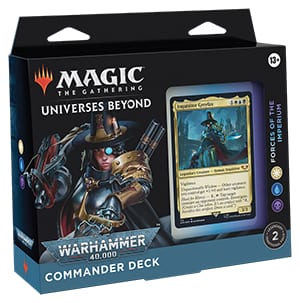
Forces of the Imperium Commander DeckOfficial product image via Wizards of the Coast (opens in a new tab) 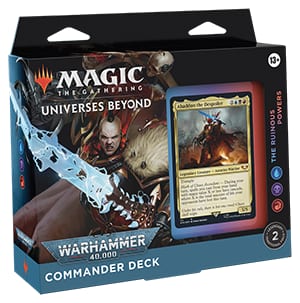
The Ruinous Powers Commander DeckOfficial product image via Wizards of the Coast (opens in a new tab) 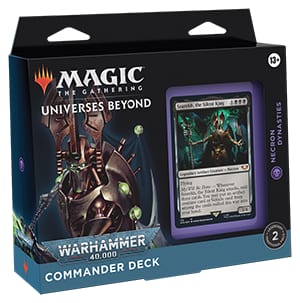
Necron Dynasties Commander DeckOfficial product image via Wizards of the Coast (opens in a new tab) 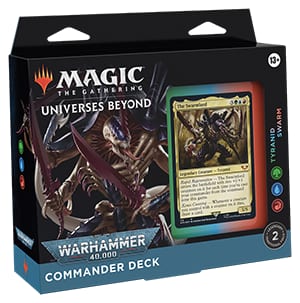
Tyranid Swarm Commander DeckOfficial product image via Wizards of the Coast (opens in a new tab) 
Forces of the Imperium Collector's EditionOfficial product image via Wizards of the Coast (opens in a new tab)
The Collector’s Edition difference
The Collector’s Edition uses the same decklists as the standard products but prints every card in the 100-card deck in Surge Foil. Its ten included tokens also carry the finish. The packaging is a premium black presentation box, while the standard decks use faction artwork and traditional foil commanders.
This is not a randomized chase product. A Collector’s Edition deck is the direct route to a matching all-Surge-Foil list, and a standard deck is the direct route to a normal playable list. A collector deciding between the two should start with the finish and the deck’s intended use, not with the hope of discovering a different card pool.
Surge Foil’s diagonal light pattern is especially visible across the dark Warhammer art. It makes a complete deck look consistent in a binder or sleeved stack, but it also means surface and edge inspection deserves good light. The Warhammer Commander decklists (opens in a new tab) are the useful reference for comparing a preowned box with the intended list.
Secret Lair is supplementary, not a fifth deck
Three concurrent Secret Lair drops broadened the crossover. Secret Lair x Warhammer 40,000: Orks brought Ork-themed cards, including Merciless Executioner with the flavor name Ork Kommando. Secret Lair x Warhammer Age of Sigmar moved into the Mortal Realms, and Secret Lair x Blood Bowl used the sports satire of that setting.
Keep these drops separate from the four Commander decklists. They make good thematic additions to a faction collection, but they do not change the standard-versus-Collector’s Edition product decision.
Mechanics that make each faction readable
The design coverage for the Commander decks (opens in a new tab) explains the set’s mechanical vocabulary. Three mechanics do most of the work at the table.
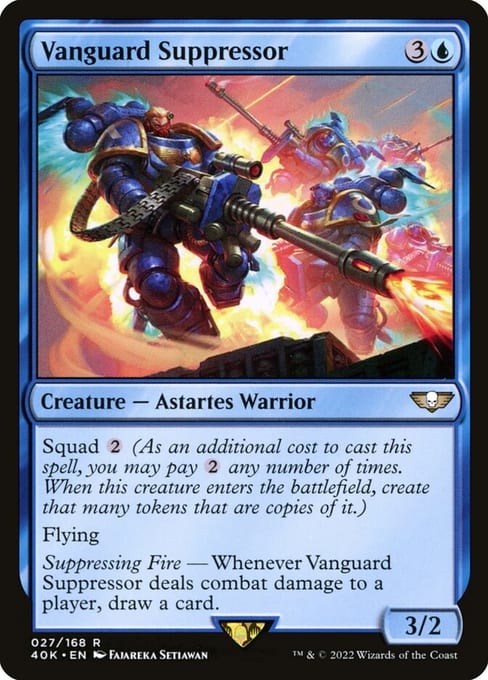
Squad turns one creature into a unit
Squad is an optional additional cost printed on the individual card. You may pay that stated squad cost any number of times as you cast the creature. When it enters, you create that many token copies.
The cost is not a generic X that you choose without reference to the card. That difference matters on a card such as Vanguard Suppressor: the late-game version is more expensive because it uses the squad cost printed on Vanguard Suppressor, and the extra mana buys extra copies. Squad is therefore a scaling decision, not a promise that every creature can be multiplied for any amount.
Ravenous makes X creatures worth the mana
Ravenous puts X +1/+1 counters on the creature as it enters. If X is at least five, it also draws a card. The mechanic gives Tyranid decks a reason to spend a large amount of mana on one creature because the card replaces itself at the larger investment.
Familiar keywords get a grimdark frame
Cascade on Abaddon feels like Warp unpredictability. Unearth on Necron cards suggests machines returning for one final attack. Miracle on Imperium cards turns a card drawn at the right moment into an intervention. These are established Magic mechanics, but the art, creature types, and deck context make them read as part of the setting.
Cards that reward careful collection
Marneus Calgar is the clearest Forces of the Imperium reference point because it changes the value of every token maker. A card that creates one token draws one card, and one effect that creates several bodies at once still draws only one. Multiple token-producing events yield multiple draws. When sorting a preowned deck, Calgar belongs on the checklist because losing him changes the deck’s core engine, not just its theme.
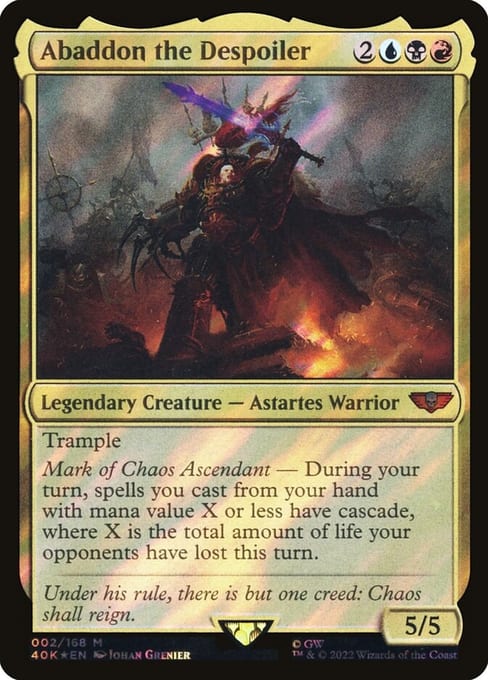
Cascade after damage, so early creatures and later haymakers belong on the same curve. 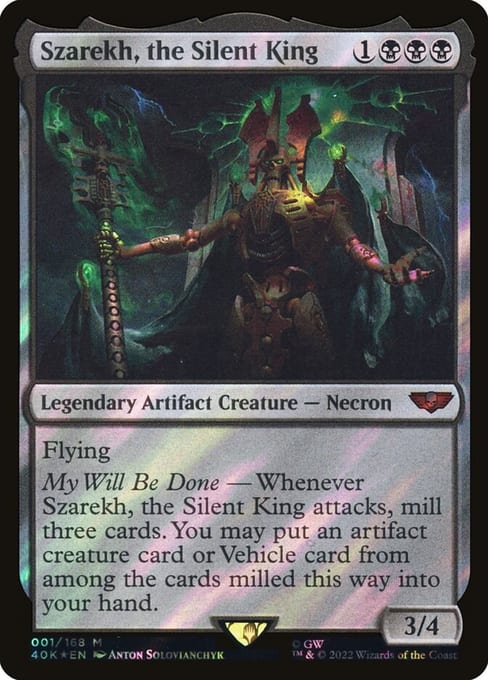
Only an artifact creature card or Vehicle among the three cards milled by that attack can go to hand. 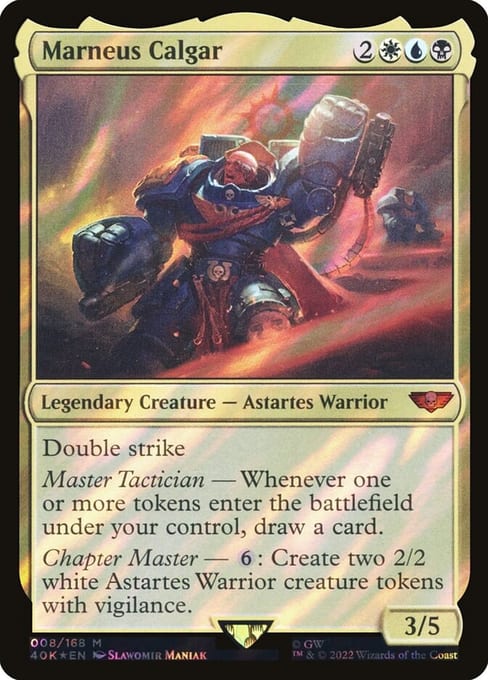
Draws once for each token-producing event, no matter how many tokens enter together. 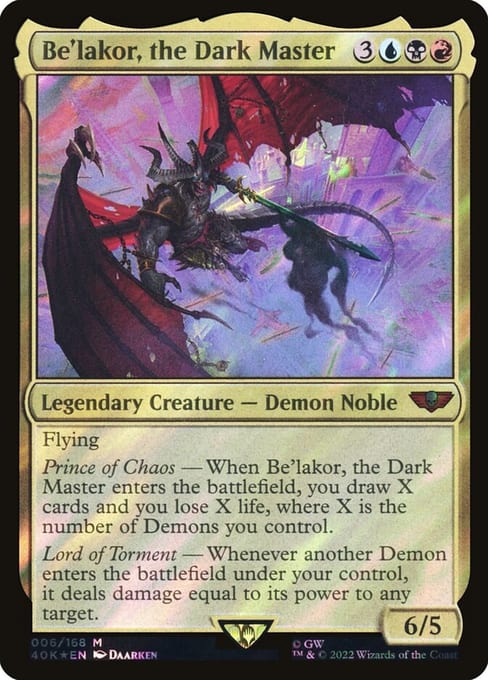
The entry trigger draws and costs life; later Demon entries deal the damage.
Be’lakor, the Dark Master is a useful test for a card summary. The entry trigger draws and costs life based on the Demons involved, then later Demon entries deal damage. A list that describes only the draw or only the burn misses the choice the card asks its controller to make: build a large enough Demon board to produce value while managing the life payment.
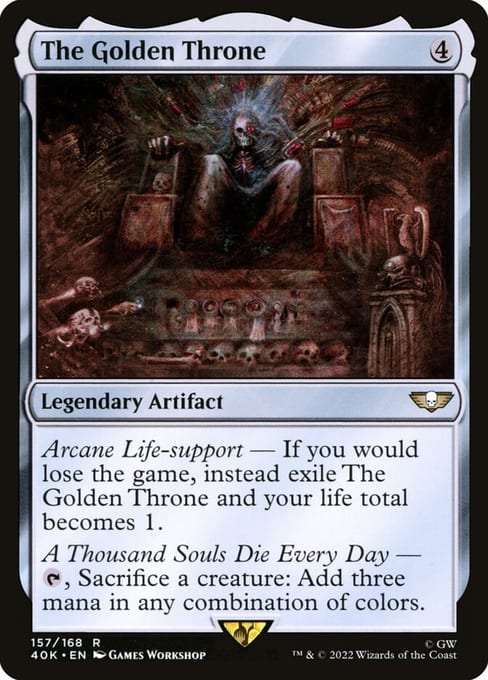
The Golden Throne has two independent uses. While it remains on the battlefield, its mana ability can tap it and sacrifice a creature to add three mana. If it prevents you from losing, the official release notes (opens in a new tab) confirm that its replacement effect exiles it and sets your life total to 1, so there is no tap-and-sacrifice follow-up after that replacement.
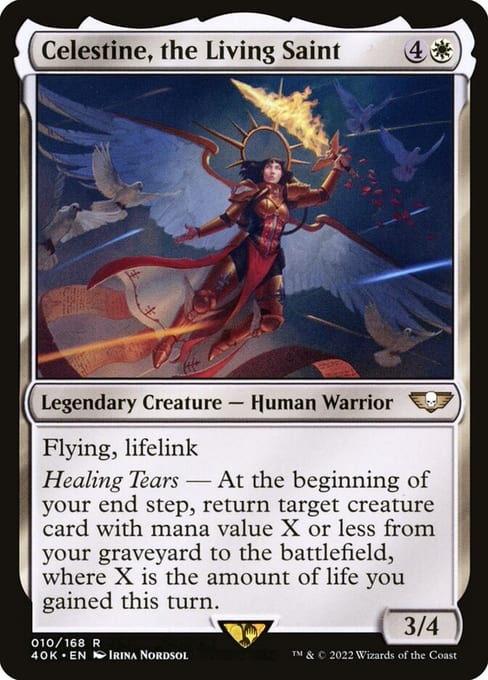
Celestine, the Living Saint is an end-step reanimation threat, and the creature it returns is tied to the life gained that turn. The condition links the card’s lifelink body to the size of the creature it can bring back, so a deck that wants Celestine should make life gain a real part of its plan.
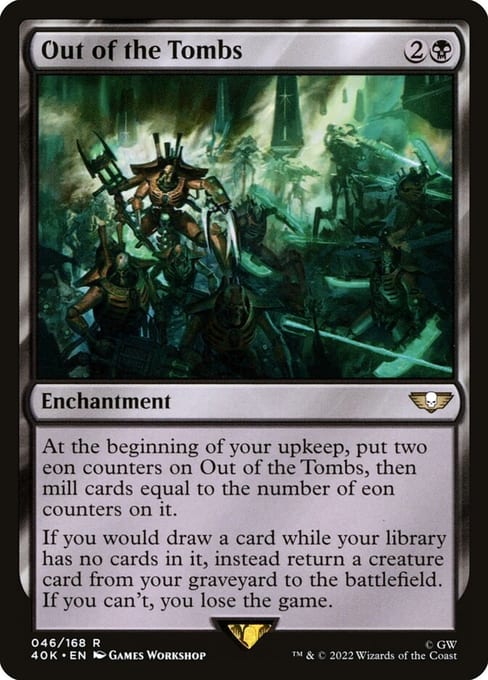
Out of the Tombs is not a guarantee against decking. It replaces any draw from an empty library, not only the normal draw step, and its controller loses the game if no creature can be returned. That makes it a graveyard-management card with a real failure condition, not an automatic license to ignore library size.
A collector’s buying checklist
- Choose the faction first. Chaos, Necrons, Imperium, and Tyranids have different curves and resource engines. A favorite army is the best starting point, but the play pattern should confirm the choice.
- Choose the edition second. Standard decks provide traditional foil commanders and mostly nonfoil cards. Collector’s Edition decks provide the same list in all-Surge-Foil form, including tokens.
- Check opened deck contents. Compare the full 100-card list, the ten double-sided tokens, display commander, deck box, and life tracker with the appropriate decklist. Do not assume a faction box is complete because the face commander is present.
- Keep Secret Lair cards in a separate list. Orks, Age of Sigmar, and Blood Bowl expand the setting but do not replace cards from a primary deck.
- Inspect dark foils carefully. Look at corners, edges, and the foil surface under even light. Our Magic Card Condition Guide covers those checks, and How to Read an MTG Marketplace Listing explains what a clear preowned-deck or single-card listing should show.