
Set & card guides
Magic: The Gathering Card Treatments, Finishes, and Frames Explained
A practical guide to the finishes, frames, promos, and special treatments that distinguish modern Magic: The Gathering printings.
Two cards can have the same name and rules while looking, feeling, and cataloging differently. A foil is not automatically a showcase card. Borderless is not the same thing as extended art. A promo stamp does not create a new frame. The clean way to identify a modern printing is to separate the physical finish from the card’s layout, border, distribution mark, and serialized number.
That distinction matters at the counter and at home. It tells you what a listing actually describes, lets you compare the card in your hand with a database record, and prevents a dramatic treatment from being mistaken for a different card.
Start with five separate properties
Scryfall’s card-object documentation (opens in a new tab) models these details independently. That is a useful way to inspect a card because each property answers a different question.
| Option | Best for | Notes |
|---|---|---|
| Set and collector number | Which set or subset and which card or variant | Read the complete printed number and code first. |
| Finish | How the card surface reflects light | Nonfoil, traditional foil, etched, and release-specific foils are separate finishes. |
| Border and frame | How the card is laid out | Borderless, regular, retro, and extended-art clues describe different visual structures. |
| Frame effect | A named visual treatment tied to a release | Showcase and extended-art effects are not the same as the frame field. |
| Promo or serialization | How the card was distributed or individually numbered | A stamp or serial mark can accompany an otherwise familiar frame and finish. |
Keeping those labels apart is more useful than memorizing every marketing name. Start with what changed on the cardboard, then use the set’s collecting guide to confirm how Wizards distributed it.
Finishes change the surface
A finish is the layer applied to the card stock. It can change the way light moves across the card without changing the art or layout.
Nonfoil is the ordinary matte printing. Traditional foil has a reflective layer across the card face and produces the familiar rainbow sheen. A foil copy can use the regular frame, borderless art, or a showcase frame, so “foil” describes the surface rather than the design around it.
Foil etched is a distinct finish with a more patterned metallic appearance. It became prominent with Commander Legends (opens in a new tab), where the collecting guide documented its release-specific distribution. Do not treat etched cards as a more reflective version of traditional foil. They are separate options in a listing and in a card database.
Wizards also gives individual releases named specialty finishes. Surge foil, halo foil, galaxy foil, textured foil, and step-and-compleat foil are examples, not a permanent universal menu. Their look and availability come from the product guide for that set. The March of the Machine collecting guide (opens in a new tab) is a useful example for halo foil and serialized Double Rainbow cards, while the Phyrexia: All Will Be One guide (opens in a new tab) documents step-and-compleat foil.
The practical test is simple: describe the surface and then verify the release’s vocabulary. A photograph can show that a card shines; the card record and collecting guide tell you which finish it is.
Frames and borders change the layout
A frame controls the structure around the art, name, rules box, and other printed information. The regular modern frame is the familiar post-Magic 2015 layout. Older cards use earlier frame generations, and a release can deliberately return to one of them.
Borderless
A borderless card extends its art to the physical edges instead of keeping the normal colored frame border. The text still needs to remain legible, so it is integrated into or placed over the art. Borderless can use the same illustration as another printing or a different one.
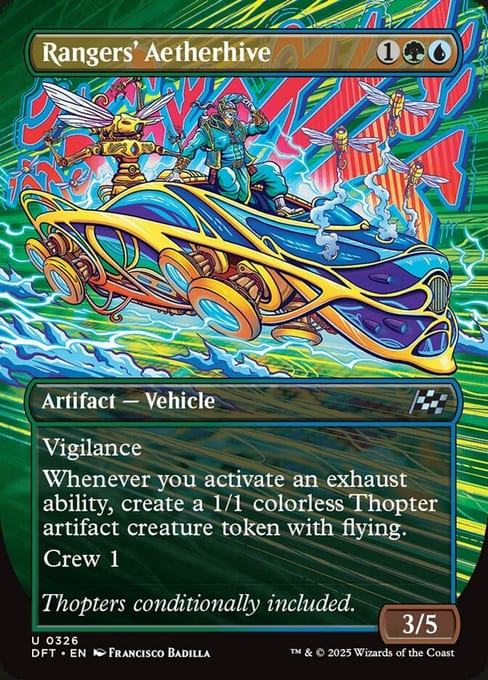
In Scryfall’s data model, borderless belongs under border_color, not frame_effects. That is a small but important correction when searching or building an inventory. Borderless tells you about the edge treatment; it does not tell you which finish the card has.
Extended art
Extended-art cards retain the regular top and bottom structure while stretching the illustration sideways into the spaces where colored side borders would normally sit. The illustration is often the same as the regular-frame card. Extended art is therefore easy to confuse with borderless from a distance, but the remaining top and bottom frame make the distinction visible.
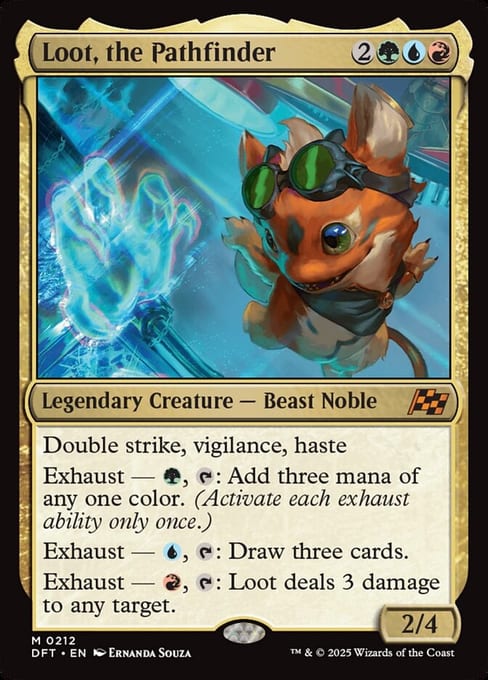
Regular frame: gold side borders still sit beside the art. 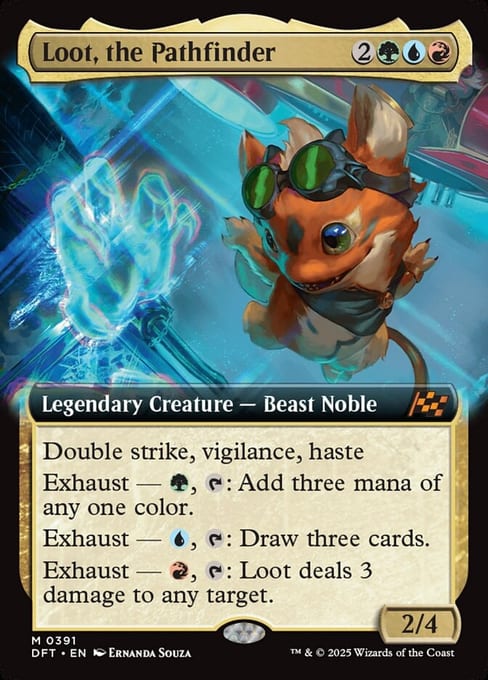
Extended art: the same illustration fills those side-border spaces, while the top and bottom frame stay put.
Availability is release-specific. Some sets place extended art in Collector Boosters, while others also put it in Bundles or another product. The Magic: The Gathering - FINAL FANTASY collecting guide (opens in a new tab) documents a release where Bundles and Gift Bundles include traditional-foil extended-art legendary creatures.
Showcase
Showcase is an umbrella for a set’s custom frame family. The design can be a storybook border, a neon-lit city panel, a dossier, or something else tied to that release’s world. Throne of Eldraine’s Storybook frame and Kamigawa: Neon Dynasty’s showcase frame family look nothing alike, but both are showcase-style treatments in the context of their sets. Keep the set’s showcase frame separate from Neon Ink, which is Neon Dynasty’s own separately named treatment on a single card.
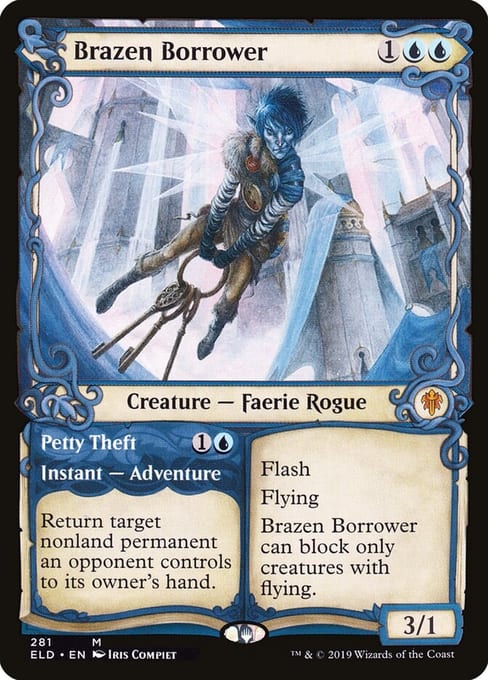
Eldraine's Storybook showcase uses an illustrated fairy-tale border. 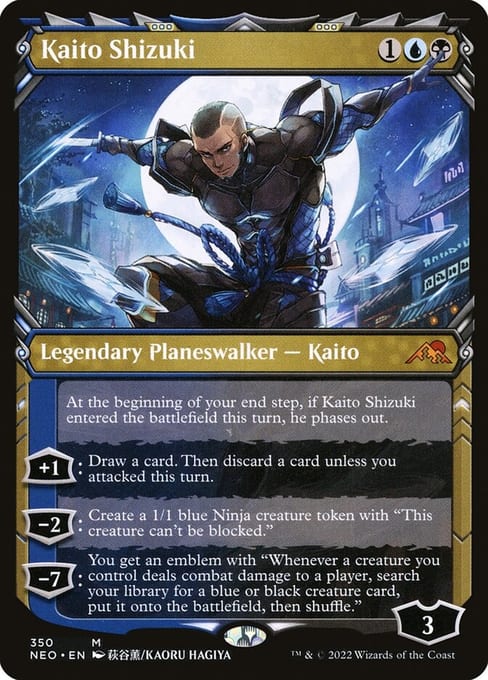
Neon Dynasty's showcase frame family is a different custom frame, not a more extreme version of the same treatment.
A showcase frame is not automatically foil, rare, or Collector Booster-only. Check the release guide for the frame’s appearances and odds. In some releases, showcase cards can appear in Play Boosters as well as Collector Boosters.
Retro frame
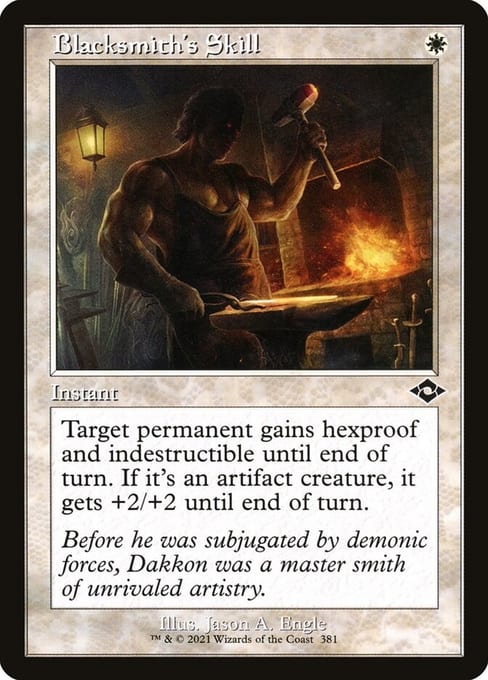
Retro cards bring back the classic layout used before the modern frame. The colored rules box, type line, and older visual proportions are the point of the treatment, not a reflective surface. Retro is recorded through the frame field rather than frame_effects.
For a concrete database example, Scryfall’s Blacksmith’s Skill Modern Horizons 2 printing (opens in a new tab) uses frame: "1997" and has no frame_effects value for that retro layout. That frame-versus-frame-effects distinction keeps a retro card from being filed under the wrong search field.
Serial numbers are a separate mark
A serialized card carries an individual number such as 142/500 printed on the card face. The denominator describes the stated size of that serialized treatment’s run. Serialization does not replace the card’s set, frame, or finish. A serialized card can be retro, borderless, foil, or another combination when the release allows it.
When you catalog one, record the serial mark in addition to the printing details. The serial is about that physical copy’s place in a stated run; the collector number is about the card’s place in its set or subset.
Promo markings describe distribution
Promo type tells you how a printing was distributed or marked. It can be a gold planeswalker stamp, a Prerelease mark, a Store Championship treatment, or a thicker display card. None of those labels is a synonym for foil or showcase.
Date and year stamps are release-specific. Some Prerelease Packs have used a stamped rare or mythic rare, while current product guides can omit the year stamp. Treat the marking as evidence to compare with the set’s product documentation, not as a universal definition of a Prerelease promo.
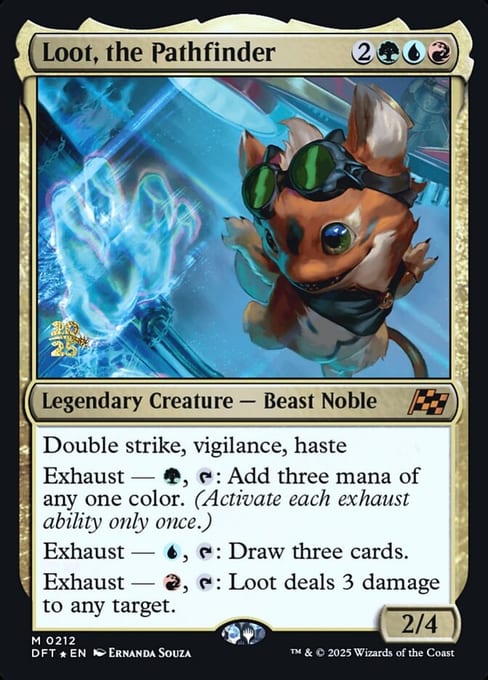
Promo printings can share the main set code and frame with a pack-fresh version, or they can use a distinct collector identifier such as 187p. Search the exact number, check the promo field, and compare the physical stamp. The number with a suffix is not interchangeable with the regular number.
Read the information line before you name the treatment
The modern information line carries the collector number and a rarity letter on one row, then the set code and the language code on the row beneath. On a traditional foil, a star replaces the small separator between those last two values, so a nonfoil DFT • EN reads DFT★EN on the foil copy. Special products can use other marks.
That line gets you to the record. The rest of the card confirms the treatment:
- Compare the edge of the illustration to distinguish borderless from extended art.
- Look at the layout generation for regular versus retro frame.
- Identify the release-specific design when the frame is showcase.
- Tilt the card to inspect traditional, etched, or specialty foil.
- Check for a promo stamp or serial number separately.
A listing that says only “foil alternate art” leaves too much unresolved. A useful listing names the set, collector number, art or frame treatment, finish, language, condition, and any promo or serial mark. How to read an MTG marketplace listing explains how to check those fields before buying.
The useful distinction
Finish answers “how does the surface shine?” Frame and border answer “how is the card laid out?” Frame effects answer “which named visual treatment does this release use?” Promo type answers “how did this printing reach players?” Serialization answers “which numbered copy is this?”
Keep those questions separate and modern printings stop looking like an unstructured pile of variants. A set code and collector number find the record; the card’s surface, layout, stamp, and serial mark tell you which physical version is in front of you.