
Set & card guides
Magic: The Gathering | FINAL FANTASY: A Collector and Set Guide
A collector's guide to Magic: The Gathering | FINAL FANTASY, including FIN, FIC, and FCA products, Standard legality, Commander decks, and the set's major treatments.
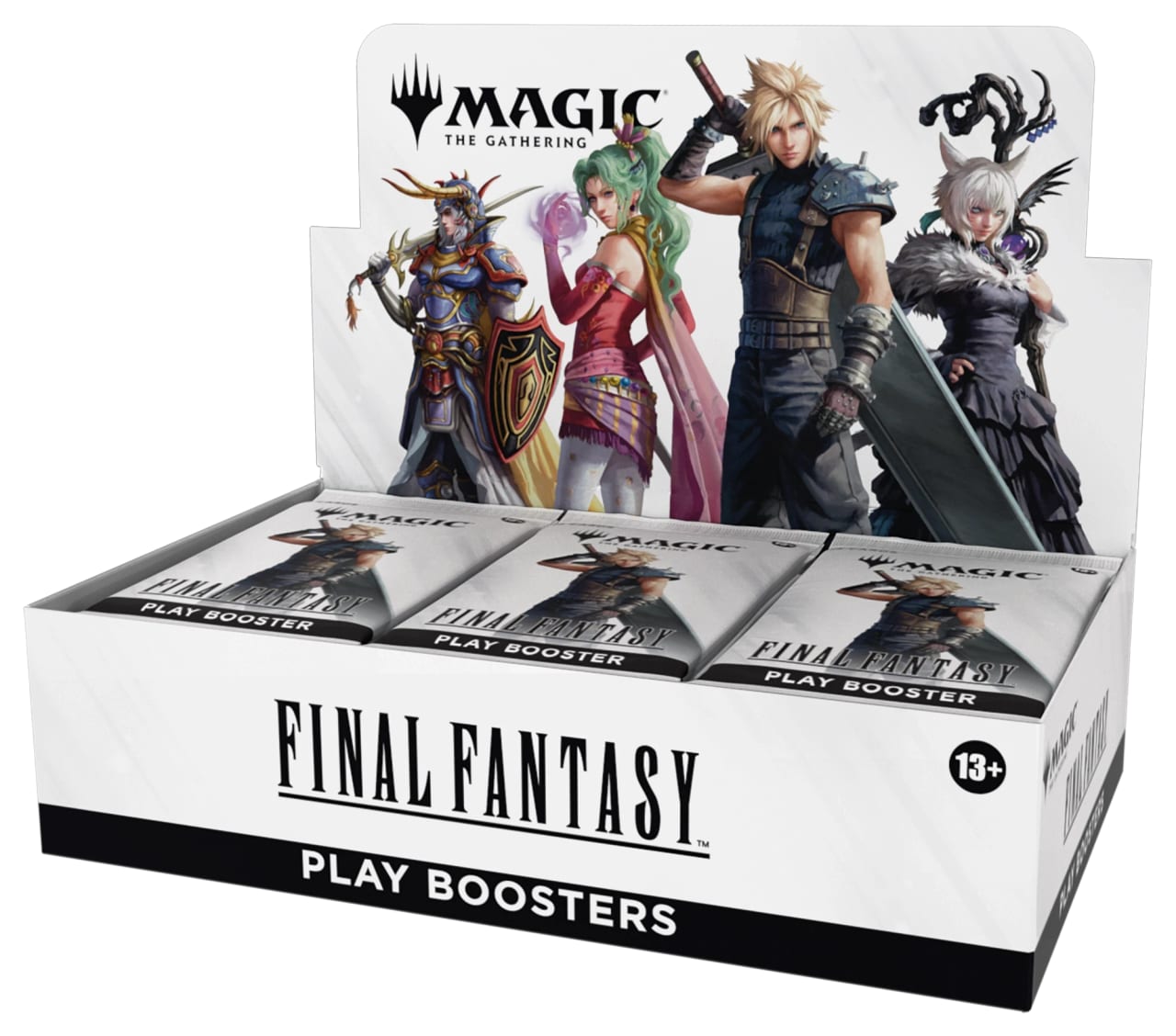
Magic: The Gathering | FINAL FANTASY is the crossover to approach as both a full Magic set and a collection of connected side products. The main set released worldwide on June 13, 2025, with prerelease events beginning June 6. It covers all sixteen numbered mainline games, from the 1987 original through FINAL FANTASY XVI, so the card pool has room for heroes, villains, summons, weapons, and very different visual eras.
The official collecting guide (opens in a new tab) uses three set codes to separate those products. FIN is the main booster set and is legal in Standard, Pioneer, and Modern. FIC is the Commander card pool. FCA, Through the Ages, is a bonus sheet of existing Magic cards with FINAL FANTASY art. If you learn that division first, the rest of the release becomes much easier to collect.
The three codes and the product map
The June launch contains several products, but they serve different jobs.
FIN is the main booster set
Play Boosters are the Limited and ordinary collecting product. Each pack contains 14 Magic cards and a token or art card, and a display contains 30 packs. The Play Booster has a traditional foil slot, a land slot that can show a full-art landmark basic or a common two-color land, and at least one rare or mythic rare. One in every three packs replaces a common with a card from the FCA bonus sheet.
Because FIN is a full booster set, it is the place to start for Standard play, Booster Draft, Sealed Deck, or a collection organized around the sixteen games. The main set is not just a wrapper for the Commander decks. It has its own Limited environment and its own format identity.
Collector Boosters contain 15 cards and are sold in 12-pack displays. They concentrate traditional foils, Booster Fun frames, extended-art legends, Surge Foils, and selected cards from the Commander pool. The serialized golden Traveling Chocobo, colorful neon-ink Chocobos, and Japanese black Chocobo belong to this treatment-focused route.
FIC is the Commander card pool
The four preconstructed decks use the set code FIC and are built around individual games:
- Revival Trance is a Mardu FINAL FANTASY VI deck led by Terra, Herald of Hope. It uses graveyard recursion and Terra’s Trance ability to turn combat into another way to recover creatures.
- Limit Break is Naya and draws from FINAL FANTASY VII. Cloud, Ex-SOLDIER leads an Equipment and combat deck that rewards building one attack into a larger burst.
- Counter Blitz is Bant and draws from FINAL FANTASY X. Tidus, Yuna’s Guardian makes counters and combat work together, with proliferate extending the plan.
- Scions & Spellcraft is Esper and draws from FINAL FANTASY XIV. Y’shtola, Night’s Blessed rewards noncreature spells and turns life loss into pressure and cards.
Each 100-card deck includes two traditional foil legendary commanders, 98 nonfoil cards, 25 new-to-Magic cards, tokens, a reference card, a deck box, and a Collector Booster Sample Pack. Collector’s Edition Commander decks use the same decklists but print every card in Surge Foil. That is a complete-deck treatment, not a new Commander card pool.
FCA is a reprint sheet, not a third new set
Through the Ages contains 64 existing Magic cards with FINAL FANTASY artwork. A nonfoil FCA card appears in one of every three Play Boosters in the bonus-sheet slot, and Collector Boosters also contain FCA cards, including traditional foil versions.
That distinction matters for both format checks and collection organization. FCA cards keep the legality of the underlying Magic card, rather than inheriting FIN’s Standard legality simply because the art is new. Put them in a separate section of a binder, or label them clearly in a deck box, so a FINAL FANTASY reprint is not confused with a new FIN card.
Starter Kit, Bundles, and later products
The Two-Player Starter Kit contains two 60-card decks built around FINAL FANTASY VII, one led by Cloud, Planet’s Champion and the other by Sephiroth, Planet’s Heir. It includes two foil legendary face cards, five nonfoil new-to-Magic cards in each deck, tokens, deck boxes, and Arena code cards in select regions. Its face cards use the FIN code but do not appear in Play Boosters, so the kit is a distinct checklist item.
The launch Bundle contains nine Play Boosters, two traditional foil extended-art legendary creatures, 32 full-art basic lands, a spindown, and a storage box. The Gift Bundle, released June 27, 2025, keeps that land and promo package and adds a Collector Booster.
The later products are not part of the June launch. On December 5, 2025, Wizards released four Scene Boxes, a Chocobo Bundle, and a FINAL FANTASY VII Commander Deck Game Edition reprint of Limit Break. The Scene Boxes are Garland at the Chaos Shrine, Children of Fate, The Siege of Alexandria, and Camp Comrades. Each contains three Play Boosters, six traditional foil borderless scene cards, six art cards, and a display easel. Keeping the December products separate prevents a later Chocobo or scene item from being mistaken for a missing launch SKU.
The June 2025 FINAL FANTASY Secret Lair release (opens in a new tab) is another separate lane. Game Over, Grimoire, and Weapons contain existing Magic cards with FINAL FANTASY names and art. They are connected launch products, not additions to the FIN, FIC, or FCA card pools, so keep them on their own checklist rather than treating their reprints as missing booster cards.
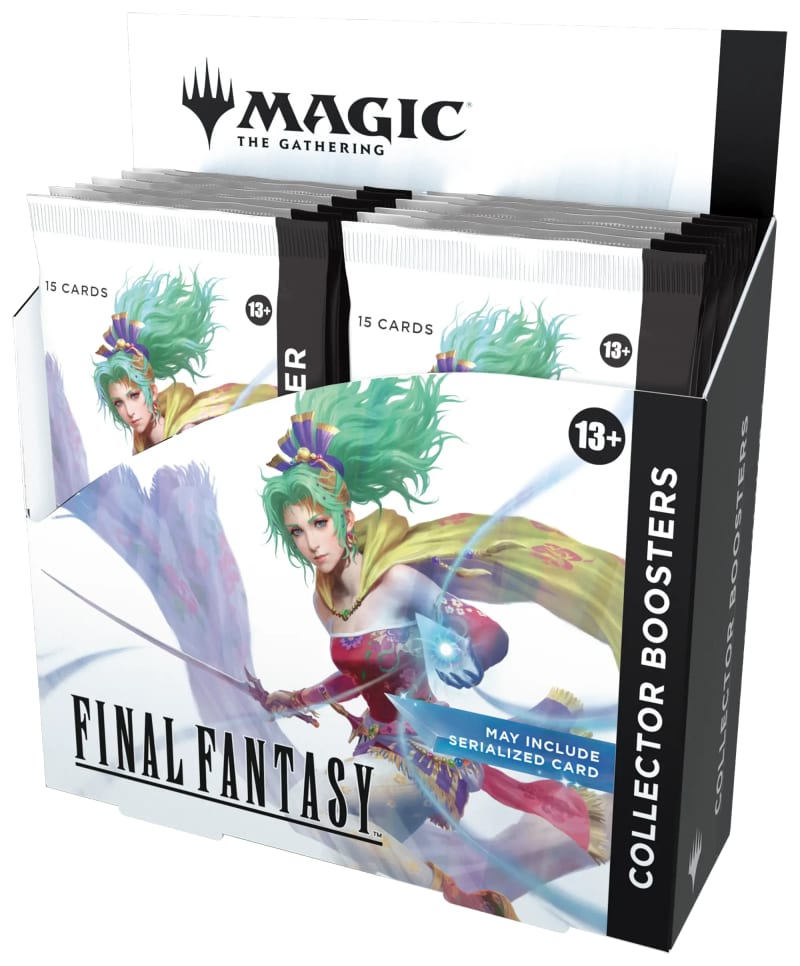
FINAL FANTASY Collector Booster BoxOfficial product image via Wizards of the Coast (opens in a new tab) 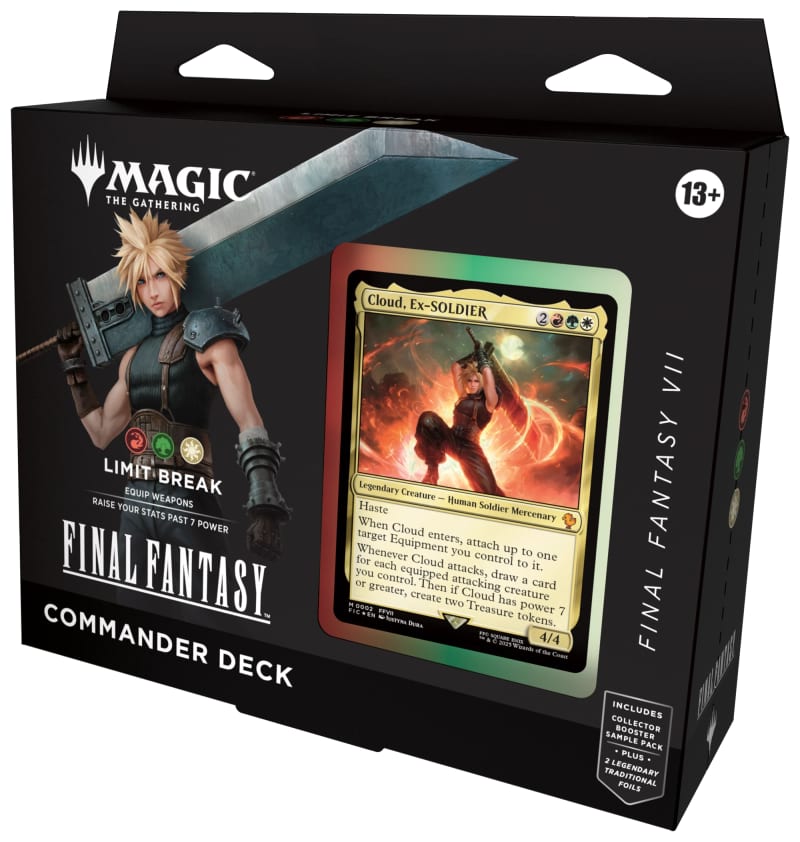
Limit Break Commander DeckOfficial product image via Wizards of the Coast (opens in a new tab) 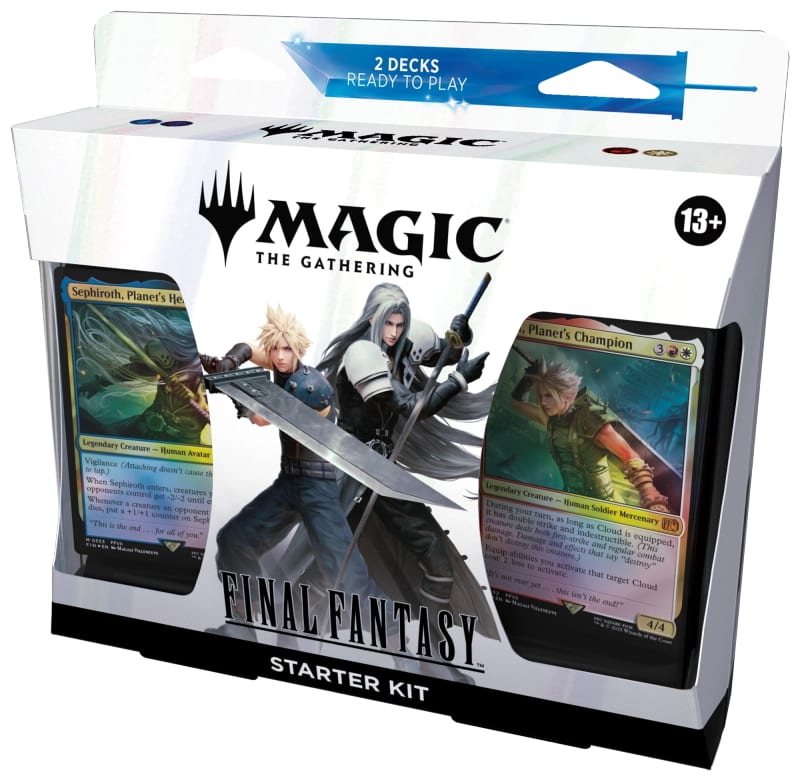
Magic: The Gathering FINAL FANTASY Starter KitOfficial product image via Wizards of the Coast (opens in a new tab) 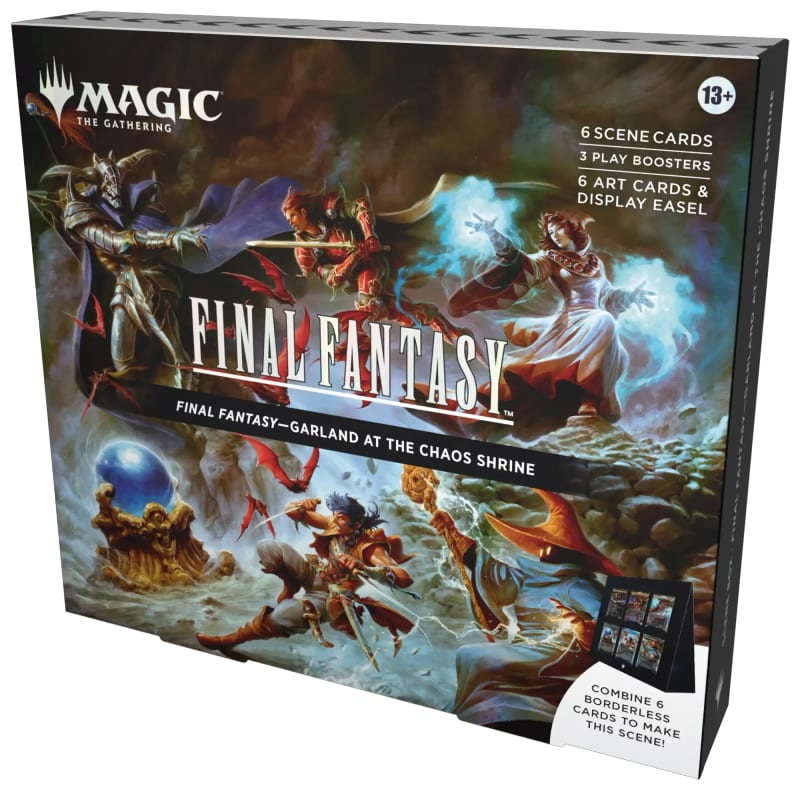
Garland at the Chaos Shrine Scene BoxOfficial product image via Wizards of the Coast (opens in a new tab)
What to check before playing a card
The set code identifies the card pool, not a blanket legality verdict. The broad set-level boundaries are:
- FIN printings are eligible for Standard, Pioneer, Modern, Commander, Legacy, and Vintage, subject to format-specific bans. FIN #248 Vivi Ornitier is banned in Standard.
- FIC printings are eligible for Commander, Legacy, and Vintage, plus formats where the specific card was already legal, subject to format-specific bans.
- FCA reprints follow the format eligibility and bans of the underlying card. FCA #48 Astral Titan is a Primeval Titan reprint and is banned in Commander.
A FIC card is not Standard legal because it appears in a Collector Booster, and an FCA reprint does not become a FIN card because it shares FINAL FANTASY art. Before a sanctioned event, check both the specific card and the current Wizards Banned and Restricted list (opens in a new tab); the set code alone is not enough.
Mechanics that feel like Final Fantasy
The FINAL FANTASY mechanics article (opens in a new tab) shows how the release borrows RPG vocabulary without turning every card into a reference.
Job Select makes Equipment arrive ready
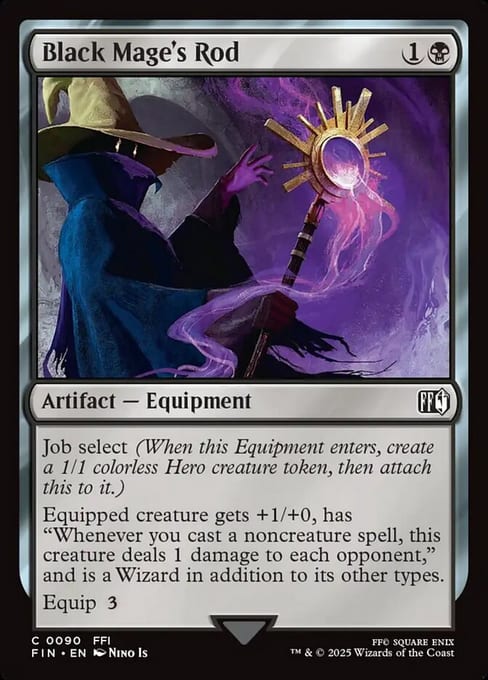
When an Equipment with Job Select enters the battlefield, it creates a 1/1 colorless Hero token and attaches itself to that token. The attachment is mandatory, so the first Hero is part of the card’s immediate board presence. Black Mage’s Rod and Dragoon’s Lance demonstrate the collecting consequence: an Equipment can be useful before you have a larger legendary creature waiting to carry it.
Tiered spells build a spell in stages
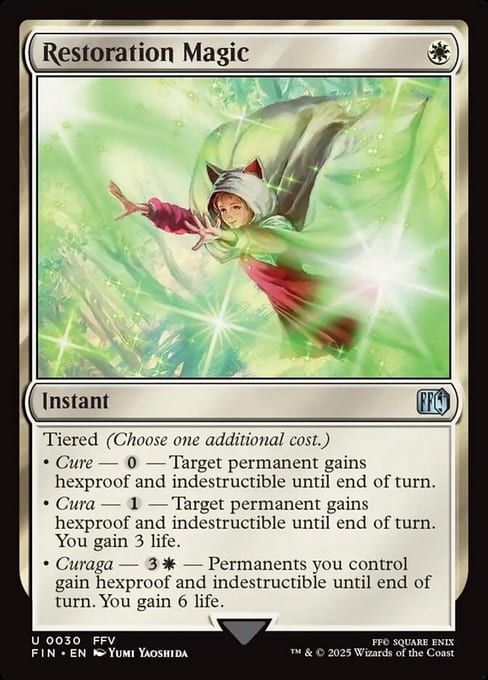
Tiered spells let you choose one of several modes and pay an additional cost on top of the spell’s mana cost. Restoration Magic shows the Cure, Cura, and Curaga progression: a small protection effect, a stronger version with life gain, or a much larger effect that protects all your permanents and gains more life.
The choice is made when you cast the spell. A collector comparing variants should therefore preserve the card’s full text, while a player should think of Tiered as flexible mana allocation rather than one spell with three separate cards hidden inside it.
Limit Break is also the name of the FINAL FANTASY VII Commander deck. It is not a set-wide keyword. Terra’s Trance is an ability word on relevant cards, not a universal rule for transforming characters at a low life total.
Cards that reward closer reading
Cloud, Ex-SOLDIER makes the equipment theme concrete. He can attach an Equipment when he enters, then turns equipped attackers into cards and potentially Treasures when his power reaches the right threshold. His role is not only “the Cloud card.” He is the reason an Equipment deck can turn a successful attack into a second main phase with more resources.
Terra, Herald of Hope gives Revival Trance its name. Her Trance ability fills the graveyard and changes her combat profile, while combat damage can bring back a smaller creature. That creates a choice between attacking for value now and keeping Terra safe for a later recursion turn.
Tidus, Yuna’s Guardian treats counters as something a deck can move, not only place. Moving one at the beginning of combat changes which creature benefits, while Cheer rewards creatures with counters when they connect. The card is a useful reference for Counter Blitz because it asks the deck to manage a board rather than place counters on one permanent and ignore the rest.
Y’shtola, Night’s Blessed gives Scions & Spellcraft a clear noncreature-spell engine. The deck wants spells large enough to trigger her life-loss effect, but it also wants to reach each end step with a player having lost enough life for her card draw. That makes removal and pressure part of the same plan.
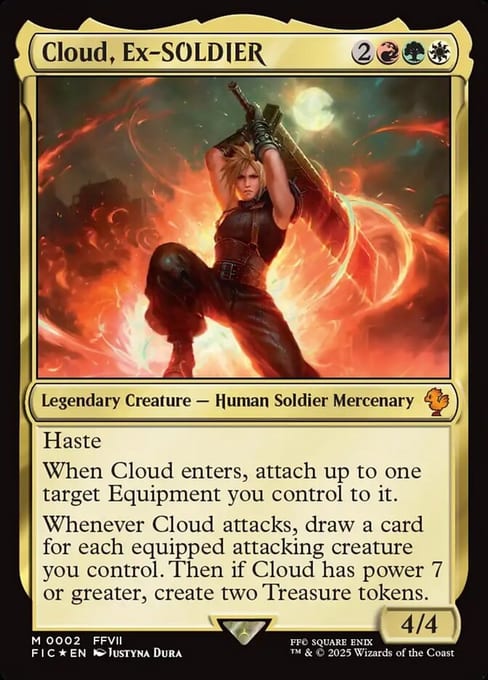
Attaches Equipment on entry, then turns a strong equipped attack into cards and Treasures. 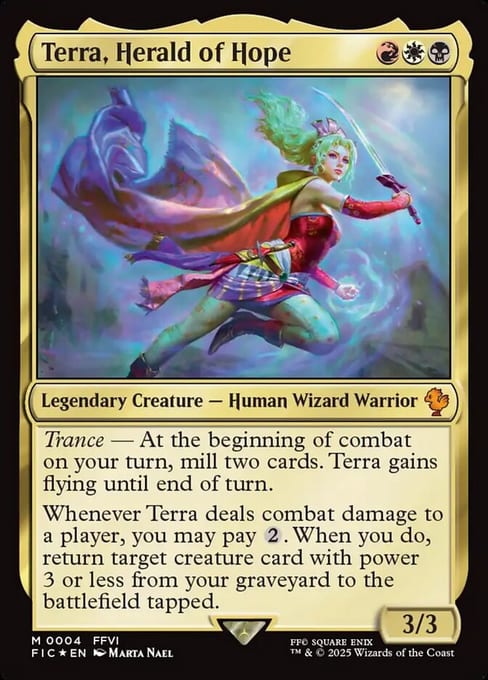
Trance fills the graveyard; combat damage can return a smaller creature. 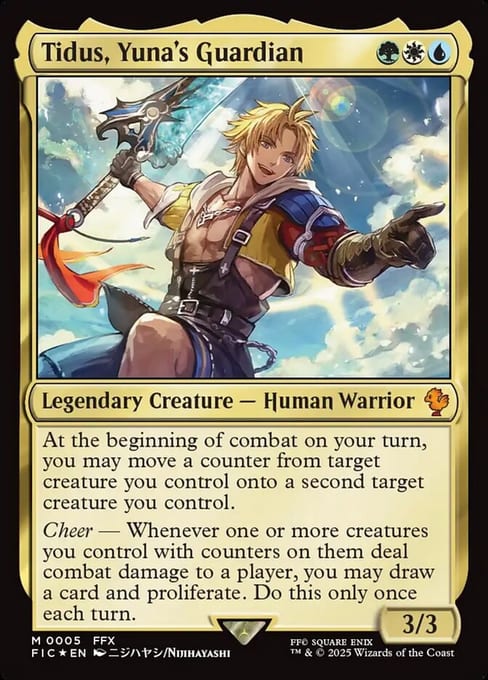
Moves counters at combat and rewards creatures that already have them. 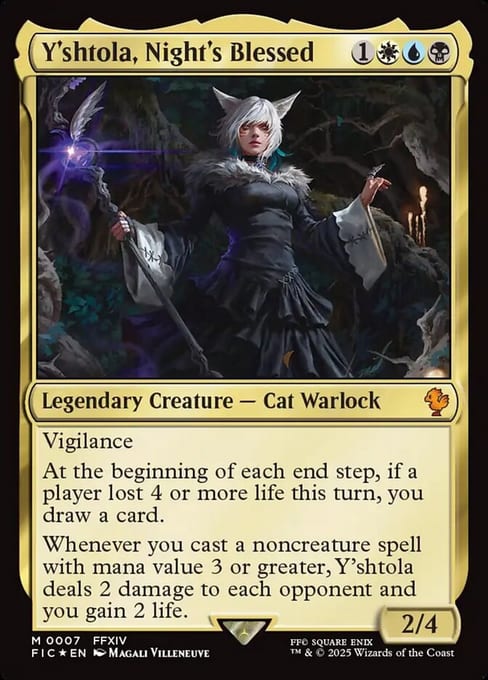
Noncreature spells and life loss feed the same end-step draw.
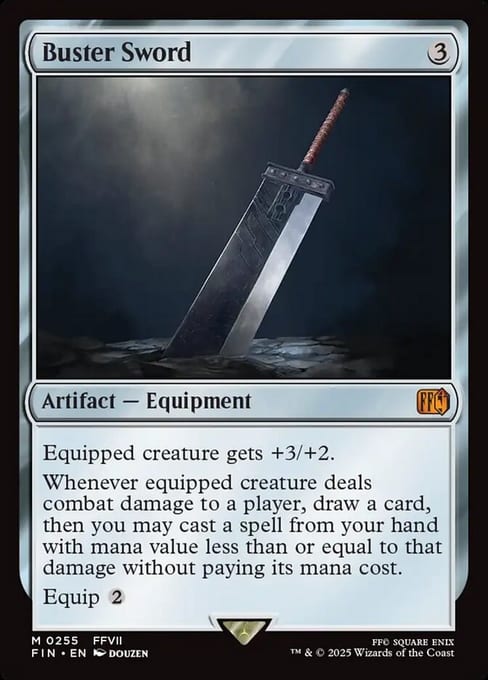
Buster Sword is a good test for a collection’s priorities. Its combat-damage trigger can turn the equipped creature’s damage into a free spell from your hand. If you collect equipment art, it belongs with the other weapons. If you are building around Cloud, it is also a card that changes how you sequence an attack.
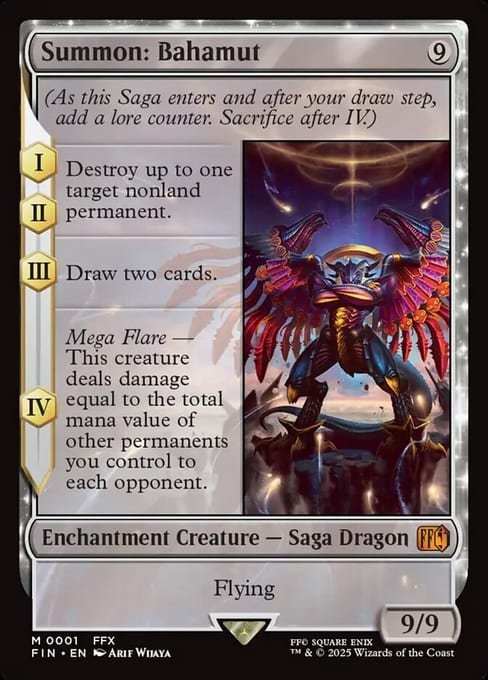
Summon: Bahamut is the set’s clearest long-game spectacle. Its four chapters each do something different: the first two destroy up to one target nonland permanent apiece, the third draws two cards, and the fourth deals damage to each opponent based on the total mana value of your other permanents. It is not a one-shot board wipe. Its value comes from surviving long enough to move through all four chapters.
Treatments and collection lanes
Traditional foils and Surge Foils are not the same finish. Traditional foil uses the standard metallic effect. Surge Foil uses a diagonal ripple pattern and appears in selected Collector Booster slots and on every card in Collector’s Edition Commander decks.
Borderless character cards, artist cards, extended-art legends, and the Through the Ages sheet create different visual collections. Ten borderless artist cards feature contributors including Yoshitaka Amano and Tetsuya Nomura. Some Amano and Nomura art also appears on FCA reprints, which is another reason to keep the bonus sheet separate from the FIN character cards.
The Chocobo variants form their own obvious lane: the serialized English golden Traveling Chocobo is numbered from 1/77 through 77/77, alongside colorful neon-ink Chocobos and the Japanese black Chocobo. A Chocobo-focused binder can therefore be complete without also being a complete FIN, FIC, and FCA set.
A practical collector’s checklist
- Choose your format first. FIN is the route for Standard, Pioneer, and Modern. FIC is the Commander route. FCA follows the legality of the underlying reprint.
- Choose your play product. Play Boosters support Limited and ordinary FIN collecting. A Commander precon supplies a ready FIC deck. The Starter Kit teaches two-player play with Cloud and Sephiroth.
- Keep Secret Lair separate. Game Over, Grimoire, and Weapons are connected June releases, but their reprints are not FIN, FIC, or FCA checklist entries.
- Separate launch and later SKUs. The four Scene Boxes, Chocobo Bundle, and Limit Break Game Edition belong to the December follow-up, not the June launch.
- Choose one treatment lane. Artist cards, Surge Foils, borderless scenes, FCA reprints, and Chocobos each make a coherent project. A focused lane is easier to display than an unstructured demand for every finish.
- Check the actual printing. Compare the set code and card name before putting a card into a Standard or Modern deck. For foil surfaces and edges, use the checks in our Magic Card Condition Guide. When a listing is vague about a serial number, language, or later SKU, How to Read an MTG Marketplace Listing gives you the questions to ask.